
Cartographies 1
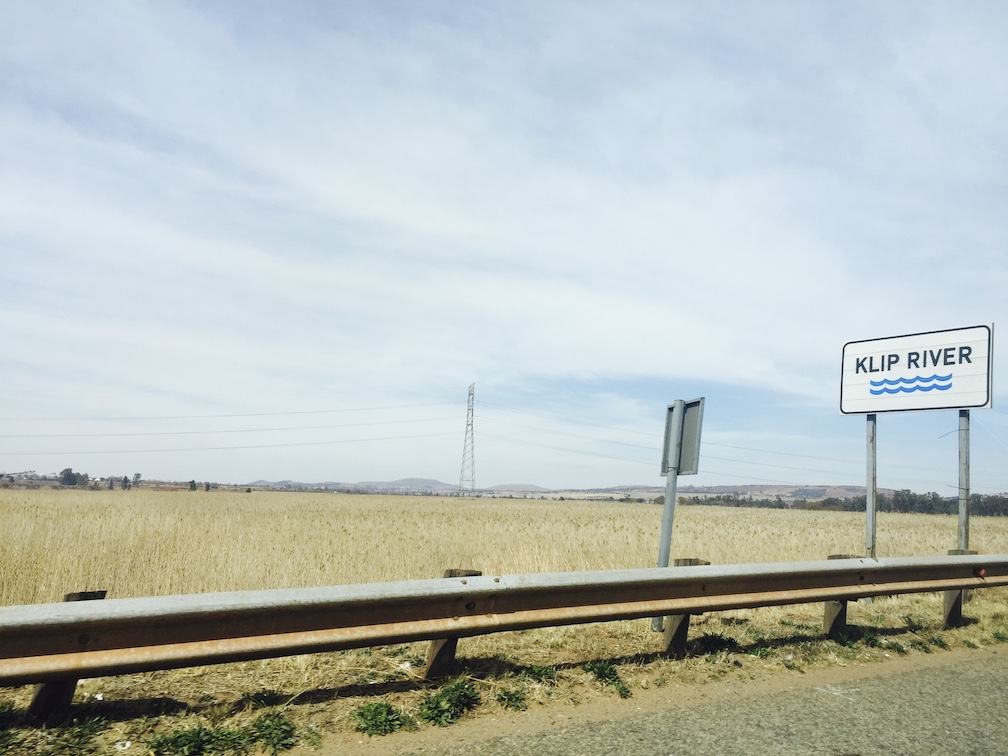
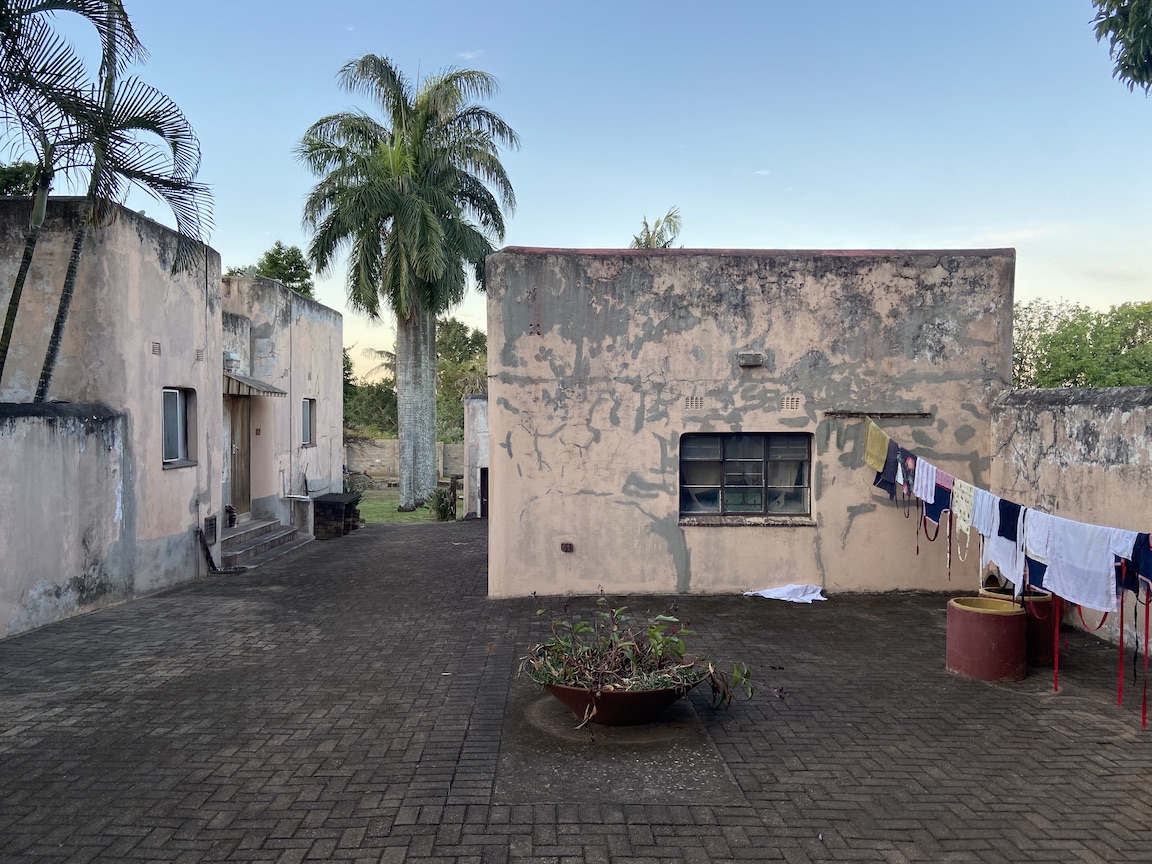
I keep my grandmother’s long braid, and her small frame. I keep her soft hands, from where she sits, in a dark room in the back of a low-slung house, with its painted stone stoep in Klipriver, a short drive from Lenz—Lenasia—where apartheid decrees that Indians must live, in a brown suburb south of Johannesburg. I keep my uncle, with his mechanic’s fix-everything, tinkerer’s hands, waiting for us to arrive for Sunday family dinners where it seems like we are in the thousands.
I keep the Group Areas Act,1 where white Afrikaners drive around in white vans, and white men in white suits show us the black-and-white maps demarcating the cities and zones and buffers that keep us on the move, fragmenting our lives.2
I keep the Klip River as it drains Johannesburg, with its diamantine and auric sediments full of miners’ and randlords’ atoms, and those of political prisoners and the Sharpeville3 dead. The river drains Gandhi’s promises and Malan’s laws. It drains Kruger’s Rands, and Botha’s vicious, small and petty dreams. It drains the Witwatersrand and its dry summer wind. In its waters, it carries the smoke of Soweto, and the charcoal peat of veld and roadside fires. In its brown-gray waters, it takes with it Joburg’s names—Egol and Jozi—and it takes Xhosa and Afrikaans and English and the Gujarati spoken by all the brown people who live here too. It takes Miriam Makeba’s Pata-Pata, where she says, oh-so-smooth: saguquga sati bega nantsi pata pa (sathi pata-pata) / aguquga sati bega nantsi pata pa (sathi pata-pata).4
Along with Pata-Pata, I keep Hugh Masekela’s breath, and I keep his golden trumpet. I keep him singing and I keep his song. Bring him back home, Hugh says. I want to keep him, see him walking down the streets of South Africa / Tomorrow.5
I keep then. I keep tomorrow and now and maybe, just maybe, I might keep the future. I keep times and I keep dates.6 In doing so, I try, here, with this writing, to keep temporalities in the way that Nasser Abourahme describes the time of colonial pasts, settler presents, and liberated tomorrows. In his essay “In Tune with Their Time,” Abourahme affirms that Palestine’s task—both terrible and beautiful—is to bring revolutionary history into experienced time—the “time of initiative.” The Things I Keep is an attempt to grapple with, as Abourahme reminds us, the inheritances of revolutionary history brought into lived and experienced time (and cartographies).
And so:
I keep the year 1983, when I was small. I keep my father taking us to see Peter Tosh7 play in Mbabane, Swaziland, because Mr. Tosh refused to play in South Africa. I keep Mr. Tosh’s words too: You cross the border, you shoot after children / Cross the border, shoot down women / Cross the border, you take your might / Cross the border to beat the right. I keep the memory of sitting on my father’s shoulders, watching this man sing. I keep 1986, when we leave Africa, and 1994, when I watch, weeping, free South African elections on a screen with my father, who left his home and mother—my grandmother, with her dark braid—for us. We watch a grainy TV from the basement of a house my father still lives in to this day—where he has lived for the last forty years, like a prophet in the desert.
I keep 1999, the year I graduate with my first degree in architecture, though I do not keep it for that alone. I keep it because that’s when Madiba8 visits Gaza, arriving at its airport, newly opened only a year prior. And I keep 2001, the year I graduate with another degree in architecture, when I looked at al-Quds and al-Aqsa and words and language for a thesis on Solomon’s Temple. But I also do not keep it for that alone. I keep 2001 because it is when the occupation army destroys Gaza Airport and its runways with their bulldozers. And so now I keep broken planes, and I also keep promised kites. I keep their strings and frames, their ailerons and their wingtips. I keep the wind and the air that holds them aloft.
I keep that airport, between Rafah and Dahaniya. I keep it especially for Rafah, but not for what it is called now—Kerem Shalom, the vineyard of peace. And yet there is no vineyard. There is no wine or grapes. There is only the wall and its gray and white concrete. I keep Rafah and Mohammed Abu Lebda’s words: “If my father had given me the choice, I wouldn't have picked this name, Or any other name. I'd have chosen a number, Maybe ‘One Thousand.’ A choice as random as everything that was, And everything that will be.”9 I keep Mohammad a thousandfold and I keep Hugh Masekela’s words too: “I don’t think I have the power to forgive.”10
I keep the name Mohammed, and the name Hugh, and all the languages they are written in. I keep pens and I keep ink, made of the black soot sourced from the underside of the kettle over a fire, in a field of flowers. But I also want to keep carnations and thorns, and spoons and sticks, and smuggled sperm.11 I want to keep the spears of the nation,12 and Mayibuye iAfrika, Mayibuye, Mayibue.13 I want to keep Madiba and Chris Hani and Oliver Tambo and Ronnie Kasrils and Chris Hani and Steve Biko.14 Yes, I want to keep Biko, who wrote what he liked.15
I keep the red sand from Lenasia on my imaginary clothes and I keep them like diamonds underneath my feet and I keep their grains between my fingers. I keep the brown people of Lenz, in their sari shops, in their groceries, in their video stores, in their car dealerships in Eldorado Park. I keep all these brown faces and skins in Oriental Plaza of Johannesburg, where my cousin’s family has a shop—or perhaps I keep them next to Honeybee florist, near where my father had a pharmacy. I keep a brown world of uncles and aunts and cousins and families, and visits to Klipriver with all of them on Sundays, and I keep my grandmother’s braid.
I keep the segregated school of Model Primary, with its rusting bathrooms and corroded urinal wall. I keep the math teacher who hits my knuckles with a ruler because I am slow on the uptake of those times tables. I keep the school uniform, with its gray pants, white shirt, black blazer, and striped tie. I keep a rock in my fist against the bullies in the yard.
I keep my ten-year-old’s peach-fuzz mustache and I keep the English teacher who liked what I wrote.
I keep the chain-link fence through which a nameless auntie sold chip sandwiches to kids on our short school recesses. I keep the memory of my mother and her dark, curly hair, waiting for me at the end of the day, our car pulled into a wheel-rutted park, with its dry brown grass. I keep my mother, as wondrous as a summer fair when you are small, where you get lost for a while, where the Ferris wheel looms large in the sky.
I keep the memory of mosques, up the street, down the street, all around our house in Extension 5. I keep the warm golden bricks of the Jaamia Masjid on Guinea Fowl Street, with its Khan-esque aspirations and its red carpets. I keep the Nur-Ul-Islam Masjid, with its golden dome and slender minaret, its covered courtyard and beige carpets. I keep it, and its students, and their soft-cover Qurans, each embroidered and decorated by the soft hands of their grandmothers. I keep all my uncles with their white beards and round, upcountry bellies. I keep the palm trees outside a masonry riwaq, and I keep the beige carpets, and I keep the sign that warns “Mind the Step.” I keep Ramadan and I keep Medjool dates, and I keep tarawih prayers as a boy, late at night, with my white kurta and crocheted white topi (knitted cap).
I keep and I keep and I keep.
I keep my mother’s mother, and my mother’s father, from the lowveld worlds of Nelspruit and White River. But I am careful to only keep the old and real names of these places—Mbombela and Mhloppemanzi—and not the names imposed by white Afrikaners and Boers. These are towns not very far apart, and I keep them because they keep the branches of my mother’s family, just as I now keep the meaning of those names, like Mbombela—“many peoples in a small space.”
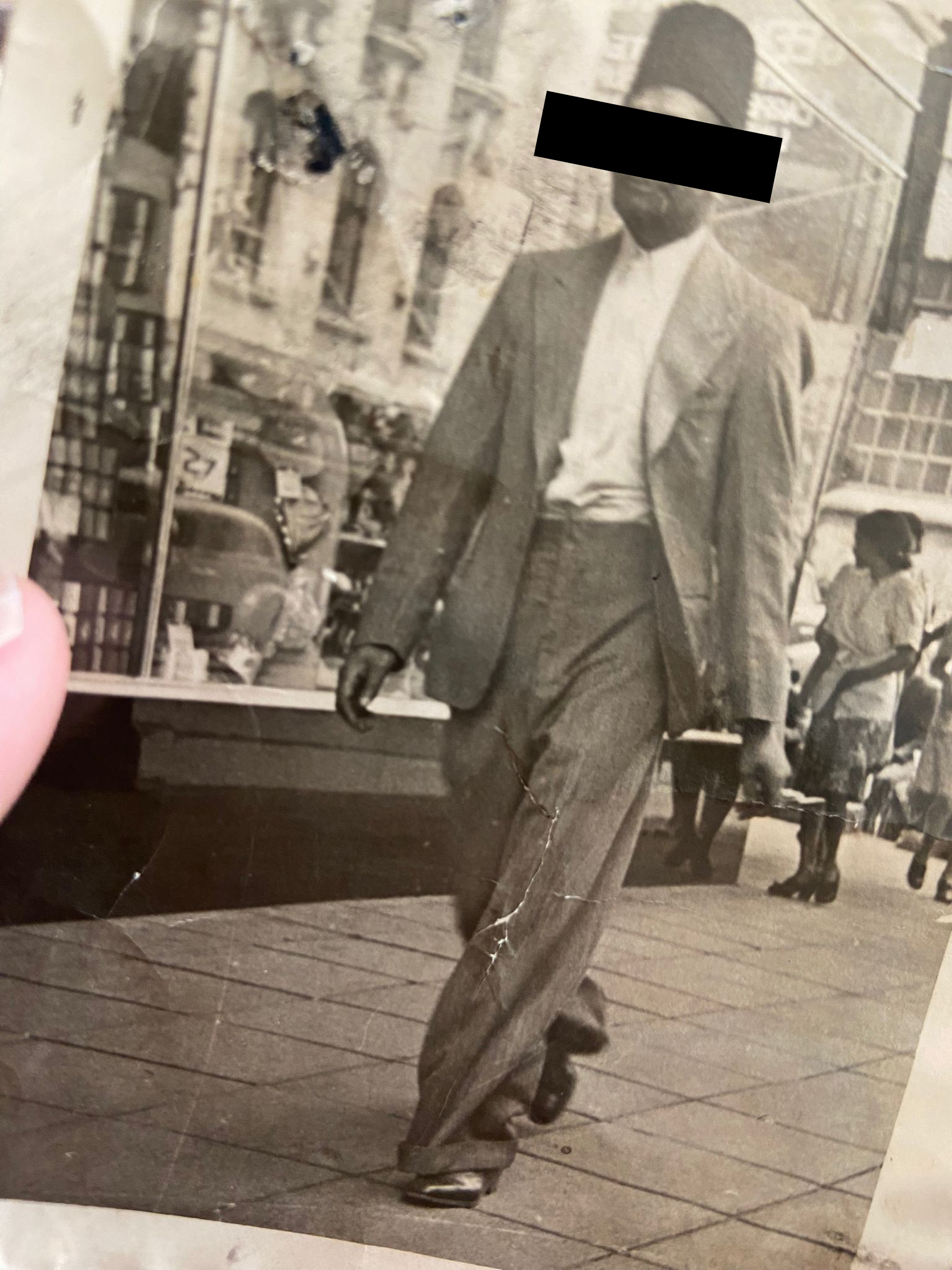
I keep the majalis16 of my family, stretched between small villages in India, where Prime Minister Narendra Modi and right-wing extremists burn and raze,17 in a great replacement, the life-worlds and memories that a mosque can come to hold.18 And so I keep the sixteenth-century Babri Mosque alive in my head, and I watch the Ram Mandir Temple rise in its place in Ayodha, not far from where my family lived—and where some still do—for a while. And so I keep the Gujarat villages where my grandfathers and grandmothers came from, in Surat and Dhabel and Kalakachha and Vesma, squeezed between the Tapi River, the Ahmedabad–Mumbai Highway, and the Arabian Sea. I keep the wish of a book with photographs, and I keep the conversations that tell me of my lineages. For a long time, I thought I was from somewhere, and now, I think I may be from many-wheres. This book—I don’t know if it’s real—is somewhere in South Africa, with a family member, with a distant cousin perhaps. It has names and images that might look like me: a slightly curved nose, a cleft chin, dark hair, brown eyes. I look for my people everywhere.
In turn I also keep, perhaps, steppe and Turkish and Red Sea and Gulf of Aden blood-worlds, gifts of the terrestrial and oceanic silk roads that connect them, from Port Elizabeth on the African littoral to the old ports of Mumbai, through Turkish and Mughal heartlands, through the Bab al Mandeb—the Gate of Grief—the strait between Yemen and Africa. I keep the path from Indian villages trodden by the overland carts that my great grandfathers and great grandmothers take, in their long, long roads from small, leafy farms around the Moti Mosque, with its golden dome and its boxy minaret, and its palm trees in the Gujarat plains, to the thick bustling port of Mumbai and its coal-belching diesel ships.
I keep these geographies and these cartographies. I keep these lineages and descents because they are pasts, but also future-tenses. I gather these places and their little and not-so-little violences and beauties because they tell me I am not insane, and I have a place, and perhaps I can fit, somewhere, curled up into the contrapposto of another’s body, or heart, or world. I sit with these worlds—I keep them—because without them I cannot move.
I keep the crocheted topis my grandmother made, with her small arthritis-hands, her baking hands, her-touch-my-face hands, in a box in my closet. I keep a small piece of paper bearing her shaky ninety-year-old writing of my name in a Ziplock bag with the last topi she made. I keep it and have never opened it. But I sometimes imagine taking it out, like a key19 to a distant house, looking at it in hands twice the size of hers. But I don’t. To open it might be to lose the her that it embodies—perhaps even her breath—sealed away in that bag and in that blue ink, and in the slip, chain, single, and double stitches that she wove for me. I keep my grandmother here, even though she is buried on a Quebec riverbank two hours away, separated from my grandfather, himself buried close by and who I drive past every day on the way to work.
To him, I say, as I drive past, and to the others there, kept in liminal spaces between then and tomorrow:
I keep a ring inscribed with Arabic, that says:
I keep forgetting.
Cartographies 2
I keep the Arabian Sea, with its winter and summer monsoons. I keep those convergences as they reverse the currents of an ocean, clockwise during the southwest monsoon, and counterclockwise during the northeast.
I keep an oceanic hajj, in the northeast monsoon, when wind from the Himalayas and the Gangetic plain rushes down, south of the Deccan. I keep this retreating monsoon, circumambulating around the Arabian sea, with its lower, unknown currents.20
I keep the sailing and coal-powered ships that brought my family from Mumbai to Port Elizabeth. I keep the VOC21 ships from that low, low country, that dragged enslaved people from the East Indies to Capes of Good Hopes, in the long shadow of eKapa’s (Cape Town) Table Mountain and Devil’s Peak and Lion’s Head.
I keep the former prisoners of Robben Island, once incarcerated a few short miles off the mainland, and the Victoria and Albert waterfront, long before apartheid jailed Madiba and Kathrada and Sisulu. I keep the memory of my tour guide during that first trip to the island, who said, “I blew up a gas station in the fight against apartheid.” I keep the wide-eyed gazes of my daughters as they take in those words.
I keep these early Robben Island prisoners, dragged from their lives and resistance to Dutch imperialism—one a prince, another an imam. I keep all the imprisoned nobles, with their spoons and their sticks, and their flowers and their gumboot dances. I keep them in their cold cells, and I keep them when they are free, from across the cold, cold, roiling waters of the Atlantic.
I keep them as they make secret meeting rooms in view of the spires of the Dutch Reformed Church, the Grootekerk, the only sanctioned religion, on pain of death. I keep all of those others, as they make mosques and shrines in the mountains, meadows, and valleys of the Cape.
I keep these secret mosques, with their secret madrassas. I keep their cemeteries, and I keep this community, pushed to exile, to the woeste,22 to the White City of Cape Town. I keep the bones of those old brown bodies now, whose decomposing flesh might have otherwise dared pollute the breathing air of Dutch and British settlers.
I keep the Bokaap, above the Cape, with its merchant warehouse and storage rooms, painted white back then, but with all the colors you could possibly imagine, now. I keep Tuan Guru—the imam who wrote the Quran from memory, and I keep Saartjie Van De Kaap—a freed slave who gave her house to be a mosque—the first in Cape Town. I keep this first mosque—the Auwal—first in my memory of the Bokaap; this building with its green and marble walls, and with an evening majlis and a dhikr23 so sweet, it makes the monsoon change direction.
I keep the measured drawings I made when I first visited this building. I keep graph paper and pens, and I make drawings of things that are not real or possible in this world. I make drawings of faraway mosques and ports and ocean tides. I make drawings of farms in India and of tombs on coastal roads in the Cape. I keep these drawings like a promise. I keep them curled around my arms and neck, just under my skin. I keep drawings of Robben Island vistas, looking south toward Green Point and the Victoria and Albert waterfront, to the Bokaap.
I keep those views like a Dutch painting, seeing Table Mountain for the first time. I keep it like Da Gama might have kept his first view of False Bay, or the way that Cecil Rhodes—may the Devil take him—might have kept his view of Zambia.
I keep the view from Robben Island up to the Rhodes Monument. I keep maps of Africa, but not painted pink in British colonial-color theory. I keep Herzl writing to Rhodes, about a colonial experiment in Palestine. I keep Rhodes—the not-so-colossus—standing over Africa in an old Punch magazine engraving. Rhodes is astride the continent, pulling it out of itself, in great greedy fistfuls of diamonds, on the backs and bones of Africans—the proto-MAGA world of empire’s absolutely insatiable appetites. I keep the imaginary Randlord—a gold and diamond baron named Soho Eckstein, and I keep William Kentridge’s disremembered drawings of Eckstein eating the earth, and I keep his sweetly playing dance, for what might—just might—offer as a manner and method of its keeping.24 I keep it because it’s a procession, and like Kentridge’s rationale for it, the Things I Keep are a constant pulling of the many histories that make me and that I traverse, out of the frame of the past and into the future. This processional—like Abourahme’s time—is a pulling out and a “putting into,” both a historic and a spatio-political cartography. The processional of the Things I Keep is a chorus of locating, gathering, crossing, moving, holding.
And then, sometimes, there is no Masekela and Makeba, no Brenda Fassie and Ladysmith Black Mambazo. There is only the vicious, greedy gold baron Soho, eating the land, swallowing it wholesale, but available to rich others for a price.
I keep disremembering, like Kentridge’s drawings of a landscape made of charcoal, erased and redrawn, erased and redrawn, erased and redrawn. I keep remembering. I keep forgetting.
I keep and I keep and I keep.
I keep a video of a Bokaap house painted like a Palestinian flag. I keep Madiba saying our freedom is incomplete without that of the Palestinians. I keep remembering that I cannot only be in solidarity with corpses and dead architectures. I keep these hills, looking over the cold Atlantic to a prison island where Madiba sat, where an imam sat, where there is a mosque wrapped in barbed wire. I look out over the Atlantic from the top of a mountain, before it is wreathed in fog, in the color of white phosphorus, sweet in my lungs. I walk this hill with family, with my older, wiser brother.
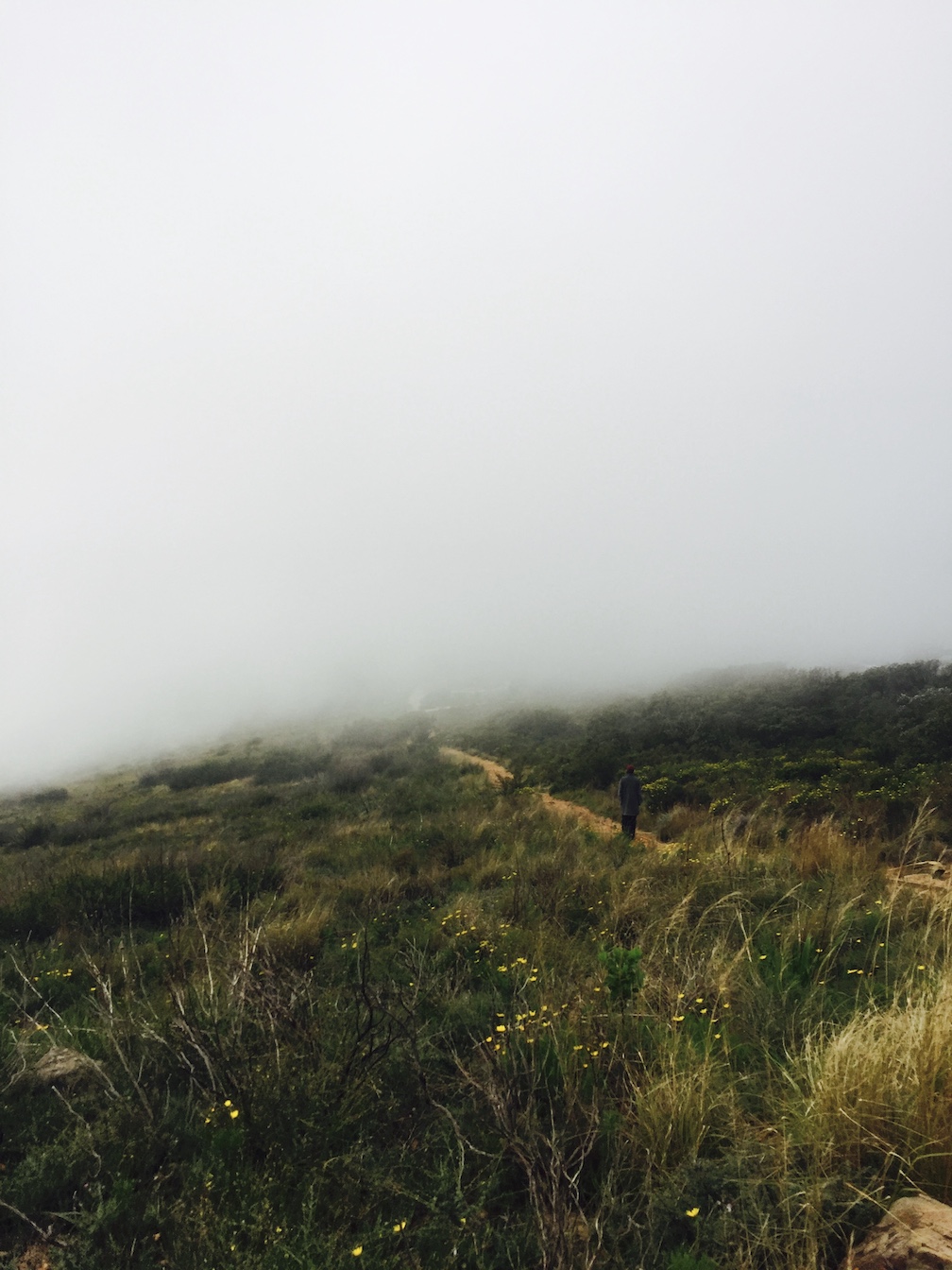
I keep the mountain, as I walk its paths near Lion’s Head and Signal Hill, looking down at the Mother City. I keep the clouds that obscure a clear view in an instant, rolling across the top of this hill where you go to look for a moon and the promise of Ramadan. There was nothing then—no views, only the sounds of a city below. And so I keep the vanished sun, as the gray cloud settles, moisture drops forming on my jacket, my hair, in my beard, and on my cheeks. I keep seeing my brother, appearing and disappearing, in a swirling monsoon mist.
I keep wondering if this is real. I keep asking if there really was a city here. I keep doubt and ambiguity, and I keep checking to see if my brother is here. And no, he is not. He is a cloud ghost in and among the fynbos of this landscape—the smallest and most biodiverse floral kingdom in the world.25
As I walk along Cape Town’s hills and Bokaap’s streets, I keep these ghosts, with the small rolled, narrow leaves of heath, daisy, blacktop, euphorbia dewstick, sillyberry, and Lamiaceae—thyme. There is thyme under my feet, in and among the remembered and disremembered ghosts of my family. There is thyme on Bokaap walls, and in Bokaap food. I keep the Cape sugarbird and the black harrier; the robin-chat and the white backed mousebird.
I rub my fingers over this thyme and keep the smell of the Cape on my fingers. I keep its aquifers and cacti, and its fynbos specters and spirits.
Cartographies 3
I keep the sight of Beirut, between the Mediterranean Sea and the mountains, descending under a dry sun and bright light. I keep the happiness of my traveling companions, their families and babies, with dark hair and dark eyes. I keep the line of Damour and Beït ed Dîne before the approach, looking to Mount Lebanon in the distance.
I keep the promise of the Litani River beyond. I keep al-Suri’s poetry,26 imagining that I can see its coral coming into view, its blue line curling west toward the Mediterranean at Deir Mimas27 with its olive groves, and olive oil, where the monastery of St. Mamas—the shepherd with his lion—was targeted by Israeli Occupation Forces a day before Christmas Eve.
I keep lions and shepherds, and curling rivers named for seven-headed sea serpents or sea gods. I keep the Beqaa Valley, where the Litani is born at the Al-Oleik springs.28 I keep Roman columns, where the poet Jawdat Haydar says that man has nothing more of magic to show.29 And I keep three-thousand-ton chunks of limestone carved into a podium to Baal. I keep them, as the writer Rasha Abdulhadi writes, as a pocketful of warding stones.30 I keep it because this is where Cain hid from God. I keep it because it was a palace built by Solomon’s djinn—the building prophet—who perhaps made it as a palace for Balquis—the Queen of Sheba.
I keep Solomon and djinn. I keep ‘ifrits and Queens of Sheba. I keep palaces where royalty believe they walk on water, though they only tread floors paved with crystal.31 I keep language and Babel. I keep palaces and towers, their heights and their illusions.
I keep Baalbek, just east of where the Litani begins, because Baalbek was built by giants on the orders of a tyrant king. Or perhaps I keep it because a king debated a Prophet—a friend—whose name is also that of a city in Palestine—Al-Khalil, and whose name is also that of a mosque in Al-Khalil. With Baalbek, I keep the Ibrahimi Mosque in faraway Hebron. But I keep it in a special pocket of time, in Ramadan in 1994, when twenty-nine Muslims were shot to death as their imam recited a sajdah verse from the Quran.
I keep a sajdah32—a prostration—because a heart should be lighter than a head.
I keep those twenty-nine men, and I keep the settlers who dress their children33 as IOF soldiers and Pokémon characters and who march in front of the mosque.
I keep soldiers and guns. I keep the dry stone of the mosque, and I keep the blood in the carpet under my feet, mixed with the smell of olives and thyme.
I keep the Litani’s long southern course, with its wheat and jasmine growing in fits and starts along its edges. I keep it at its turn, as it moves west. I keep it because it refuses to be a northern border, because a valiant south will not allow it.
I keep East and West and I keep South. I keep North, too, because it might—if I’m careful—bring me to Beirut.
In Beirut, I keep part of a zajal—one part of a dueling poetry tradition. I keep the raddādah—the chorus, where two voices or more echo word and meter. I keep them as a procession of words and worlds. I keep the chorus that accompanies the poet, and I keep reciting only certain lines, to keep reminding the poet of “the musical meter” from which he might have strayed.34
I keep the chorus and I keep straying from the meter. When I am lonely, I keep the chorus, when I am not, I keep the zajal.
It is easy to go off-course in Beirut.
I keep getting lost in the streets of Hamra with its tall buildings and its murals. I keep walking and walking. I keep walking until I get to the Corniche, and I keep walking. I keep getting found.
I keep bitter towers and I keep the squares of martyrs. I keep sniper-pocked concrete and a manousheh so good, I stop and stare at it in my hand. I keep the fishermen in the boats as they ply the Mediterranean waters. I keep the swimmers in the sea, and the old men who are so tanned, they are a permanent dark red, with shocks of hair so white, they are like ocean buoys stretched out long on green, algae-covered rocks. What do they teach you when you learn to pilot a boat? Red, right, returning.
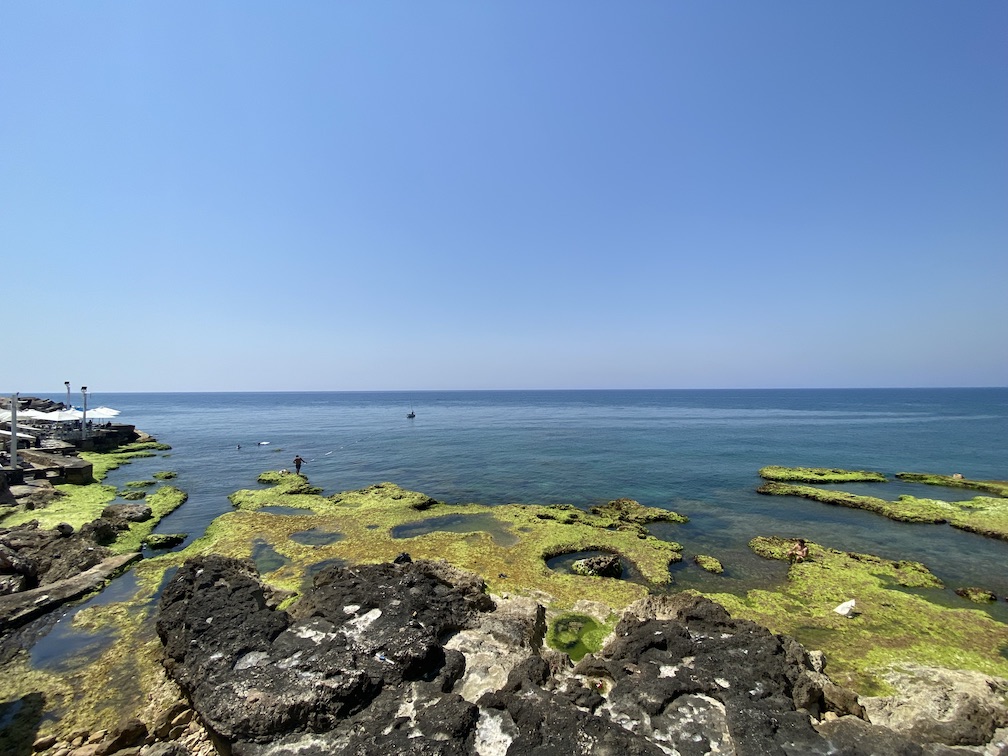
As I walk along the Corniche—which of course I keep—I keep algae and rocks. I keep the Israeli jets that buzz across the heights of the city. I keep the brutal cheval-de-frise and the anti-tank hedgehogs and spiked metal palisades in front of embassies and banks. I keep the blank edge of a green line, and I keep the clout—chase of modern architects desperate for Solidere bankrolling. And I keep a still-ruined port, and I keep the ruthless insistence on rebuilding.
I keep along an old university, behind its high walls. I keep Bliss as I turn onto John Kennedy. I keep the cats that cluster on a small traffic island in front of the American University of Beirut Medical Gate. I want to keep all of Beirut, but the space for this keeping is only so big, and my heart can only hold so much.
I keep a drive to Jeita with a friend, and I keep the grotto with its raddādah stalactites, one of which a grotto attendant plays with his hand, the whole cave becoming its own zajal. I keep the view of the Mediterranean, and I keep Jbeil and its old city. I keep a fish lunch at a Phoenician port and watch a party boat sail into a protected harbor as Israeli jets fly across southern valleys and olive groves, dropping missiles and phosphorus.
I keep dreaming of houses I have never visited and of olive groves that burn.
I keep dreaming of houses that have been destroyed because so many of us keep cowardice and silence as a North Star.
So I keep cowards and I keep their vassals. I keep their states and I keep their resolutions. I keep their twitters and their truth-socials. I keep their presidents and princes and I keep their diplomatic pouches. I keep their offices, and their politics. I keep their lines and their piers. I keep their battery factories and their drone strikes.
I keep syllabi I have not written, with decolonized bibliographies of such pretty promises. I keep intelligences and artifices, and I keep submitting questions for my Senate. I keep going to my faculty meetings and I keep reading the minutes. I keep wondering when universities will hold to their tasks eternal.
I keep all this in mind as I keep walking the Corniche, as I drive along the Jounieh-Beirut Highway. I keep the red egg of the Harissa-bound teleferique cable-car pod, bobbing slowly and serenely over Beirut. I keep Our Lady of Lebanon, where we embark and disembark, on our round-trip slow-motion flight, and I talk with a friend about his family home in the south.
I keep a home that I have never seen.
I keep a house that is not mine.
I keep quiet in the car to the airport. I keep staring at a line of blood on the floor in the customs line. I keep my precious Canadian passport in my hand. I keep the shame that goes with it, that allows me to keep crossing borders so easily. I keep the last of my Lebanese pounds.
I keep my eyes dry as I watch a dark-haired baby reach for a bright green soother in the visa line.
I keep wondering if she will be split apart on a concrete rooftop by a bomb dropped from an Israeli jet, paid for with American money and American taxes by my American friends. Will her little body be cut in two across the terrace, amid its terrace-life minutiae? With its plastic chairs and small grill, with its clothesline and clothespins, with little cartoon pajamas and her grandmother’s abayas, drying in the Mediterranean sun. Will her body be broken on an apartment building in Dahiye that an architect somewhere designed for a somewhere client, with a view of the Mediterranean to the west and the promise of the Litani to the east?
I keep a view of the ocean, and I keep construction and contract documents, and I keep building. In one hand I keep a tape measure, in the other I keep a gold and silver pager, like an American president and a US congressman, so I can be reached, and destroyed, at any time of another’s choosing.
I keep these drawings of houses I have never visited, the syllabi I have never drafted, the raddādah that chokes in my mouth. I keep them all and pin them up on a clothesline on a terrace that overlooks a river and a sea.
Homecoming
I keep Omar, and I keep wondering when it’s safe, if everyone will have always been against this?35
I keep his off-camera stare when a journalist asks him about Hind Rajab. I keep the look on his face when he hugs his daughter, and when he tells us all, watching on the Zoom call, that Hind was his daughter too.
Omar tells us that empire is cocooned around its own fortress of language.36 I keep telling myself what Omar tells us: that language is one of the load-bearing beams that hold up the physical slaughter of Palestine.37
I keep beams and lintels. I keep rebar and gusset plates. I keep them in my pocket, with a laser level and a tape measure so that I can take measurements of tunnels and hospitals, of universities and libraries, of fertility clinics and bakeries. I keep measurements: time to impact, steel penetration of an MK84: 15 inches; concrete penetration: 11 feet; HE-Frag (High-Explosive Fragmentation) radius: 400 yards.
I keep a quarter mile away.
I keep pictures on my phone, in-between my universes here and there. I keep pictures of my daughters as babies, as toddlers, as teenagers, as the young women they are becoming. I keep pictures of my wife, of our wedding in my grandmother’s garden. I keep pictures of my nieces and nephews, and pictures of books I want to buy. I keep pictures of buildings I like and of places I visited. I keep pictures of flowers. I keep a picture of me and my brothers, falling over my grandfather as we sit under a South African sun by a swimming pool. His hair is white and long. He is smiling. I can imagine the pack of Dunhill cigarettes he used to smoke, tucked into his pocket.
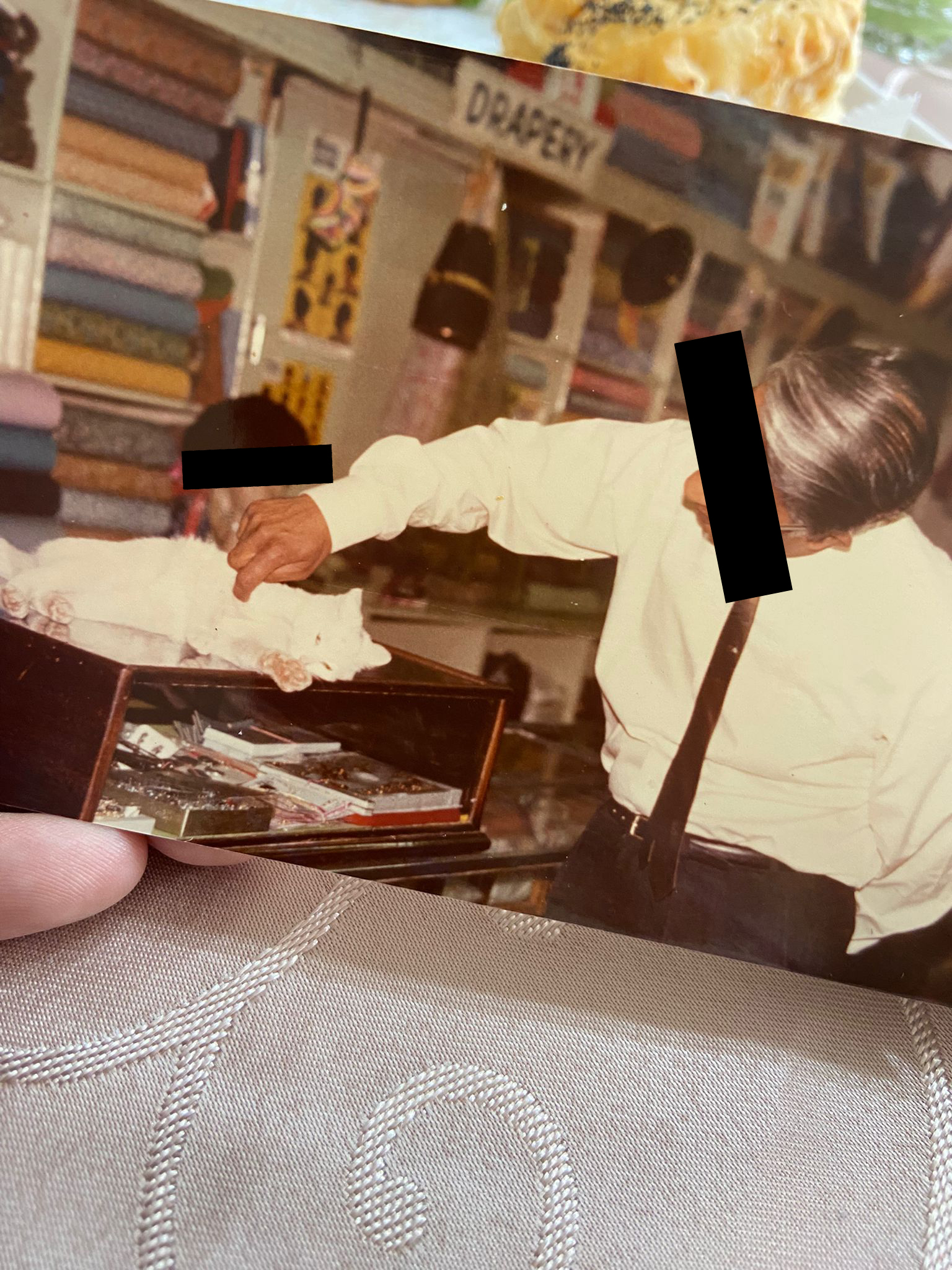
I keep a picture of Khaled Nabhan smiling at a kitten, like a keep a picture of my grandfather, in a shop, doing the same. I keep a picture of Khaled Nabhan, smiling even in death, as he lies wrapped in white, in a somewhere in Gaza. I keep getting Instagram updates from his accounts, and it keeps showing me pictures of a man I keep thinking is still alive.
I keep a video of Ahed Bseiso’s dining room table amputation in a room in a house somewhere in Gaza. I think of her, and her uncle, too, who had to sever the leg of his niece and didn’t have access to anesthesia, or scrubs, or a sterile room.
I keep wondering if I can ever design a street or a dining room, or a house anywhere, ever again.
I keep designing things that I will never build.
I keep a series of pictures of the journalist Hossam Shabat in his car, telling us that he is steadfast with the truth and with image. He turns away and looks ahead and we keep him in profile. He says:
I keep Anas al-Sharif, with his blue “Press” vest, and I keep him with his daughter Sham, and his son Salah and his wife Bayan. I keep a picture of him, looking broken with his press vest, and a bystander saying, “Keep going, Anas. You are our voice.” I keep Anas because he kept going. I keep Anas because he is my voice and my procession, zajal, raddādah, and all, dueling with worlds that don’t echo him, but that fought him instead. I keep the times and spaces and pictures of Hossam and Anas and Ismail and Wael and all the murdered word-keepers of a Gaza that refuses the world- and word-ending obsession of society today. I keep a picture of a bride-to-be kissing the bloody feet of her fiancé. I keep my wedding picture on my phone.
I keep a picture of Muhammed Bhar, sitting cross-legged on a soft carpet in Shuja’iyyah. The IOF dog that killed him, in his home, has a bite force of over 238 PSI.
I keep pounds and pressure.
I keep the sound recording of Refaat Redwan, executed by Israeli soldiers—Refaat and fourteen other medics. I keep listening to him asking his mother for forgiveness. I keep listening to him say, I only chose this path to help others. I keep listening to him say, Oh God, If I’m written from among the martyrs, then accept me.
I keep Refaat’s voice like a voicemail. I keep a picture of him, slight, serious, bespectacled. I keep a picture of Khalid Abu Saif, lying on a terrazzo floor, with his dead baby girl on his chest. I keep imagining that I might have been the doctor or nurse who moved his hands so that, even in death, they hold his daughter.
I stop typing.
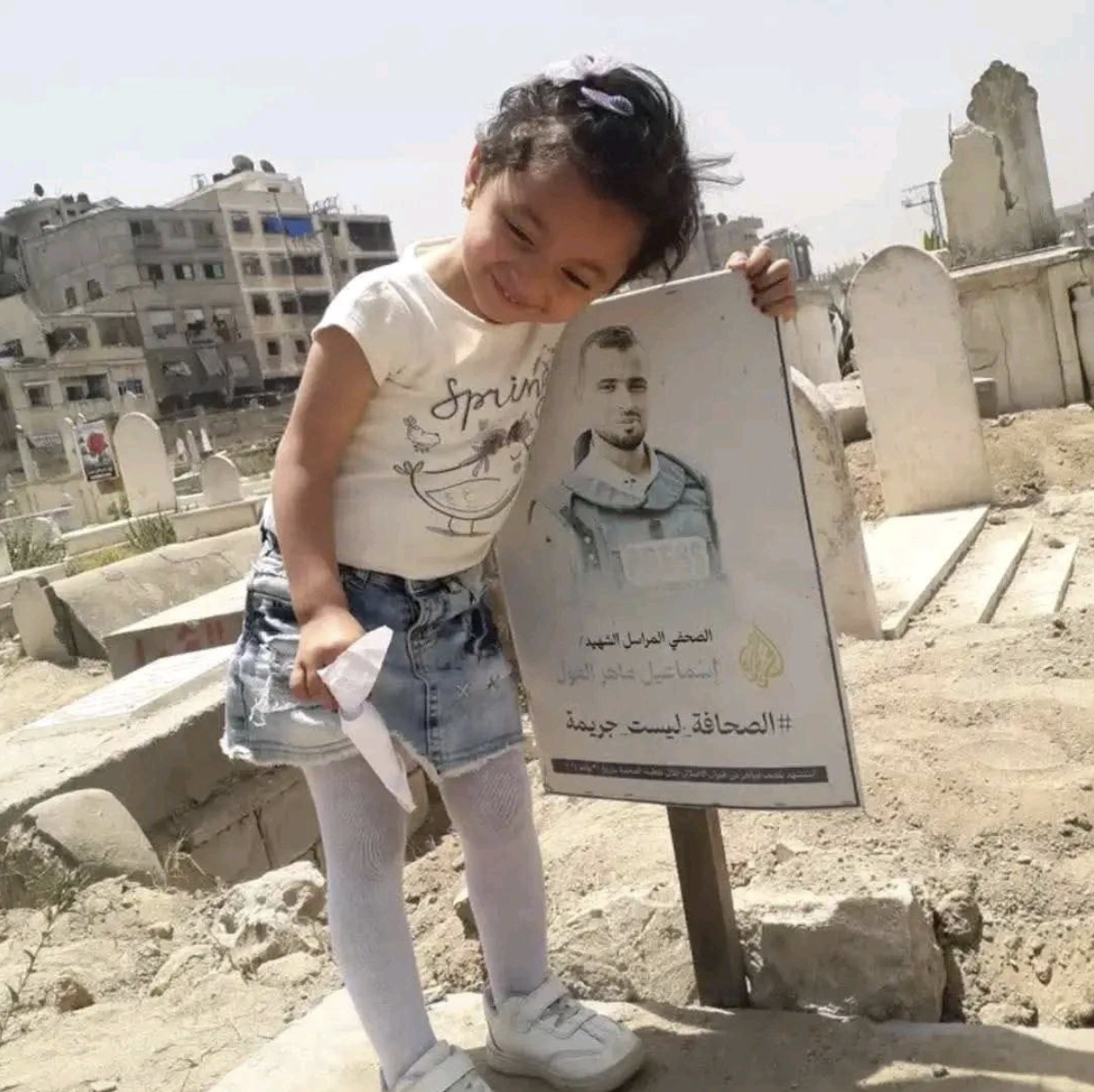
I keep a series of grainy stills. In them, Zeina visits the grave of her father, the journalist Ismail al Ghoul. She hugs his headstone, tells him I love you. She smiles and looks down. She is dressed in white shoes with Velcro straps, framed by white stockings. She wears a shirt that says “spring,” with a chicken on it. She has dark hair, and her hand is wrapped around a picture of her father, serious and unsmiling in his press jacket.
I keep befores and afters. I keep it once was. I keep this is how it is now. I keep this used to be. I keep maybe one day. I keep thinking:
Once upon a time.38
I keep what was once, and what once was not.
I keep hospitals and dining rooms and landscapes and cemeteries. I keep tables and floors and intersections and universities and libraries. I keep all the architectural programs because if I keep them long enough, maybe I can plant them in a wet, loamy earth and watch them push through a warming ground.
I keep a shovel for a freshly dug grave, and for newly planted roses and jasmine and carnations. I keep a shovel to dig foundations and escape hatches. I keep a beam to hold up a tunnel and a beam to hold up a city. I keep a lintel to stretch across a doorway, to hold a door that keeps a lock, and to hold a lock that keeps a promise of a key. I keep a stick to prop open a door.
I keep a thousand, thousand, thousand keys. I keep the keys for Tulkarem. I keep the keys for Jenin. I keep the keys for Khan Younis. I keep the keys for Deir el Balah, for Akkah, for Abu Sinan, for al-Manshiyya, for Baysan, for Kafra, for al’-Imara, for Laquiya, or Beit Lahiya, for Burayr, for Dimra, for al-Khisas, for Najd, for Nuseirat, for Qastina, for Rafah, for Shaykh Radwan, for Simsim, for Yasur, for Abu Dis, for Battir, for Kasla, for al-Nabi Samwil. I keep them all, don’t you see? Don’t you see?
I keep maps and names, and I keep them just beneath my eyelids so I can see them and name them even when I dream.
I keep them like kohl, pressed into the skin of my face and my cheeks, so they are closer to me than my jugular vein.
I keep them like musk and I keep them like oud. I keep their scent on my wrists and at the side of my neck so that when my daughter kisses me—and not a picture of me—she perhaps can keep them too.
I keep them like graphite, which I press onto the soft, toothy paper on my drafting table. I rub the graphite like water over my fingertips, like I am making wudhu, the ritual ablution before prayer, and it covers my hands and I hold them up and stare at them in surprise.
Did you know that you can make wudhu with a stone? When there is no water? I keep a stone.
I keep the madness of burned children and children without arms and legs and distended stomachs and visible spines. I keep the madness of a father talking to his headless son’s body and keep it with the madness of our sideline pavilion spritzers in our Venice linen suits and our Met Gala looks and our standing ovations. I keep the madness of Sidra hanging on a fence, cut in half by the Group Areas Act of American bombs. And I keep the emails that find us well, and the summer plans for Burning Man. I keep this thermobaric madness in a straight, straight line, or better yet, I keep it in a locket around my throat, closer than my jugular vein.
I keep madness.
I keep it close, and carry it with me, from room to room, looking for my children and wife and nephews and nieces, and brothers and sisters, and fathers and mothers and grandfathers and grandmothers. I keep wondering, if they are alive, am I dead?
I keep drawing and drawing and drawing. I keep writing and writing and writing. I keep wondering and wondering and wondering.
I keep a braid, I keep a river, I keep flowers, and I keep sand. I keep seas and pilgrimages. I keep monsoons and phosphorus. I keep poets and stones, and I keep all the cartographies I am. I keep architecture and beams and lintels. I keep those beams and lintels that are mangled in the rubble of hospitals and schools, of libraries and universities. I keep the كان ياما كان of justice. I keep a shovel and I keep maps and dreams like kohl on my eyes. I keep cities. I keep everything. I keep all the choruses of all the dueling poetry that the world can possibly hold. I keep the poet’s voice, and her rhyme and meter. I keep myth and time. I keep all the time that I can pull into and out of myself, because to keep time is to move beyond the frozen past of hollow empires. These are the things I keep, and if I can, carefully, tenderly, I will keep you, and maybe, just maybe, you will keep me.
-
The Group Areas Act became law in South Africa on July 7, 1950. It was considered one of the cornerstones of apartheid and established the legal framework for the ruling National Party to designate “group” areas of South Africa, to limit property rights and trading licenses, and to essentially enable the mass displacements and forced relocations of non-white communities. The GAA was one of many laws built on previous legislation such as the 1903 Locations Act, the 1913 Native Land Act, and the 1923 Native Urban Areas Act. In 1950, the National Party also passed the Population Registration Act, which required a national registry of racial classification. ↩
-
Lindsay Bremner, “Border/Skin,” in Against the Wall: Israel’s Barrier to Peace, ed. Michael Sorkin (New York: W. W. Norton, 2005), 123. ↩
-
On March 21, 1960, South African police officers fired into a peaceful crowd gathered to protest apartheid and its pass-book laws, killing sixty-nine people and wounding scores more. Many people were shot in the back as they fled the gunfire. A few days later, the South African government declared a state of emergency given the subsequent uproar, and jailed over 18,000 people, including Nelson Mandela. ↩
-
Zenzile Miriam Makeba is one of South Africa’s most well-known and iconic singers, songwriters, and activists. Born in Johannesburg in 1932, she married Kwame Ture/Stokely Carmichael—a leader of the Black Panthers. Known as Mama Africa, Makeba worked with Harry Belafonte and recorded with Nina Simone and Dizzy Gillespie. Makeba remained in exile for almost thirty years, returning to South Africa after the fall of apartheid. Pata-Pata means “touch-touch” in Xhosa. Miriam Makeba died in 2008. ↩
-
Hugh Ramapolo Masekela was a renowned South African trumpet player and composer. He has been described as the father of South African Jazz. He was briefly married to Mariam Makeba, and his song “Bring Him Back Home” was first released in 1987 on the album Tomorrow, produced by Masekela, Don Freeman, and Geoffrey Haslam. The song became a kind of unofficial anthem for the anti-apartheid movement. Nelson Mandela, who the song is about, danced to it at the end of his speech in Boston in 1990 on the Charles River Esplanade. ↩
-
Nasser Abourahme, “In Tune with Their Time,” in Radical Philosophy (Summer 2024), 20. He expands on the settler colonial time of Israel in “The Time Beneath the Concrete: Palestine Between Camp and Colony,” articulating how Zionist temporality was frozen at the instant of the start of the occupation project. See Nasser Abourahme, The Time Beneath the Concrete: Palestine Between Camp and Colony (Durham, NC: Duke University Press, 2025). ↩
-
Peter Tosh was a Jamaican musician who, with Bob Marley and Bunny Wailer, was one of founding members of the Wailers, a reggae, ska, and rocksteady band. They played together for eleven years, before going their separate ways in 1974. Tosh was one of the co-writers of the songs “Stir It Up” and “Get Up/Stand Up.” ↩
-
Madiba was Nelson Mandela’s Thembu clan name. Thirty-five years earlier, in 1964, Malcom X visited Gaza too. ↩
-
Mohammed Abu Leba, “Thousandfold Legacy: A Poem from Rafah,” in Dawn, May 30, 2024, link. ↩
-
Jason Bourke, “Tributes Paid to South African Musician and Activist Hugh Masekela,” The Guardian, January 23, 2018, link. ↩
-
See Yahya Ibrahim Sinwar, The Carnation and the Thorn, Volume 1 and 2 (South Africa: TASQ, 2024), and Basil Farraj, “In Memory of Walid Daqqa,” in Jadaliyya, April 12, 2025, link. ↩
-
“Spears of the Nation” is the English translation of Umkhonto Wi Sizwe—the paramilitary wing of the African National Congress (ANC)—which was established by Mandela and other anti-apartheid activists in the wake of the Sharpeville massacre in 1960. ↩
-
“Let Africa Return,” the English translation of “Mayibuye iAfrika,” became one of the most recognized slogans of the anti-apartheid movement. ↩
-
These individuals were some of the greatest anti-apartheid activists of their time. Steve Biko is considered the father of the Black Consciousness movement in South Africa. He was murdered by the South African Defence Forces in 1977 at the age of thirty. ↩
-
See Steve Biko, I Write What I Like: Selected Writings (Chicago: University of Chicago Press, 2002). ↩
-
An Arabic word that could mean a sitting space or a gathering. “Majalis” is the plural of majlis, and is related, etymologically, to the Arabic verb “to sit.” To keep a regular majlis is to keep a regular gathering (a jama’ah, variously of community, of family, of citizens). ↩
-
See Mariam Shivangi Raj, “Constructing Muslim Absence: Constructing ‘Bulldozer Justice’ in India,” The Funambulist, October 21, 2024, link. ↩
-
See Salimah Shivji, “India’s Hindu Nationalists Are Petitioning Courts to Tear Down Mosques and Replace Them with Temples,” CBC, May 6, 2024, link. ↩
-
“I want to visit Jaffa. A few days ago, I wrote something about my grandfather, interviewing my father about whether he was able to visit his parents’, my grandparents’, house in Jaffa. My father said that he did visit it when he was a child to help my grandfather work in the orange harvest, to iron clothes. He told me that he passed by the family house which was now occupied by a Jewish family, and he remembered a two-story house and a big, old mulberry tree. This is the picture of my dream house. But the tragedy is that many Palestinians have kept their house keys, but my question is, [even if] they have the keys with them, do the doors even still exist?” Mosab Abu Toha, in conversation with Jean Franco. Arab Lit and ArabLit Quarterly, November 14, 2022, link. ↩
-
S. R. Shetye, A. D. Gouveia, and S. S. C. Shenoi, “Circulation and Water Masses of the Arabian Sea,” Proceedings of the Indian Academy of Science (Earth Planet Science) 103, no. 2 (June 1994): 114. ↩
-
VOC (“Vereenigde Oosindische Compagnie” in Dutch) is the acronym for the Dutch East India Company. Established by the States General of the Netherlands, the VOC is considered one of the first multinational corporations in the world. With the power to raise an army and strike its own currencies, the VOC, along with mirror corporations such as the British East India Company, was one of the key instruments of colonial and imperial power, responsible for much of the transatlantic slave trade, exploitation, resource extraction, and environmental destruction. ↩
-
A Dutch word used to describe the non-white (read: “non-civilized”) spaces beyond the white city. See Jennifer Benningfield, The Frightened Land: Land, Landscape and Politics in South Africa in the Twentieth Century (London: Routledge, 2006). ↩
-
Dhikr is a term used to describe devotional practices for the remembrance of God, usually through the recitation of verses from the Quran or the prophetic tradition. The word is derived from the Arabic word for “to remember.” ↩
-
More Sweetly Play the Dance is an endless looped animated film of Kentridge’s drawings, in an over-thirty-four-meter-long parade of a processional danse macabre. Kentridge, the South African artist and son of civil rights activists, has long been interested in how drawings (and their making) can remember and disremember landscapes and histories. Of the procession, Kentridge writes: “Specifically, the image of a procession goes back to Goya and his paintings of processions. It goes back more recently to photographs of refugees fleeing Rwanda, coming from north to south-Sudan. All the movement that still exists across the continent of Africa. Further back to the images of the processions of people from the Balkans. The huge population of movements of people at the end of the Second World War. The image of a procession of people pulling or carrying their baggage is both a contemporary and immediate image and one deeply rooted in our psyches.” Willian Kentridge, “More Sweetly Play the Dance,” link. The processions here, in this text (memory, geography, oceanic hajj and immigration, etc.), were considered with parallel processions of people—and the things they carry and keep—in particular, and especially of Palestinians being forcibly moved across Israel’s barbaric and gross use of “safe zones,” or on the lineups for food aid. Or, in the context of Nasser Abourahme’s time—of return. ↩
-
The Cape Floristic Region (CFR) in Cape Town, although less than 5 percent of South Africa’s total area, has one of the richest and most diverse plant and animal species in the world. Fynbos is a type of shrub vegetation, Mediterranean-type—and is found within the smallest of the world’s six floral kingdoms (boreal, palaeotropical, neotropical, Australian, Antarctic, and South African)—the South African. ↩
-
See Abd al-Muhsin ibn Muhammad ibn Ghaldun al-Sūri, Diwan (Beirut: Dar al-Mahajjah, 2024). ↩
-
Deir Mimas is a municipality in Lebanon, about fifty miles south of Beirut. It is named after Mamas, a Christian saint who was freed by an angel from torture by Emperor Aurelian, and who took a lion as his companion. ↩
-
See Amin Shaban and Mouin Hamzé, eds., The Litani River, Lebanon: An Assessment and Current Challenges (College Station: Texas A&M, 2018). ↩
-
Jawdat R. Haydar, 101 Selected Poems (London: Ingram, 2006), 67. ↩
-
Rasha Abdulhadi, “A Pocketful of Warding Stones,” in Poetry.onl, October 21, 2023, link. ↩
-
In the Quran, in Chapter 27, titled “The Ant,” it is written: “The Queen of Sheba set forth from her country and reached Jerusalem. When she came to meet Solomon, the Queen, to her surprise, was asked whether her own throne resembled the throne she saw at the palace. The Queen admitted that she was wonderstruck to see this throne which was exactly similar to her own. The throne which she had kept safe in her palace in Ma‘arib, had mysteriously traversed a distance of fifteen hundred miles and reached Jerusalem. After entering Solomon’s palace, the Queen of Sheba reached a room where the floor was made of thick, transparent slabs of glass with water flowing beneath them. Mistaking the floor for a pool of water, the Queen quickly pulled up her garment to prevent it from getting wet. Seeing this, Solomon explained to her that it was just the floor and not water.” ↩
-
The Muslim act of physical prayer involves ritual movements—standing, bowing at the waist, prostrating. In the Quran, there are fifteen moments where recitation requires prostration—specific verses that, if read, require the reader to bow their head, and if they can, to place their foreheads—the symbolic seat of the intellect—onto the ground, thereby (as happens regularly in prayer) to elevate their heart—the seat of the soul—above their so-called rational faculty. Words are worlds. This is also a procession, and a chorus. ↩
-
In the Islamic tradition, children and babies who die, or are killed, or murdered—in the womb or without, Muslim or not, are placed in the paradisiacal care of Abraham—of Al-Khalil. I heard this story at a Friday prayer, a jumu’ah, here in so-called Ottawa, and the moment of that description—on the heels of that day’s genocide—I wept; because of the scale of the devastation being visited on Palestine, but also because of the status of Abraham as the one who would care for children that IOF soldiers hate so much. This looking back to the past tense of these once-children in the once-world of a now destroyed Palestinian city, and to the futurescape of liberation (in this world) but also in the next—is another processional, another raddādah (see four short paragraphs ahead and its corresponding footnotes) is the simultaneity of space, geography, landscape and, of course, time. ↩
-
Adnan Haydar, “The Development of Lebanese Zajal: Genre, Meter, and Verbal Duel,” Oral Tradition 4, nos. 1–2 (1989): 189–212, at 203. The nature of the zajal, as Saad Abdullah Sowayan writes, “because it is characterized by constant feuding, neutrality is hard to maintain,” and you are “either with or against, an ally or a rival, close or distant.” See Saad Abdullah Sowayan, “Tonight My Gun Is Loaded: Poetic Dueling in Arabia,” Oral Tradition 4, nos. 1–2 (1989): 151–173, at 171. ↩
-
Omar El Akkad, One Day Everyone Will Have Always Been Against This (Toronto: McLelland and Stewart, 2025). ↩
-
Omar El Akkad, in conversation with Pacinthe Mattar, “Amnesty Book Club Presents Omar El Akkad: One Day, Everyone Will Have Always Been Against This,” May 5, 2025,link. ↩
-
Omar El Akkad, in conversation with Pacinthe Mattar, “Amnesty Book Club Presents Omar El Akkad: One Day, Everyone Will Have Always Been Against This.” ↩
-
The writer Nour Eldin Hussein writes about the arabic phrase كان ياما كان, which loosely translates, in his words, in its least presumptive sense as a “functionally equivalent analogue,” as “There was, and there was not.” Here, in The Things I Keep, كان ياما كان is, as he writes, “This may be seen in the common translation Western folklorists, ethnographers, and translators give to kān yā mā kān in English—'there was, or there was not’—which recognizes a certain temporal and spatial tension preventing simple interchangeability. The two phrases specifically disagree on the question of where the audience is in relation to the folktales they hail: on one hand, ‘once upon a time’ constructs a world beyond the reach of the audience by way of complete temporal and spatial unknowability, a world so irretrievable that the belief of the audience becomes irrelevant; the world of reality and that of the story exist independently. In fact this exclusion of the audience is the generic characteristic of folklore, differentiating it from generic myth which does seek to insinuate the audience in the conspiracy of its world. Kān yā mā kān, on the other hand, seems to do both: though it ushers in the ancestral world of a folk- or fairytale, it implies in the same breath a measure of continuity with lived reality. Far from the abstractions of ‘once upon a time,’ kān yā mā kān sits plausibly, tangibly close by.” All these cartographies, keepings, and times are ancestral (a chorus of the past), lived (the present voice), and projective (a future time). See Nour Eldin Hussein, “Postscript on Myth and Memory: Kan (Ya)( )Ma( )Kan,” Mizna, October 5, 2023, link. ↩
Ozayr Saloojee is a South African/Canadian (b. Johannesburg) teacher, writer, and designer whose scholarship and creative practice is themed around architecture enacted otherwise, where design is a practice of tender epistemic dreaming. He is faculty in Architecture at Carleton University in Ottawa/Canada, where he is also cross appointed in African Studies and at the Center for the Study of Islam. He has long been preoccupied with the question of “fit” and its associated ecosystems of power, privilege, diaspora, borders, and belonging.