
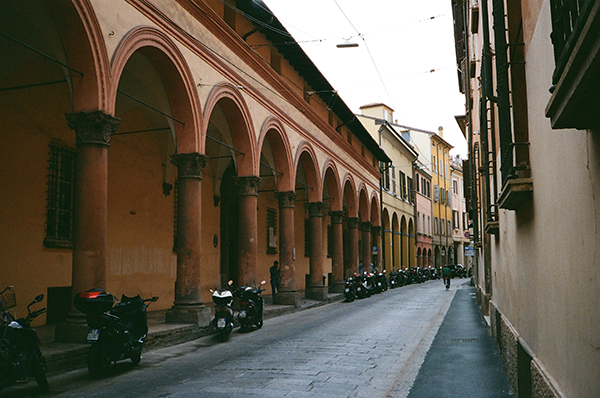
I’m walking along Via Sant’Isaia in Bologna—it’s September, the waning edge of a summer so hot the city has been placed under the highest red alert for a heat advisory. Although my phone insists it’s 85 degrees Fahrenheit, the air feels no warmer than 70. That’s the alchemy of shade in this city of 400,000—where heat is subdued, not by trees or fountains but by the ancient technology of porticoes. Arch after arch, in brick, sandstone, marble, even reinforced concrete, the city’s veins pulse under 23 miles of continuous arcade, each of a different style. They range across almost nine centuries of history: medieval timber frames of the twelfth and thirteenth centuries; Renaissance octagonal brick pillars with vegetal ornament in the fifteenth; baroque flourishes of the seventeenth and eighteenth; and finally, the stripped-down concrete modernism of the twentieth.1 The oldest arcade dates to 1041, the tallest stands 35 feet in wood, and my favorite runs along the edge of Piazza Maggiore, Bologna’s central square, where the portico rests on weathered stone columns carved with rows of rosettes.
The porticoes are architecture as social contract. Under these arches, life refuses to retreat inside and instead unfolds in countless variations outside—dogs are walked, gelato is savored, groceries are carted home, books are read, university coursework is completed, meals are enjoyed, laps are run—and whether the rain falls steadily or the sun scorches the streets, the porticoes allow life to continue uninterrupted. Shade and shelter here are essential utilities, establishing the very conditions that make the public realm possible in Bologna.
I first encountered Bologna’s porticoes by way of Sam Bloch’s recent book Shade: The Promise of a Forgotten Natural Resource.2 In this work, Bologna is situated as a lens through which to see shade as infrastructure. The argument of Bloch’s book, pitched toward an American readership, insists that if our cities are to survive in an age of extreme heat, then shade can no longer be left to emerge as an ad hoc outcome of beautification projects or privately installed awnings but must be planned, built, mandated, and defended as necessary urban infrastructure at the scale of everyday pedestrian life.
The book arrives at an important time. Extreme heat is becoming an increasingly urgent condition of life in the United States. Summers no longer arrive in June; they begin in May and stretch, mercilessly, into October. For ten consecutive years, record-breaking temperatures have been surpassed,3 each new summer establishing unprecedented and unsustainable norms. What were once dismissed as freak anomalies are now routine. And they can be fatal. In 2021, a heat wave swept the Pacific Northwest—a region long understood as climatically temperate and largely unprepared for extreme heat—killing more than 650 people.4 Heat now claims more lives in the United States than any other natural disaster.5 The elderly, young children, people with heart disease, diabetes, or respiratory conditions bear its greatest health burdens. Black and Brown low-income communities are disproportionately exposed to heat.6 They are more likely to live in environments devoid of trees and to lack the financial means to run A/C, even as the American Red Cross recognizes it as the most critical public health intervention during extreme heat, urging people to stay inside.7 Meanwhile, hard-won climate commitments that aim to reduce the drivers of planetary warming are being rolled back by an administration that refers to climate change as “the greatest con job ever perpetrated on the world.”8
With Shade, Bloch reminds us that the American city is an urban landscape given over to cars—paved to the horizon and built to magnify the sun. The book is deeply researched and written with the clarity of a reporter—Bloch is an environmental journalist—and the urgency of a climate advocate. But its intervention is not prescriptive; it’s not a technical manual for urban planners or heat scientists, nor does it aspire to be. Shade is for a broad public, working less through exhaustive methodological analysis than through storytelling. Divided into three parts, the book examines “the past,” “the here and now,” and a “look to the future” through a series of concise vignettes drawn from different regions of the world—America, Africa, Asia, Europe—and from multiple moments in history.9 It combines on-the-ground observations, expert interviews, and policy and planning precedents to show how architecture, cultural attitudes, and political decisions have either protected people from heat or left them exposed to it.
Bloch writes, “For thousands of years, in ancient Iraq and imperial Rome and the American frontier, city dwellers relied on shade to furnish the comfort needed to travel, walk, talk, work and barter, and come together outdoors. Soon these activities would move inside.”10 Looking further back, he situates the loss of shade in the US within a longer colonial inheritance. English colonizers, he writes, feared disease; they were more concerned with staying warm than cool;11 and they came not to cultivate public squares but to extract and farm.12 They retreated indoors when it got hot,13 shaping cities around the interior and privacy rather than shared exterior protection. In more recent US history, shade has been systematically undermined, sacrificed in favor of policing, car infrastructure, surveillance, redlining, and, crucially, A/C, all of which demonstrate a cultural attitude that privileges private comfort over collective well-being and enclosure over commons. The ultimate claim Shade makes is simple enough: Shade has been overlooked as a crucial defense against extreme heat, despite it being one of the deadliest climate impacts of our time.
Shade was published in July 2025, and by coincidence I was set to arrive in Bologna seven weeks later. My trip had nothing to do with shade or the book; I had come for a small conference on data accessibility to share my work on a crowdsourced dataset of illegal rent gouging after the Los Angeles wildfires—the strongest evidence yet linking the disaster to predatory housing practices in the city.14 There was no particular reason for the conference to be held in Bologna, except that everyone suddenly seems to want Bologna.15 The city has seen a recent uptick in tourism—visitors come for the mortadella and ragu, the tortellini in brodo, the clay-tiled roofs and the endless variations of red that coat the buildings; the medieval towers, the Renaissance facades, the Fountain of Neptune presiding over the square, the cafés whose tables spill into the street; the cathedrals and the claim to the world’s oldest university. And so we, the data makers, came too—with our laptops and our PowerPoints—into this ancient city of porticoes.
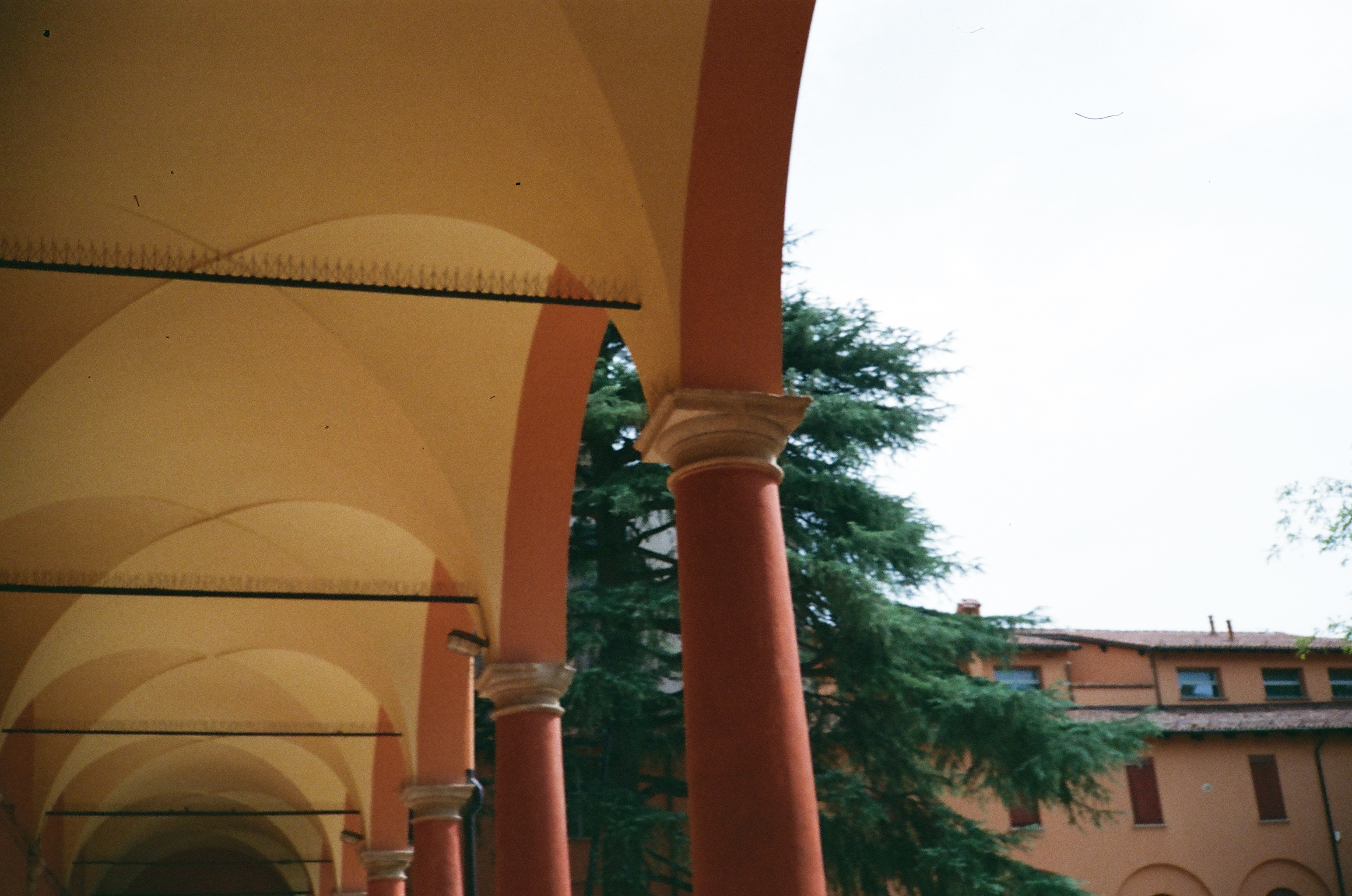
Bologna as a destination owes much to its porticoes—twelve were elevated to UNESCO World Heritage status in 2021 for their historical legacy, extraordinary architectural range, and compulsory origins.16 The designation was Bologna’s first, but like so many other cities that have joined the heritage ranks, inscription has shown itself to be a powerful magnet for corrosive and parasitic tourism. Residents of Bologna now speak anxiously of what Marco D’Eramo labeled “unescocide”17—the process by which a UNESCO designation draws millions of visitors who consume, exhaust, and destroy.
This is by no accident. Bologna’s application for UNESCO status in the early 2000s marked the beginning of a broader effort by local leaders to cast Bologna as a global tourist destination, positioning the porticoes as the city’s calling card, akin to Rome’s Colosseum or Venice’s lagoon, and pursuing inscription to garner “international recognition.”18 The city has also invested immensely in cultural branding,19 courted foreign partners—most notably China20—and made public resources and grants available to attract creatives.21 Bologna is now known by a profusion of monikers: as a city of culture, food, porticoes, knowledge, music, creatives, cinema—as the New Yorker has recently styled it,22 and soon maybe even a city of towers. In 2023, Mayor Matteo Lepore announced he was seeking UNESCO status for a pair of medieval towers—the Garisenda and Asinelli towers—located in the heart of the city.
Yet, residents increasingly describe it as a city of evictions. In 2023, students from the University of Bologna, unable to find affordable long-term housing as Airbnbs continued to take root throughout the city, took to the street, pitching tents to protest high rents.23
Unescocide names not only the destruction wrought by mass tourism but a system of everyday predation in which eviction and displacement become the price of political ambition. Residents grapple with high housing costs, while elected officials leverage UNESCO recognition to elevate their reputations on the global stage. The present moment is a divergence from the era of Red Bologna (1945–1993), when the city was known above all not for food or cinema but for being the best-governed city in Europe, a period when the Italian Communist Party provided programs of social housing, fareless transit, and robust public services.24
Bologna is one of many cities Bloch visits in Shade. We’re brought to Singapore to learn how decades of uninterrupted governance under Prime Minister Lee Kuan Yew enabled long-horizon planning and planting; to Seville, where fabric toldos stretch across streets like sails; and to Mesopotamia, where in the ancient city of Ur precedent is found in tightly clustered houses built to create shadow. The book, however, returns often to Los Angeles, where it begins with Bloch’s experience of commuting by car down Figueroa Street, evoking both the everyday conditions faced by pedestrians in the city and the urgency of addressing them:
As the sun rises in Los Angeles, a dozen passengers wait for a downtown bus in front of Tony’s Barber Shop. On this barren stretch of Figueroa Street near the Pasadena Freeway, they stand one behind the other... It’s going to be another scorching summer day, and across the city, riders like these are hiding from the sun behind road signs, telephone poles, and whatever meager shelter they can contrive… City officials dismissed their pleas for a bus shelter with a roof and a bench, claiming the sidewalk was too small to fit one… An unshaded wait is enough to ruin a typical commuter’s day, and for others—the elderly, people in poor health, and those with physical disabilities—it’s the beginning of something more serious.25
Bloch writes Shade more than two decades after Mike Davis’s own “shadow history” of the city, an articulation of racial and environmental struggle authored across books like City of Quartz: Excavating the Future in Los Angeles and the essay “The Case for Letting Malibu Burn.” Reading across these works reminds us that in Los Angeles, the sun is near year-round and shade is distributed unevenly along lines of race and class. There is almost no shade in Watts, a once-Black area of southeast Los Angeles that was the site of the 1965 uprising. The neighborhood, now majority Latine, has only 10 percent tree canopy,26 less than half the citywide average. Meanwhile, before the 2025 wildfires, a single census block in Pacific Palisades made up 10 percent of the City’s entire tree canopy.27 Bloch shows that neighborhoods like Watts, graded “hazardous” by the Home Owners’ Loan Corporation, are today the hottest in the city. These neighborhoods, which were historically and systematically redlined,28 where opportunities to invest in trees were subsequently foreclosed, became shadeless landscapes of absentee landlords, warehouses, and industrial yards that have intensified heat, pollution, health disparities, and discomfort.
One of the book’s most brutal revelations is that since 1995, Los Angeles has actively worked to remove shade. The city apparently uprooted a post-1965 effort led by the Watts activist Ted Watkins and the Watts Labor Community Action Committee,29 which planted more than 22,000 trees in Watts using dedicated federal funds in the aftermath of the uprising.30 Watkins’s son told Bloch that the vast majority of those trees were later removed as part of a defoliation program meant to make it easier for police to see and catch criminals.31 This approach, according to Bloch, draws from Crime Prevention Through Environmental Design (CPTED), an urban planning ideology rooted in the architect Oscar Newman’s 1972 book, Defensible Space: Crime Prevention Through Urban Design. CPTED argues that coverings and obstruction in an urban environment enable crime and that safety depends on visibility and surveillance, ultimately positioning trees (and tree cover) as enablers of dangerous activity.32 Newman writes that “the provision of such surveillance opportunities is a significant crime deterrent that markedly lessens the anxiety of inhabitants, and serves to create an overall image of a safe environment. Most importantly, this image is also perceived by the potential criminal, who is deterred from initial consideration of this area as an easy hit.”33
Newman’s book emerged in response to the urban uprisings of the 1960s, which unfolded not only in Watts but also in cities such as Newark and Detroit. Newman takes New York City public housing—comprising roughly 150,000 units, or about 19 percent of all public housing in the United States—as his primary subject.34 Drawing on three years of tenant data supplied by the New York City Housing Authority’s dedicated 1,600-member police force, Newman developed his theory of defensible space. Widely praised by mainstream audiences at the time, the book helped legitimize the decline and demolition of public housing and laid the groundwork for later theories such as broken windows policing, which interpret blight, graffiti, and property damage as root causes of social disorder. Such frameworks have recast social and economic problems as spatial ones, largely sidestepping the role of inequality, disinvestment, and structural racism in poverty and crime.35
As a result, these theories have played a role in the spatial design of cities across the country. In Los Angeles, since at least 1995, police have been granted extraordinary influence over the built environment, especially at public housing sites, where officers participate in safety assessments and recommend changes to lighting and landscaping. At Imperial Courts in Watts, Bloch tells us, entire canopies have been felled because branches interfered with policing infrastructure, leaving whole blocks fully exposed to the sun,36 likely intensifying the so-called urban heat island effect at these sites.37 As one Housing Authority of the City of Los Angeles forester told Bloch, “Either you’re going to prioritize making a community more resilient, or you’re going to prioritize surveilling them.”38 Contrary to the assertion that trees encourage criminal activity, a 2001 study found that public housing buildings with more vegetation suffered 48 percent less property crime, and 56 percent less violent crime than sites with minimal greenery.39
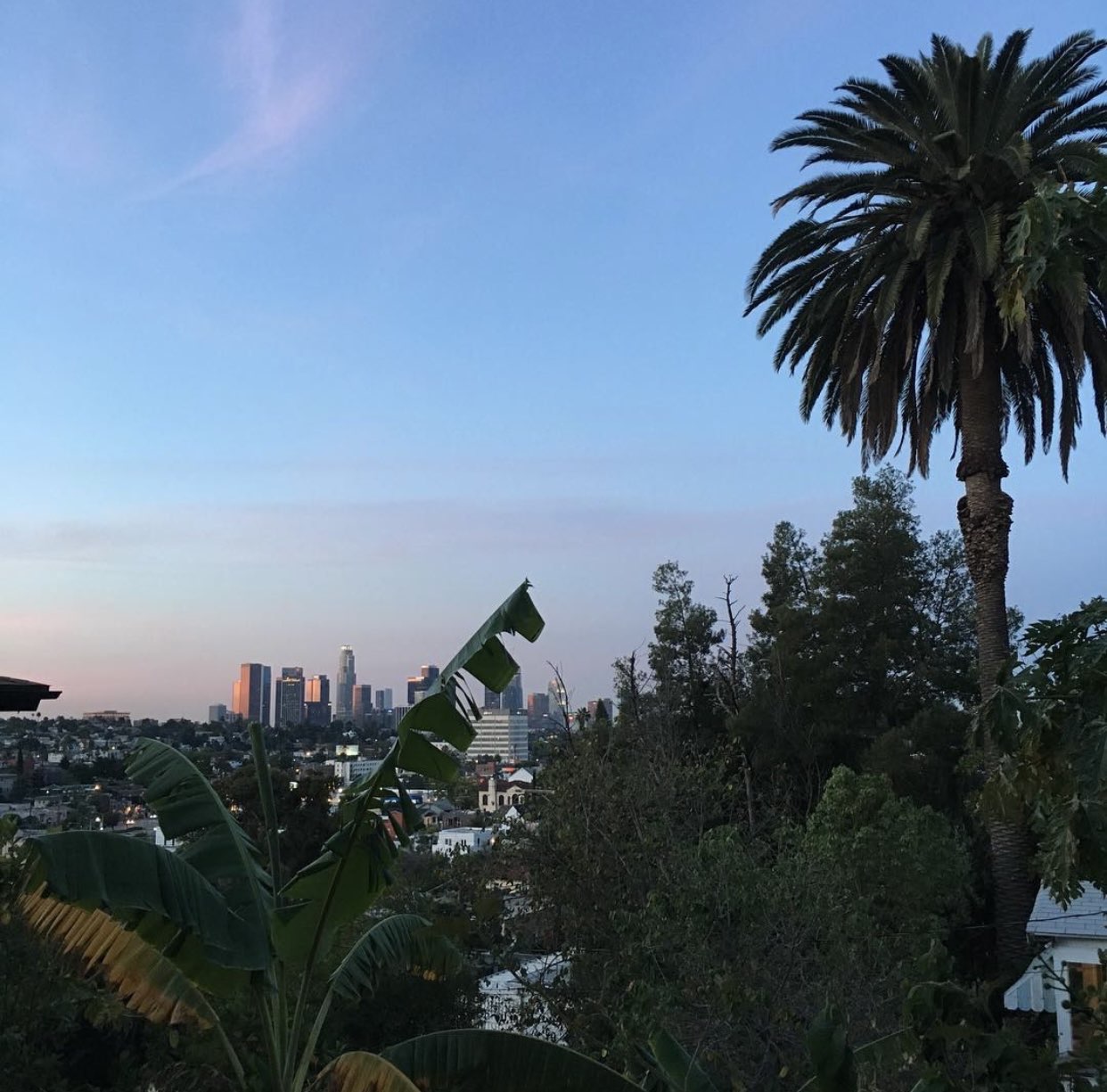
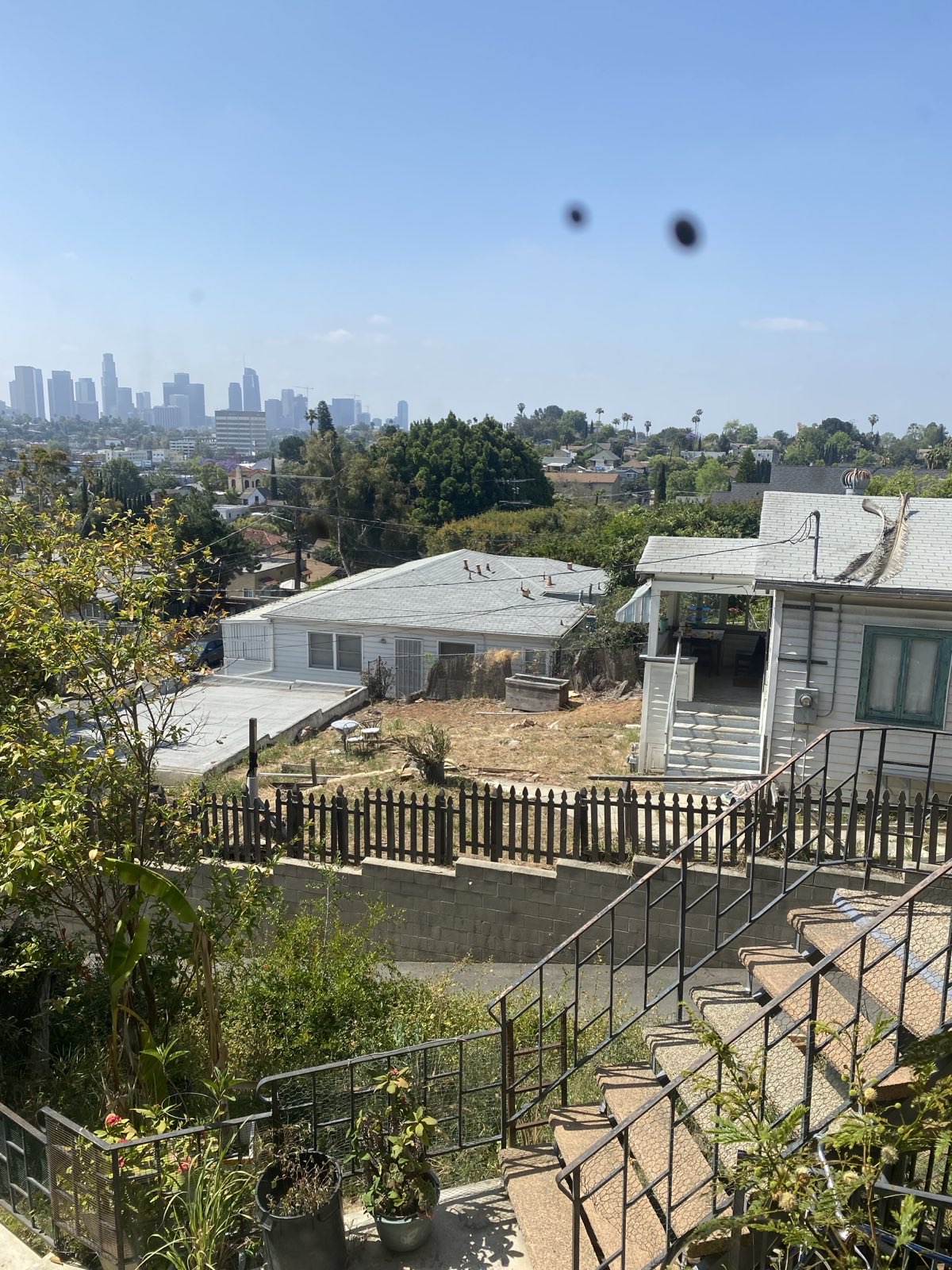
If you had asked me what I loved most about my apartment in Echo Park, Los Angeles, when I moved in eleven years ago, I would not have said the affordable rent, or the generous square footage, or even the view of downtown from my dining room. I would have said the trees. The river tamarind outside my balcony, with its long seedpods that made a nutty salsa. The papaya tree that dropped fruit I learned how to cut open with the help of my neighbor. The banana plants and their big, paddle-shaped leaves. The citrus tree. The cherimoyas, native to the Andes, that fanned out into the sky. The iconic Canary Island date palm, reigning over them all at 50 feet high.
Twenty-four trees, by my count, spilling across to the adjacent parcel, which my landlord also owned. Together, they created a green paradise in an otherwise sun-drenched and concrete-covered city. And then, in the last month of 2021, the trees were gone. All but the citrus tree.
The previous year, my neighbors and I had formed a tenant association. The pandemic had stripped our wages and locked us inside, leaving us to confront, day after day, the condition of our apartments. The stained popcorn ceilings, the broken counters, the unfinished kitchen floors. The cockroaches that arrived through cracks and holes and unsealed doorways. The eroded grout around the sink. The balcony doors that were off their tracks. The blinds that were missing panels. The carpets that hadn’t been replaced once since the building was constructed in 1963. The trash that overflowed each week because collection was infrequent. The vermin. The lights that were never adjusted to daylight savings. Perhaps worst of all, the black mold that spread through everyone’s bathrooms. In my own apartment, the water damage was so severe that the floor joists in my bathroom rotted. An inspector warned that my bathtub was sinking, that it could drop straight through to the ground any minute. These were our homes, homes that had been decaying for decades.
We demanded repairs—extermination, sanitation, lighting, new carpets and floor tiles, a table in the laundry room, visible unit numbers so mail carriers could find us. When we sent our demand letter to the landlord, we didn’t get a response. Instead, her son showed up at the complex, warning each tenant not to listen to me—the “bad tenant” in unit 4 who spearheaded the union. After filing formal complaints with the Housing Department, repairs were slowly and begrudgingly made. Our eldest neighbor—in her nineties—had her carpet replaced for the first time in fifty years. I was relocated for a week while my bathroom was rebuilt. For a fleeting moment, we felt enlivened, dignified, victorious. And then, our landlord took our trees, cut them all down to the ground.
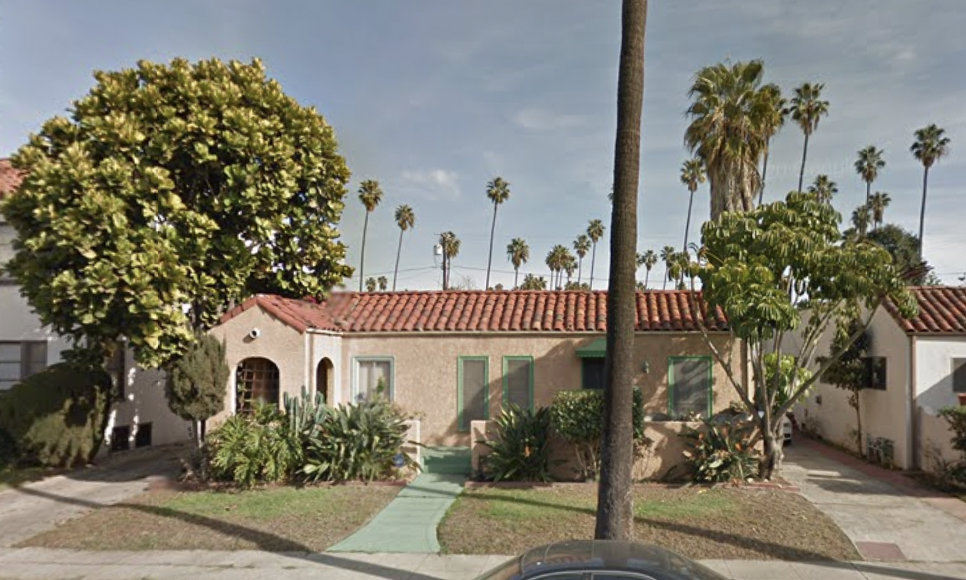
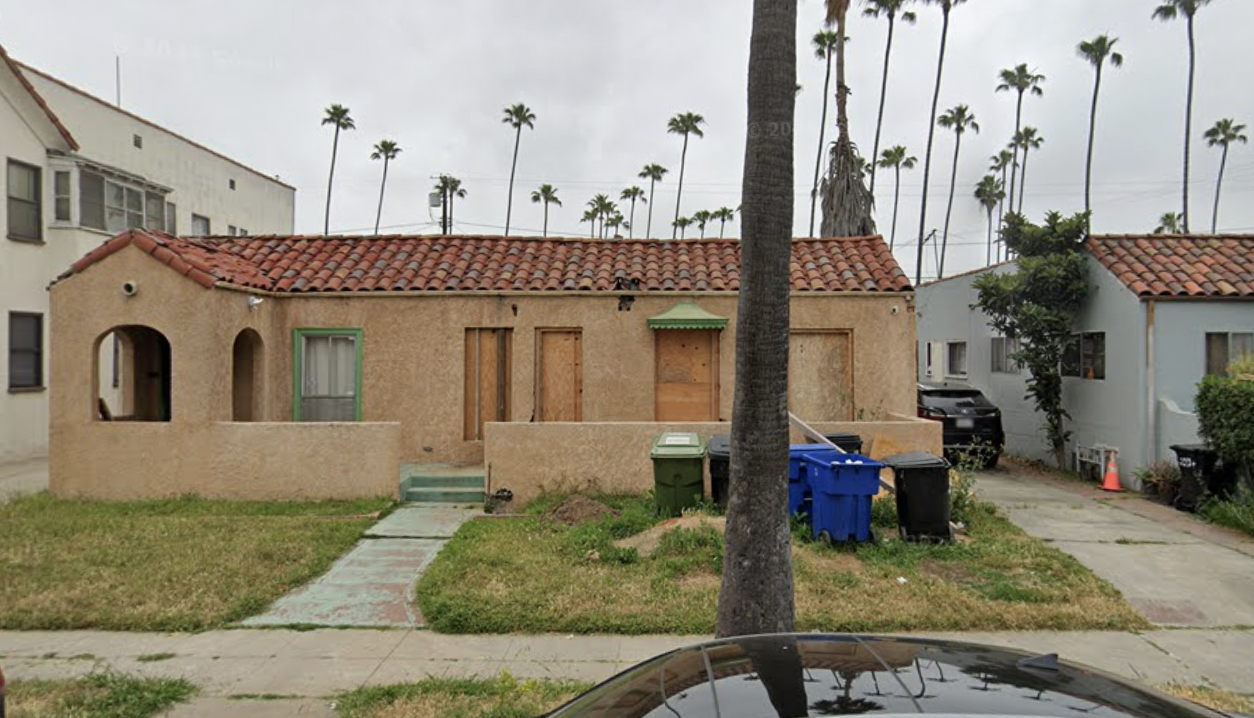
Among a landlord’s many tools, foliage removal is a weapon used to reassert control, to unsettle tenants, and to make us leave. One Mid-City resident, Lynn, for instance, watched as the 20-foot tall fiddle-leaf fig tree that cast a long shadow across her duplex was stripped away in an effort to force her out.40 Lourdes was ordered to remove the aloe vera plants she had tended for more than fifteen years at her apartment in Echo Park under new rules banning belongings on balconies, an early move by a new owner that preceded an eviction case she later fought, alongside her neighbors, and won.41 At Sycamore Bungalow Court, near Hancock Park, a tenant facing eviction for tenants-in-common conversion42 told me that shortly after the new owners took over, they tore out the shared garden around which her and her neighbors’ homes were arranged—the center of the court’s social life—cutting down paper trees, pepper trees, and the red berry trees that had once provided shade. “I never had to have curtains upstairs, because it was so shady and beautiful,” she said. After the trees were removed, “I literally had to go get curtains that day. I went out to IKEA in Burbank and bought blackout curtains.” At Hillside Villa, a 124-unit building in Chinatown, in the midst of a campaign to get the city to seize the building after affordability covenants lapsed and rents increased by 300 percent, the landlord hired landscapers to uproot the community garden in which residents had first planted chiles, guavas, avocados, papayas, and herbs two decades earlier. The tenants answered by blockading the building’s entrance, stopping the landscape crew from entering. “We want to be owners,” tenant Moniva Ruiz told Capital & Main. “We could plant whatever plants and trees we want.”43
Even when removal is justified as a cost-cutting measure (technically cheaper than pruning), the practice runs counter to tenant wishes and results in the loss of much-needed shade, turning people’s homes into urban heat islands. After the massacre of the trees at my apartment, the Los Angeles County Tree Canopy Map Viewer44—a tool that visualizes both existing and potential tree canopy across Los Angeles County—showed our shade had dropped to 11.86 percent, half the county average and less than half the minimum of any parcel on our block. In response, I bought my own defense against the oppressive sun—not blackout curtains but large bamboo shades to drape over my balcony.
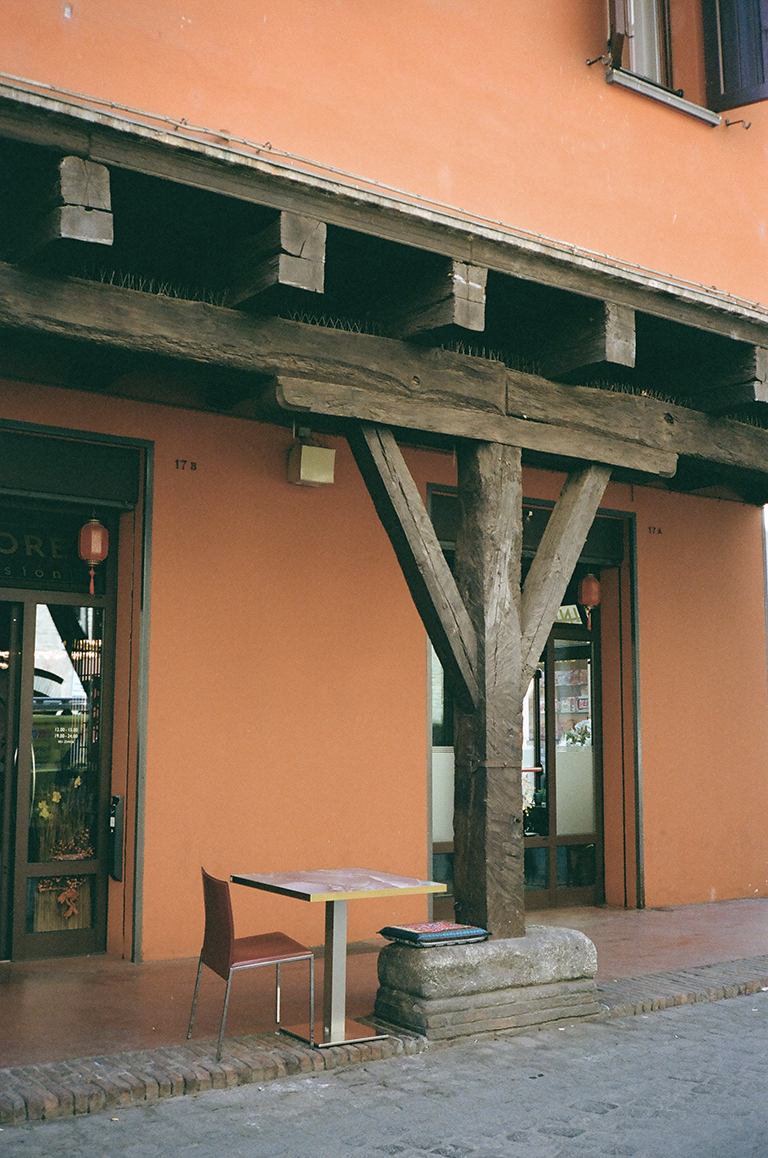
Despite their famed social function, Bologna’s porticoes had emerged not in response to public need but from landlord extraction. In The Bolognese Portico: An Exceptional Architectural Heritage, the authors note that porticoes first appeared on the streets of Bologna “in an unplanned and illegal fashion.”45 Landlords installed porticoes to extract more rent without acquiring more land. Instead of expanding their buildings further upward—where taxes would be applied—owners projected their buildings outward, propping the upper floors up with wooden columns planted directly in the public street. These were private infringements on public space, and they were not unique to Bologna; similar encroachments appeared across central and northern Italy. But elsewhere, they were torn down.46 Bologna took a different path. The coverage the porticoes provided for merchants to sell their goods and for passersby to conduct life in the rain was invaluable. Thus, Bloch tells us, “in 1288, the city not only legalized these ramshackle porticoes but made them compulsory by statute.”47
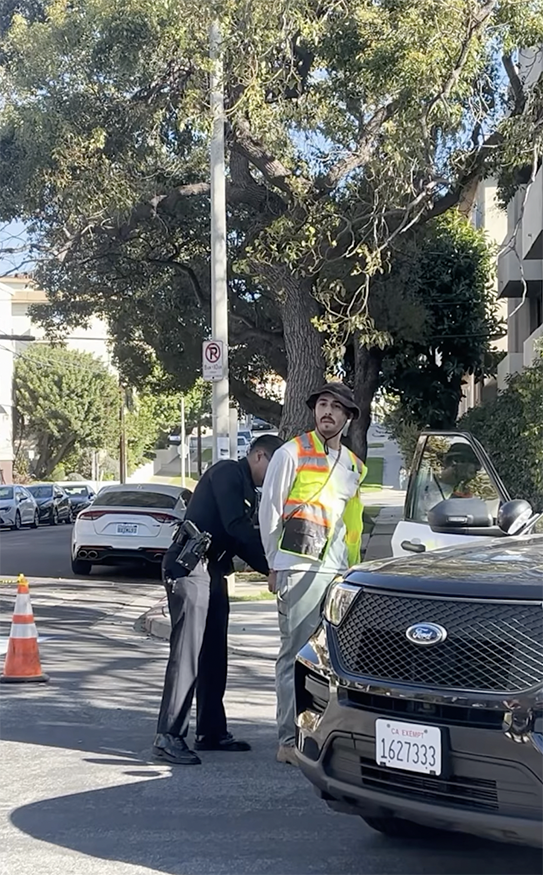
In Los Angeles, it is not unusual for private landlords to turn unregulated practices into law when it serves their profit. Over the past decade, I’ve seen numerous schemes designed to extract greater returns from housing—short-term rentals,48 tenants-in-common arrangements,49 or extended-stay hotels,50 to name a few—that are tolerated at the margins and either left deliberately unenforced or are formally sanctioned after the fact. Yet, when the property-less intervene on behalf of others, they are criminalized; when materially similar improvisations arise, they are interpreted as nuisances or illegal obstructions and removed. I’m thinking of the safety activist Jonathan Hale, who was arrested on December 7, 2025 for painting two guerrilla crosswalks to protest unsafe streets.51 I’m thinking of the Fletcher Bridge bike lane, laid down by activists, that was almost immediately removed—in a city where it takes decades to integrate bike lanes into transit plans.52 I’m thinking of the dozens of bus benches, individually fabricated and installed by an anonymous artist across Boyle Heights, El Sereno, and downtown—and how many vanished within days.53 And, of course, of Tony Cornejo in Highland Park, who, as Bloch recounts in Shade, draped a gray canopy from a banana tree outside his barbershop for bus riders waiting and wilting day after day beneath a pitiless sun. Cornejo even placed wooden crates for seating. But his structure lasted only a short while before inspectors ordered it torn down as an obstruction to the public right of way. Such is the fate of many public gestures against a hostile built environment designed to treat survival as nuisance.
While Bloch appreciates these gestures, he also refuses to romanticize them. That shade must be improvised at all to compensate for failed governance Bloch sees as evidence of the deep structural rot in the city’s approach to public space. “What L.A. has done about shade hasn’t worked. It has led to tweaks and so-called innovations that are incommensurate with the need,” he says.54 He is explicit in calling for comprehensive, coordinated solutions through public-sector local planning.
Shade prompts us to vividly imagine a Los Angeles transformed by such an approach: a city of bus shelters and umbrellas, of reflective white walls and green roofs, of Viennese blinds and Barcelona-style boulevards narrowed to make way for rows of trees. If so many cities have managed to treat shade as essential infrastructure, why can’t American cities do the same?
This is where Shade reaches its limits. Bloch identifies governance as a fault line—our leaders need to use their power more effectively, to manage and implement projects competently, and to cultivate the foresight required for long-term planning. Yet, he pays far less attention to the political infrastructure that has prevented shade in the first place. The deeper issue is not merely that leaders fail to use their power well, but that those who need shade do not have power to begin with and are kept from it by design. The examples Bloch most admires are often located in places where land and resources are not organized primarily around private property rights:
Singapore shows what can be done with intentional government planning of shade. A cooler city for everyone is within reach. Let’s not pretend it’s impossible…Lee ordered his land use planners to consider [trees] from the beginning…Most utilities are laid underground. The green infrastructure is plotted by urban planners, engineered by public works agencies, and managed by a parks board whose budget increased tenfold under Lee’s leadership.55
When Bloch marvels at Singapore’s long-horizon governance, we are shown what is technically possible, but the political question remains largely offstage. It is not only that former Prime Minister Lee Kuan Yew governed long enough to shepherd multiyear, even multigenerational, plans from inception to fruition; it is that the underlying property relations made such initiatives feasible. Before concluding that Lee had “smart planning policies,” Bloch mentions something critical: “The Singaporean government had a lot of leverage. Through strong eminent domain rules, it owned about 90 percent of the land.”56 In Singapore, roughly 80 percent of housing is publicly provided, too. In Los Angeles, by contrast, less than 1 percent of housing is publicly provided, and nearly 90 percent of the urban forest is owned by private interests.57 Here in the US, ownership determines who may intervene in the public space, making the struggle for shade inseparable from the struggle for the right to intervene at all.
This aligns with David Harvey’s concept of the right to the city, which describes a collective right to shape the city itself, a right that must, but does not currently, carry greater authority than the absolute primacy granted to private property.58 Look around Los Angeles and you see a landscape not planned rationally around collective need but one brokered, parceled, and engineered for private profit. As Harvey would insist, urban form reflects the preferences of those who can shape policy, not those who most acutely feel its consequences. Developers build for yield rather than climate resilience; car lobbies push for wider freeways; gas companies obstruct building decarbonization; homeowners resist density; investor-owned electric companies, police departments, and landlords cut down trees.
After the wildfires in January 2025 destroyed more than 16,000 structures, residents who were impacted began to immediately receive calls from developers offering to buy burned-out parcels for a fraction of their value. By June, nearly half of post-fire sales in Altadena had gone to corporate buyers.59 Bloch opens his book with bus riders, mostly low-income workers and the elderly, waiting at shelterless stops, people who live in apartments without A/C, who commute on foot or by transit because they cannot afford cars with cooling and who return home to interiors that trap heat long after the sun goes down. For this community, shade is not an amenity; it is a condition for survival. And yet, to prioritize them would require a city willing to privilege the needs of tenants, low-wage earners, and public transit riders, precisely those with the least political or financial power. Los Angeles can expand roads for drivers, protect homeowners from high property taxes, and safeguard the profitability of real estate actors because these groups already wield disproportionate influence. The bus riders at the heart of Shade are structurally unheard.
Under our current private property regime, it is important to consider the efforts of ShadeLA, one of the few comprehensive initiatives dedicated to “keeping LA cool.” As a joint partnership between USC and UCLA, the project proposes to cool the city by mobilizing schools, businesses, corporations, homeowners, renters, and philanthropies to make shade wherever they can. Describing itself as a “people-powered movement to make LA cooler,” ShadeLA seems to acknowledge that the city will not deliver shade at the scale that is desperately needed. Rather, the responsibility must be taken up by residents. Participants are urged to hang umbrellas or sails, build trellises, plant up to seven city-provided trees, replace lawns with native plants, or retrofit space piece by piece. Shade is pitched as a customer draw for businesses, as cost savings for property owners, and as basic survival for everyone else. The initiative offers toolkits, subsidies, and a design competition, in partnership with LA Metro, for temporary shade structures at bus stops and other public sites “to make it easier to take public transit for major events.”60
ShadeLA’s ambition ultimately hinges on the Olympics, the World Cup, the Super Bowl, and the Paralympic Games, all coming to LA in the next few years—leveraging the mega-sport events for a way around the inertia of an actionless state. This isn’t a new strategy. Before the 1932 Olympics, Los Angeles lined its boulevards with 25,000 Mexican fan palms—plants that are not, botanically speaking, trees.61 In 1984, just days before the opening ceremony of that year’s Olympic Games, TreePeople planted its millionth tree as part of a sweeping air-quality campaign that harnessed the Olympic deadline to achieve in three years what the government claimed would take twenty.62 Once again, a global spectacle is being asked to stimulate the work of public government. If shade must hitch itself to tourism cycles to become politically viable, the underlying politics remain unchanged.63
But shade is not just a natural resource. It is also a political and architectural decision, its inequity rooted in colonial legacies of Indigenous displacement. And, as Bologna shows, it is never a gift of the market. It must be wrested into being, fought for, and cared for. What is required, at the very least, is a redistribution of decision-making power over land and infrastructure, and, ultimately, governance rooted in Indigenous stewardship and long-term responsibility to land. Prohibiting landlords from cutting down trees, requiring them to plant and maintain them, mandating exterior shading on every window, building permanent shelters at every bus stop, and reallocating street space from cars to people are redistributive acts. These acts should not be positioned as ends in and of themselves, and rather as starting points for actioning a different political imagination. As the Land Back movement reminds us, the injustices embedded within our cities are deeply entwined across ownership, affordability, public health, climate, and on and on.64 A city capable of guaranteeing shade at scale would also be capable of guaranteeing housing, health, mobility, and safety without outsourcing these needs to individual purchase in the private market. But unless cities discover the political will to unsettle current property relations, shade will remain contingent on ownership, goodwill, and spectacle rather than guaranteed as a human right. And Los Angeles will continue losing its trees and, with them, the possibility of a livable future.
Bologna offers a cautionary parallel. Its porticoes, a collectively produced urban commons that shelters everyday life, may soon primarily shade visitors rather than residents. When the right to the city is subordinated to tourism and extraction, even the most humane architectures can be hollowed out. But alas, city leaders, Airbnb landlords, and tour guides insist Bologna could never become Venice. The comparison, they argue, is absurd. There are no canals, no gondolas, no lagoon. But anyone who has stood in the perpetual line at the Finestrella di Via Piella, the tiny window that reveals a surviving stretch of the Canale delle Moline, knows otherwise. Bologna’s canals once powered its silk mills and carried its trade. They were paved over in the 1950s to make room for piazzas and parking lots.65 Today, tourists line up for a fleeting glimpse of the water, peering through a hole cut into the city’s surface. One can almost imagine the concrete pulled back again, the canals restored, and, in a final irony, cruise ships docking in the shadow of San Petronio.
-
Francesco Ceccarelli, “The Bolognese Portico: An Exceptional Architectural Heritage,” in Francesco Ceccarelli and Daniele Pascale Guidotti Magnani, The Bolognese Portico: Architecture, History, and the City (Bologna: Bologna University Press, 2022), 9. ↩
-
Sam Bloch, Shade: The Promise of a Forgotten Natural Resource (New York: Random House, 2025). ↩
-
World Meteorological Organization, “WMO Confirms 2024 as Warmest Year on Record at About 1.55°C Above Pre-Industrial Level,” January 10, 2025, link. ↩
-
“2021 Northwest Heat Dome: Causes, Impacts and Future Outlook,” USDA Northwest Climate Hub, link. ↩
-
Bloch, Shade, xi. ↩
-
See, for example, Katherine Davis-Young, “In Phoenix’s Extreme Heat, People Living in Manufactured Homes Face Higher Risk,” KJZZ, July 16, 2025, link; Bill M. Jesdale, Rachel Morello-Frosch, and Lara Cushing, “The Racial/Ethnic Distribution of Heat Risk–Related Land Cover in Relation to Residential Segregation,” Environmental Health Perspectives 121 (2013): 811–817, link. ↩
-
Melina Walling and Seth Borenstein, “Trump Called Climate Change a ‘Con Job’ at the United Nations. Here Are the Facts and Context,” PBS NewsHour, September 25, 2025, link. ↩
-
Bloch, Shade, xvii. ↩
-
Bloch, Shade, 40. ↩
-
Bloch, Shade, 32. ↩
-
Bloch, Shade, 33. ↩
-
Bloch, Shade, 33. ↩
-
Lucy Briggs et al., “After the LA Fires: Rent-Gouging in the Wake of Disaster,” The Rent Brigade, January 2025, link. ↩
-
Alice Scarsi, “The Beautiful Italian City That’s Now Become Unrecognizable due to Overtourism,” Express, August 15, 2024, link. ↩
-
Ceccarelli and Magnani, The Bolognese Portico, 9. ↩
-
Marco D’Eramo, “UNESCOCIDE,” New Left Review, July/August 2014, link. ↩
-
Ceccarelli and Magnani, The Bolognese Portico, 5. ↩
-
Federica Busa et al., Shanghai Manual: A Guide for Sustainable Urban Development in the 21st Century (United Nations Department of Economic and Social Affairs, Bureau International des Expositions, and Municipal Government of Shanghai, 2011). ↩
-
Comune di Bologna, “‘Welcome Chinese’: Bologna First Italian City to Be Certified,” International Relations and Projects, last updated April 3, 2017, link. ↩
-
Cities of Service, Incredibol! The City of Bologna Blueprint, City of Bologna, n.d., link. ↩
-
Anthony Lane, “The Exacting Magic of Film Restoration,” New Yorker, September 22, 2025, link. ↩
-
Francesca De Benedetti, “Tents for Rents,” european focus, May 17, 2023, link. ↩
-
Max Jäggi, Roger Müller, and Sil Schmid, Red Bologna (London: Writers and Readers, 1977). ↩
-
Bloch, Shade, x. ↩
-
City Forest Credits, “Greening Watts Urban Forestry Project Impact,” November, 2022, link. ↩
-
Mike Galvin, Jarlath O’Neil-Dunne, Dexter Locke, and Michele Romolini, Los Angeles County Tree Canopy Assessment (Los Angeles: Center for Urban Resilience, Loyola Marymount University, 2019), link. ↩
-
Ryan Reft, “Segregation in the City of Angels: A 1939 Map of Housing Inequality in LA,” PBS SoCal, November 14, 2017, link. ↩
-
Myrna Oliver, “Watts Activist Ted Watkins Sr. Dies at 71,” Los Angeles Times, October 27, 1993, link. ↩
-
Mike Sonksen, “A New Generation in Watts Takes Up the Mantle of Change and Justice Through the Arts,” PBS SoCal, October 29, 2020, link. ↩
-
Bloch, Shade, 115. ↩
-
Bloch, Shade, 116. ↩
-
Oscar Newman, Defensible Space: Crime Prevention Through Urban Design (New York: Macmillan, 1972), 80. ↩
-
Newman, Defensible Space, 10. ↩
-
Joy Knoblauch, “Defensible Space and the Open Society,” Aggregate 3 (March 2015), link. ↩
-
Bloch, Shade, 116. ↩
-
US Environmental Protection Agency, “What Are Heat Islands?” link. ↩
-
Bloch, Shade, 119. ↩
-
Frances E. Kuo and William C. Sullivan, “Environment and Crime in the Inner City: Does Vegetation Reduce Crime?” Environment and Behavior 33, no. 3 (2001): 343–367, link. ↩
-
Chelsea Kirk, “Yes on Proposition 21,” Knock LA, October 24, 2020, link. ↩
-
Jack Ross, “Out with the Old: The Loophole California Landlords Use to Get Around Rent Control,” Capital & Main, October 21, 2024, link. ↩
-
Chelsea Kirk, “TIC’d Off,” New York Review of Architecture, October 1, 2025, link. ↩
-
Jack Ross, “Hillside Villa Tenants Face Eviction While LA Tries to Buy Their Property,” Capital & Main, January 25, 2023, link. ↩
-
“Los Angeles County Tree Canopy Map Viewer,” TreePeople, effective as of October 8, 2025, link. TreePeople has been mobilizing large volunteer tree-planting efforts countywide since 1973. ↩
-
Ceccarelli, “The Bolognese Portico: An Exceptional Architectural Heritage,” 9. ↩
-
In Vicenza, for instance, the commune ordered the demolition of more than 100 unauthorized porticoes for obstruction of public streets. See Francesca Bocchi and Rosa Smurra, “Bologna and Its Porticoes: A Thousand Years’ Pursuit of the ‘Common Good,’” Quart: The Quarterly of the Institute of Art History, University of Wrocław 57, no. 3 (2020): 87–104, link. ↩
-
Bloch, Shade, 24. ↩
-
Ben Poston, “L.A. apartment owners charged with allegedly evicting tenants, then renting their units via Airbnb,” Los Angeles Times, June 20, 2016, link; Emily Alpert Reyes, “L.A. approves new rules for Airbnb-type rentals after years of debate,” Los Angeles Times, December 11, 2018, link. ↩
-
Kirk, “TIC’d Off.” ↩
-
Chelsea Kirk, “Why We Need to Regulate the Little-Known Insidious Extended-Stay Hotel,” CityWatch, November 12, 2018, link. ↩
-
Kavish Harjai, “LA Police Arrest Street Safety Activist for Painting DIY Crosswalk in Westwood,” LAist, December 9, 2025, link. ↩
-
Damien Newton, “DIY Lanes on Fletcher Bridge Already a Memory,” LA Streetsblog, July 28, 2008, link. ↩
-
Carolina A. Miranda, “Meet the Anonymous Artist Installing Bus Benches at Neglected Stops on LA’s Eastside,” Los Angeles Times, November 28, 2018, link. ↩
-
Bloch, Shade, 197. ↩
-
Bloch, Shade, 190. ↩
-
Bloch, Shade, 190. ↩
-
For more on Singapore, see Ng Kok Hoe, “Public housing policy in Singapore,” Lee Kuan Yew School of Public Policy, August 1, 2018, link. For more on Los Angeles, see Dudek, “First Step: Los Angeles Urban Forest Management Plan,” prepared for City Plants, 2018. ↩
-
David Harvey, Rebel Cities: From the Right to the City to the Urban Revolution (London and New York: Verso, 2012). ↩
-
Erin Stone, “Corporations Are Buying Up Altadena Lots. Policies to Counter That Trend Have So Far Failed,” LAist, October 6, 2025, link. ↩
-
USC Dornsife Public Exchange, 2025 Shade Zones Design Brief, (Los Angeles: USC Dornsife Public Exchange, 2025), link. ↩
-
Zoie Matthew, “How Palm Trees Became a Symbol of LA (And How to Tell Them Apart),“ LAist, May 27, 2022, link. ↩
-
Julio Moran, “TreePeople Branch Out to New Issues,” Los Angeles Times, November 6, 1987, link. ↩
-
Trees, too, are being asked to do the work of public governance, deployed to compensate for state withdrawal, racist planning and policing practices, real estate speculation, and environmental injustice, a dynamic interrogated in Cooking Sections’ 2023 installation Offsetted. “678,183 street trees in New York City currently provide \$109,625,536.06 in ‘environmental services’ to the city every year. These services correlate to a tree’s biological functions, which are calculated in dollars—a mitigation scheme that positions trees as instruments to offset man-made ecological degradation. Rather than address the actual source of emissions, wastewater, or energy over-expenditure, the quantification of the performance of trees into tradable assets implicitly accepts the continuous production of waste and pollutants.” Cooking Sections, Offsetted, installation, 2019 and 2023, exhibited at Unsettling Matter: Gaining Ground, Carnegie Museum of Art, Pittsburgh, 2023. ↩
-
“Our Hohovarawech, Our Dream,” Tongva Taraxat Paxaavxa Conservancy, link. ↩
-
Dario Maya, Brooke Stewart, and Nynoshka Vazquez-Suazo, “Diving into Underground Bologna: How a Hidden Canal System Could Lead to a More Sustainable Future,” Kairos Magazine, January 10, 2024, link. ↩
Chelsea Kirk is a tenant organizer, researcher, and policy advocate in Los Angeles whose work sits at the intersection of housing and climate. Her writing has appeared in New York Review of Architecture, Phenomenal World, n+1, and the Los Angeles Times. She holds a degree in Urban and Regional Planning from UCLA, and is UCLA's 2026 Activist-in-Residence.