
A rough translation of Teje Solidario from Spanish into English would render something like “Solidarity Weave.” Yet, perhaps consistent with Jacques Derrida’s “tragedy of translation,”1 this does not capture the full weight of the term. Teje, el teje, tejer—sometimes used as a noun, at other times as a verb—functions in “travesti slang as a catch-all word that comes from the world of prostitution.”2 It can signal something unspoken, implicit, or illegal, that which circulates under the surface, but it can also name something overt, collective, and openly articulated. The word travesti is itself a term that has been reclaimed in Argentina and other parts of Latin America by the trans community as a distinct political identity. This essay retains the word in its original form, untranslated, as this act of linguistic and political reappropriation captures a unique genealogy that cannot be collapsed into external or universal terms. More broadly, it adopts a situated approach to translation, allowing certain words and expressions to remain in their original form where their discursive, cultural, and political specificity is central to the argument.3 The Argentine travesti activist Marlene Wayar4 expands on Teje’s meanings: “It is the word of complicity between us.”5
While Argentina has been celebrated for its progressive gender and sexual‑rights protections—gains now being actively eroded under President Javier Milei—the daily lives of trans people, along with women and other gender‑diverse communities,6 continue to be marked by precarious housing, limited employment opportunities, increasing violence, and shrinking institutional support. In this context, community infrastructures are not only technical systems but the collective practices of marginalized groups that make urban life possible. Teje Solidario is one such trans infrastructure in Buenos Aires.
Teje’s elasticity is not incidental but central to how this essay approaches, understands, and analyzes travesti-trans infrastructures. By attending to these community infrastructures across their multiple material, social, and political dimensions, it is important to recover the “hybridization of knowledges”—a notion proposed by the architectural researcher Sebastian Buser, which proposes modes of inquiry that transcend disciplinary boundaries and integrate forms of academic and nonacademic knowledge, theory, and practice.7
The Mocha Celis School—founded by and for the travesti-trans community in 2011 as a space of educational and political empowerment—developed Teje Solidario in response to the COVID-19 pandemic. It activated, with a “militant speed,”8 an urgent, large-scale infrastructure that assembled people, resources, and funds to support a community disproportionately impacted by sudden income loss, exclusion from social protection networks, and precarious housing conditions.9 Teje Solidario distributed resources to more than 2,500 trans people and mobilized more than 400 volunteers—assembling a relational infrastructure of solidarity and care during crisis. And in that double capacity, it became a vital network:
El Teje was like a bonfire during the pandemic: everything turned off, everything stopped, everything cooled down—in fact, it literally cooled down, because from March we were heading into winter, you couldn’t go out, you couldn’t connect, you couldn’t do anything, your feet locked inside the house… Everything was frozen. And El Teje was explosive like a fire, it was truly a fire, and people wanted to go, to put their hands in, and feel the warmth.10
Through Teje Solidario, it is possible to trace the “how” of infrastructure-making, the ways in which communities assemble, maintain, and transform spaces and networks to enact resistance and sustain life. It is both a system and a practice, which enact what the Care Collective describes as “promiscuous care”:11 a political and social ethic that circulates across multiple bodies, networks, and spaces. Its political force lies in the collective forms of interdependence it mobilizes, enabling life to be sustained under extreme conditions of exclusion. And the COVID-19 pandemic made this exclusion starkly visible: travesti-trans communities were left almost entirely outside the (already precarious) institutional circuits of care, forced to rely on their own networks to survive. Teje Solidario emerged within this context as a collective infrastructure that (re)territorialized care through activist movement, connecting bodies, needs, and resources.
Community infrastructures press the field of urban studies to shift toward more inclusive and accountable forms of theory and practice. Considering Teje Solidario through critical urban studies, trans epistemologies, and feminist theories of care raises a key question for contemporary urbanism: What other forms of planning might emerge if we start from practices that center critical, situated, and embodied infrastructures and knowledges?
This essay is grounded in a qualitative and ethnographic framework,12 shaped by my role as an architect-researcher-activist—a triad that defines both my positionality and relationship to Teje Solidario. This methodological positioning builds on my own long-term relationships with el Teje as a volunteer, and with other travesti-trans infrastructures in Argentina.13 I write not from a position of detached and distant observation but from a place of built trust, which has afforded me access to less visible community practices, spatial assemblages, and modes of inhabitation.
This work thus emerges from and weaves together a range of sources, including direct participation, archival materials, interviews,14 and, perhaps most crucially, a critical account of all these methods. As geographers Yaffa Truelove and Hanna Ruszczyk argue, infrastructures must be understood not only as materialities but as assemblages of relational practices that sustain and transform the urban environment and life in it.15 This perspective supports an approach that does not separate the physical from the social, and that treats documents, visual records, and testimonies as interdependent layers and threads of the same fabric, in constant negotiation and reconfiguration.
Travesti-Trans Infrastructures
Over the past two decades, the field of critical urban studies has undergone what is often termed an “infrastructural turn”:16 a conceptual shift that recognizes infrastructure as more than technical networks or material systems. In broadening the analytical scope to include affective, relational, and embodied dimensions, it acknowledges the capacity of infrastructures both to sustain and to undo life—an ambiguity that demands we consider “how their ratio might be understood and thus composed differently.”17
As technologies of governance, infrastructures can operate as devices that determine who has access to resources and who is excluded from them. In this sense, they should be read as biopolitical devices in the Foucauldian sense—tools that organize, regulate, and manage life.18 Yet, in contexts marked by systematic expulsion, such as those experienced by trans communities, they are underwritten by their inverse: necropolitical logics that determine which lives are deemed unworthy of being sustained.19 This differential access to infrastructure reveals how power shapes the city: who can or cannot circulate safely, who can or cannot find refuge, and who is or is not afforded the safety of visibility.
In “Infrastructures of Empire and Resistance,” Deborah Cowen discusses “fugitive infrastructures,” which emerge through evasion, clandestinity, or the subversion of normative regimes.20 They are not merely alternative infrastructures but material and symbolic practices that refuse to be captured by biopolitical/necropolitical logics, drawing on what is available, intermittent, and sufficient. The urbanists Gediminas Lesutis and Maria Kaika note, “These indeterminate, fugitive bodies can, and do, create their own infrastructures”21—and not solely in moments of crisis. While emergencies, such as the pandemic, certainly intensify and exacerbate violence, exposing the limits of existing institutional systems, for trans communities, structural state violence shapes everyday life. Alternative infrastructures are thus not exceptional responses but continuous and sustained practices of survival, expanding the scope of who belongs—or can belong—in the city.
The case of Teje Solidario recognizes the organizational force with which this network activates other ways of being and caring. It shows us what is possible when care becomes urban form: a practice that reconfigures the very meaning of what a city can be and can provide. In this framework, travesti-trans infrastructures emerge as a methodology of (re)territorialization: practices that unsettle the seemingly stable spatial constructs through which the city is organized and governed, while also producing forms of situated queer urban knowledge rooted in lived experience.22 This process is inseparable from the presence and movement of bodies—individual and collective—whose trajectories remap the relation between gendered bodies and space. If state territorialization operates as a mode of domination that secures authority through demarcation, the practices enacted by infrastructures such as the Teje mobilize a different logic: one that (re)territorializes space in order to sustain life, community, and political possibility.
Seen this way, these practices rewrite the meaning of the urban from its margins, expanding what, and whom, a city can hold. But if these trans infrastructures enable life to be sustained, their force will not be exhausted in merely sustaining and maintaining what already exists. They are also ways of projecting community, of rehearsing and “deploying”23 worlds in order “to build and inherit community power,” as Wayar affirms.24
The trans scholars Aren Aizura and Hil Malatino issue a bold call in their work “We Care a Lot” to “decenter the emphasis on the domestic and the reproductive that has so long informed theorizations of care.”25 They instead propose investigating “networks of mutual aid and emotional support developed by trans femme communities subject to transmisogyny, transmisogynoir, and multiple, interlocking forms of institutional marginalization and structural violence.”26 This decentering does not suppress reproduction; it enables the recognition of other, perhaps marginalized, reproductive forms—social, communal, affective—that take place in collective spaces.
Teje Solidario, as a trans infrastructure of care, represents a mode of organization that interrupts hierarchies and proposes new forms of relationality and other ways of living. Within this framework, the geographer Jack Gieseking notes that trans care webs must be “read spatially” as they are “expansive affectively and theoretically.”27 These observations concern the affective ties and networks that emerge within material and urban infrastructures. Thinking of care as infrastructure means recognizing its spatial deployment. Thus, care must be conceived as a material, urban, and collective assemblage—as a “communisation of care.”28
The question, therefore, is not only what care is but how it circulates and is organized. Malatino insists that care should not be understood in the abstract but as a situated practice, consisting of “action, labor, work”29 carried out with others. Taken together, care is a political and archival practice: a choreography of gestures that preserve and transform, remembering pasts and rehearsing possible futures (and presents). Care, in this sense, produces continuity in the midst of rupture.
Recovering these relational dimensions of care helps us highlight its political implications. As the ecofeminist philosopher María Puig de la Bellacasa reminds us, care is contested30—not only because of its unequal distribution but because of its operation at the intersection of need and desire, of sustaining and transforming, in which the question of how to care must be asked again and again.
Travestis Organizadas
In 2007, the activist Marlene Wayar founded the first travesti-trans publication in Latin America: El Teje. In the first issue of the magazine, she wrote:
El Teje is a way of beginning to know each other and to organize ourselves as a collective, to unify criteria on how to work and to achieve greater strength and impact before society and, above all, before the State.31
Teje Solidario carries and unfolds this potency. Operating from the very beginning of the pandemic as an improvised network of food distribution, emergency housing support, medicine access, and mutual aid, it quickly became an alternative care infrastructure where other institutional systems failed. What began as an urgent response soon evolved into a consistent, community-led network that sustained the travesti-trans community and also challenged the limits of state responsibility and capability. As Mora underlines, its strength lies in “contributing for both to see the world differently and to build it differently.”32
In the early 2000s, the first surveys and censuses of the trans population began to emerge in Argentina, mainly linked to the City of Buenos Aires, which had recently gained greater autonomy as a result of the 1994 reform of the national constitution. This reform granted the city the authority to legislate its own legal framework, including the Public Order and Misdemeanors Code. First introduced in 1998, this code decriminalized the offering of sex in public spaces but required negotiations over where the activity could take place,33 opening a debate among various political parties, neighborhood associations, police forces, and community organizations on the issue.
The debates surrounding this new code brought sex work into mainstream discourse, transforming it into a “public issue.” On the one hand, travestis were able to use this conversation to assert their position and presence as collective actors, and the organized travesti movement that had begun to take shape in the 1990s was strengthened and sustained by this intense renewed politics of visibility.34 On the other hand, sensationalist press coverage often reduced the “issue” to a conflict between “neighbors” and “travestis.” This framing was reinforced, for example, in official statements by the secretary of justice and urban security at the time, who declared: “We are not prohibiting anything; we simply treat prostitution as another misdemeanor. It is an improper use of public space.”35 The travesti position thus exposed an ongoing contestation over the boundaries of urban space—a struggle that persisted well beyond the code’s approval in 2004.36
This was the context for the 2005 census initiative La Gesta del Nombre Propio (“The Feat of Asserting One’s Own Name”),37 which offered “a blueprint for trans and travesti led and centered research that is collaborative, participatory, and rigorous.”38 In line with the organizing ethos articulated in the early issues of El Teje, the project dismantled “the [artificial] boundaries that separate academia from activism,”39 actively involving the travesti-trans collective in the survey work not only as participants but as protagonists, drawing on years of activism, experience, and territorial strategies and knowledge.
La Gesta del Nombre Propio generated much of the “information on age, income, housing, health, and education that was used for many years to understand the living conditions of travestis”40 in Argentina. It revealed, among many things, that 85 percent of the trans and travesti population had not completed formal education, that more than 70 percent were engaged in sex work, and that life expectancy did not exceed thirty-five years. As a resident of the Hotel Gondolín, another key trans infrastructure in Buenos Aires, explained in a 2023 interview:
I never imagined I would reach a certain age because this has been so imposed on us, and it is still imposed on us to some extent, the idea of having a limit to our age, to limit our lives, and maybe that also leads us to destroy ourselves, little by little, without wanting to and without realizing it.41
The census did more than provide numbers; it created the space to reflect on and denounce the mechanisms of discrimination and prejudice responsible for producing these numbers and limits on life.
Mocha Celis
In 2011, the travesti activist Lohana Berkins,42 along with “a broad coalition of cis, travesti, and trans community members,”43 founded a school called the Bachillerato Travesti-Trans Mocha Celis. Mocha Celis44 was not only a high school, a pedagogical remedy to systematic exclusion, but also a challenge, more broadly, to traditional hierarchical education. Funded largely through individual contributions and intermittent public support from the city and the national government, the school continues to operate through a collective governance structure in which teachers, students, and administrators are “actively, critically and constantly rethinking their own historical positionality.”45
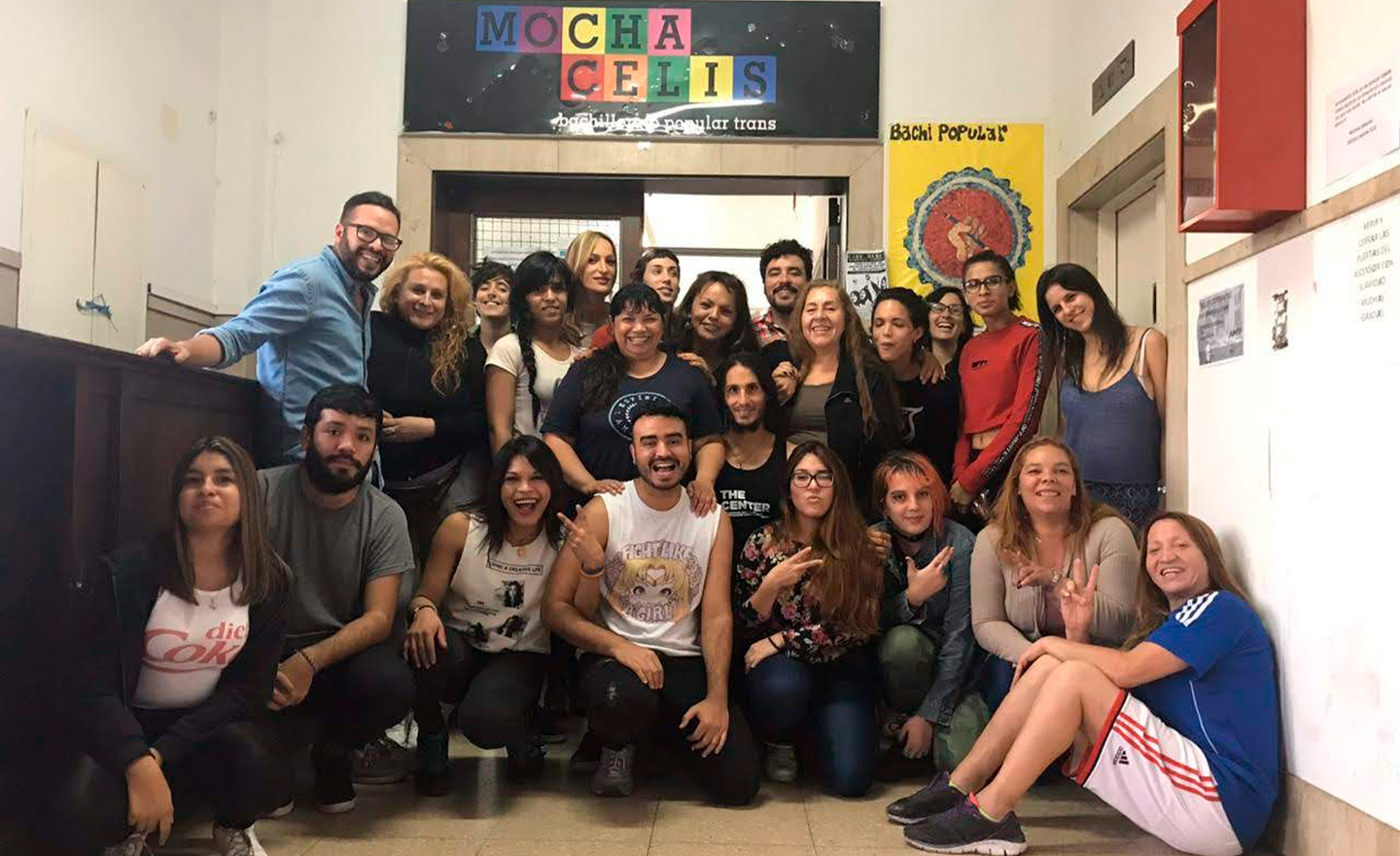
After a brief period operating in borrowed classrooms, Mocha Celis relocated to a former railway building adjacent to the Federico Lacroze station, where it remained for nearly a decade. The school’s location, embedded in one of the city’s major transportation hubs, played a crucial role in shaping Mocha’s social and political life—especially for a population of travesti-trans students whose mobility is so often restricted by violence, police control, and long-standing patterns of urban peripheralization. The accessiblity, visibility, and connection afforded by its position in the center of the city enabled the circulation of other marginalized groups, including “young single mothers, migrant workers, and cisgender young men often criminalized by state and police forces.”46 This coexistence generated a plural fabric that, for Mocha, was an intentional move toward broader inclusion: “Travestis have always fought to occupy spaces as first-class citizens, so we did not want to create a ghetto or a space of isolation.”47
Mocha’s experience in this area aligns with the trans geographer Sage Brice’s notion of “constitutive vulnerability”: a simultaneous condition of risk and resistance, but also a “generative encounter” that enables the production of knowledge.48 This cohabitation facilitated mutual learning and the construction of shared knowledges, anticipating the logics of openness and entanglement that were later articulated in Teje Solidario.
By late 2019, the school faced a new challenge, in which increasing building costs made the space financially unsustainable, forcing the school to search for a new location for the 2020 academic year. Few could have imagined that by March 19, with only a handful of reported cases, the government would announce a nationwide lockdown.
Unfolding an Infrastructure
From the outset, the lockdown in Argentina was exceptionally strict, and its abrupt implementation left significant gaps. The first 48 hours were marked by an avalanche of messages, internal meetings, and social media appeals. The response was less the result of a coordinated effort and more a series of improvised reactions to the unfolding crisis. As Maryanne, the school’s treasurer, reflected, “It was also a moment when that capacity for the future, or for imagining, did not exist.”49
What began as a few calls and messages to Francisco Quiñones, then director of Mocha Celis, quickly escalated into a torrent of requests for help, particularly from the travesti-trans community. Government restrictions made sex work impossible, cutting off income overnight, while rents continued to rise without housing alternatives. “From one day to the next, it became impossible to work,” Maryanne recalled, “and, with that, even to buy a bag of food.” These requests exposed a deeper reality: Mocha Celis had become something larger than an educational project. In moments of acute vulnerability, it was a space of support for the whole trans community.
Through an initial appeal on social media, the school was able to mobilize resources quickly. Drawing on nearly ten years of territorial experience, Mocha Celis decided against a simple assistentialist system of cash distribution, focusing instead on developing a network that could guarantee food and essential supplies to those who needed them. The team calculated how many food packages were needed per household and organized distribution to communal hotels and private residences. Friends with access to transportation helped deliver the food, navigating the national government–imposed restrictions on movement. Recounting one of these deliveries, Rocío, coordinator of collective distribution, shared:
People from the hotel next door came, who had nothing to do with our collective… and they tried to grab things from the car boot… It was a matter of hunger.50
As the initiative expanded beyond Mocha Celis’s initial community, the need for supplies and funds increased significantly. The growing complexity required new forms of organizing. Through this process, Teje Solidario emerged as its own network—still rooted in Mocha, but increasingly composed of new people who would later become central to its work. Despite challenges, Teje Solidario was able to effectively respond to the daily needs of the community. As Martina, a volunteer coordinator, noted:
We understood that something was coming that was suddenly going to be a lot of people, a lot of information, and we didn’t know how long it was going to last… but that uncertainty was mobilizing.51
Teje Solidario increasingly assumed tasks that would, in principle, have fallen to the state. Yet the state’s absence was not only contingent but also structural. Many of the sites where Teje intervened were not limited to individual households but extended across a heterogeneous network of marginalized communal living arrangements and other community-led initiatives. Teje attempted to compensate for the historical lack of infrastructure in these places, with what many described as “militant speed”—fast, improvised, and effective. As Rocío emphasized: “What we always had as a difference from so many other organizations is territory.” It was precisely this territoriality and speed that allowed Teje Solidario to implement an infrastructure in places where the state could not and, in many cases, had never done so.
Teje Solidario implemented a volunteer mechanism that, over the course of its operation, had around 400 workers across the city. Teje connected people in need via social media with allies52 from different neighborhoods, who contributed with funds or time, delivering food, basic goods, and support. This dynamic configured Teje as an “assemblage,” defined by the architectural theorist Tim Gough as a weave of “transverse movements and connections that occur in the interplay of things that are usually regarded as entirely diverse.”53 Disparate actors, forms of knowledge, and resources converged in and across the infrastructure, producing “coalitional spaces as a way to continually bring attention to the differences within, as well as the collaborative nature of community production.”54
These choreographies of care enabled more than food delivery. They produced encounters between neighbors and “people who wanted to do things,” as Martina recalled. Gabriela, another collaborator, described this relational dimension as “a convergence of needs”55: on the one hand, the travesti-trans community’s urgent need to sustain everyday life; on the other, the broader need to remain connected—with each other and with the outside world—amid strict isolation.56
Spatializing Need
Weeks passed, and the material needs diversified too: demand for food became a request for medicine, psychological support, and housing assistance. These shifts not only increased the volume of work but also transformed the spatial demands of the network itself. In the words of Marcos, one of those coordinating the network:
Teje had already become a protocol… And we started adding all kinds of information, decisions, and policies: What do we do in the case of a housing crisis? What about an eviction? What do we do in situations of mental health crisis? What do we do in physical health crises? Et cetera, et cetera, et cetera.57
The convergence of multiple crises prompted a shift from improvised spreadsheet lists to a map capable of organizing information, giving form to what one collaborator recalled as “a beautiful map.” The map distinguished types of assistance and roles within the network, charting travesti-trans people receiving various forms of support alongside neighbors and volunteers who acted as sponsors—either by delivering food or donating funds. Over time, as Maryanne recalled, the map began to expand beyond its initial coordinates.58 If fact, as the cartography of care expanded, so too did Teje Solidario’s material and spatial requirements.
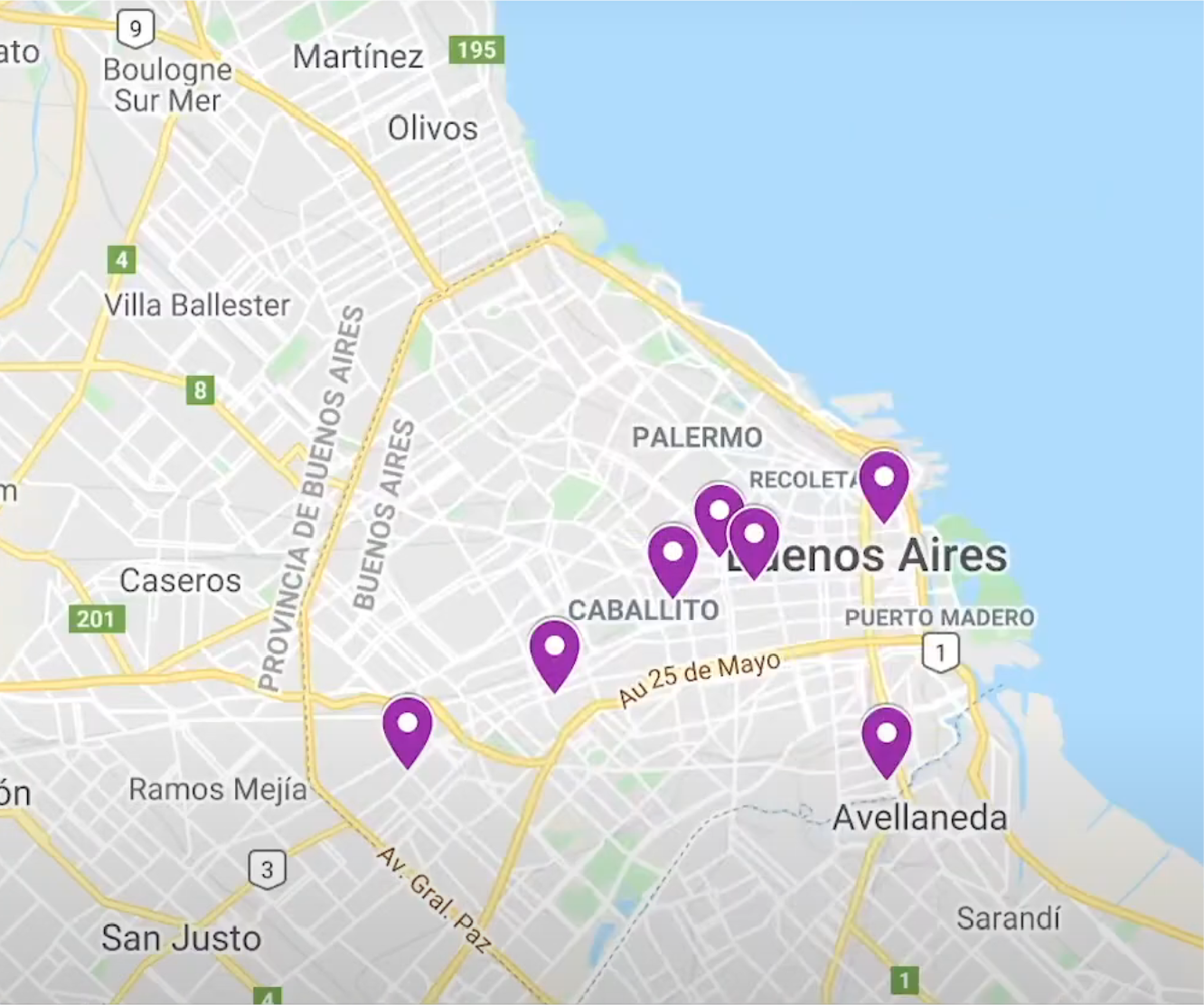
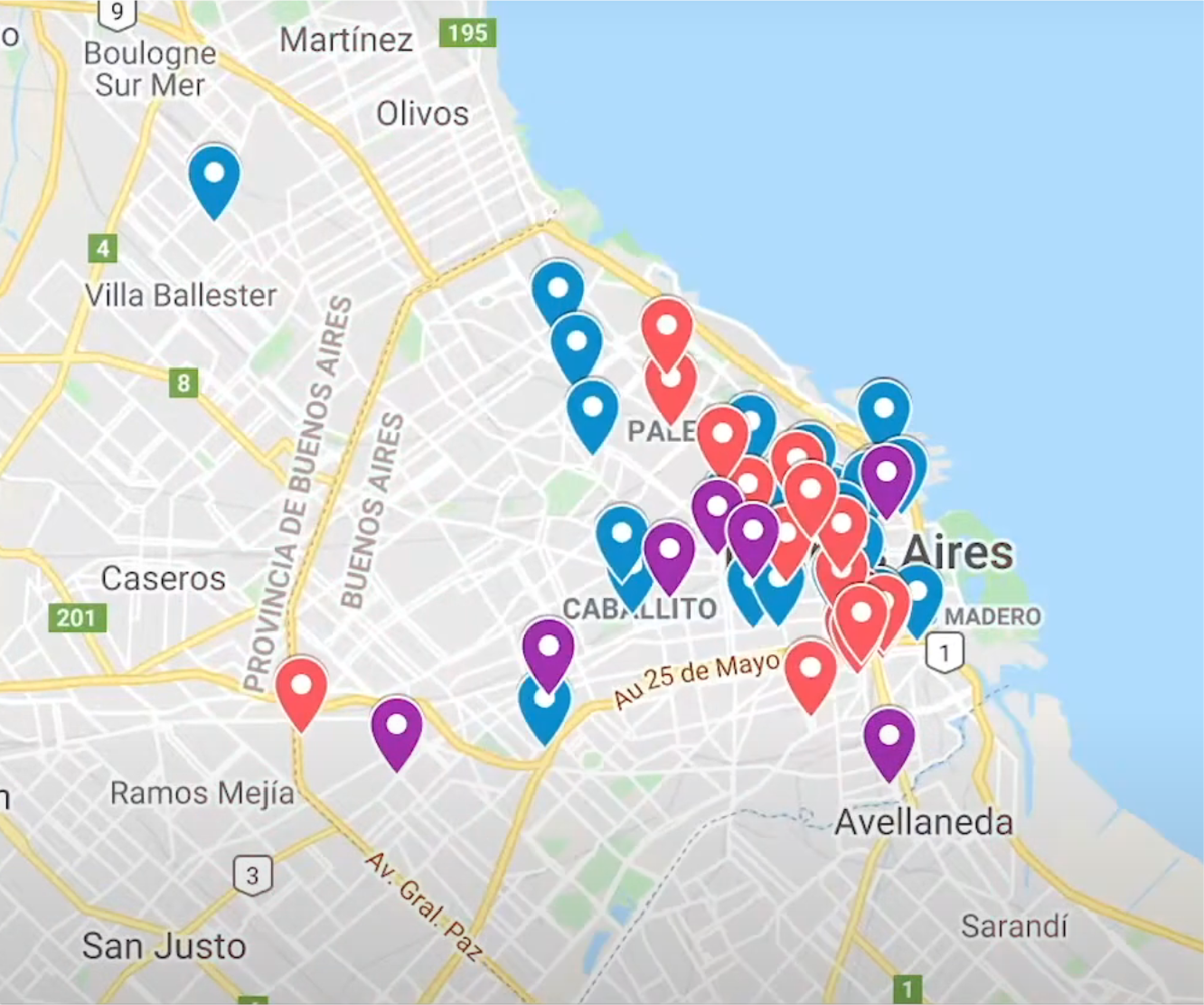
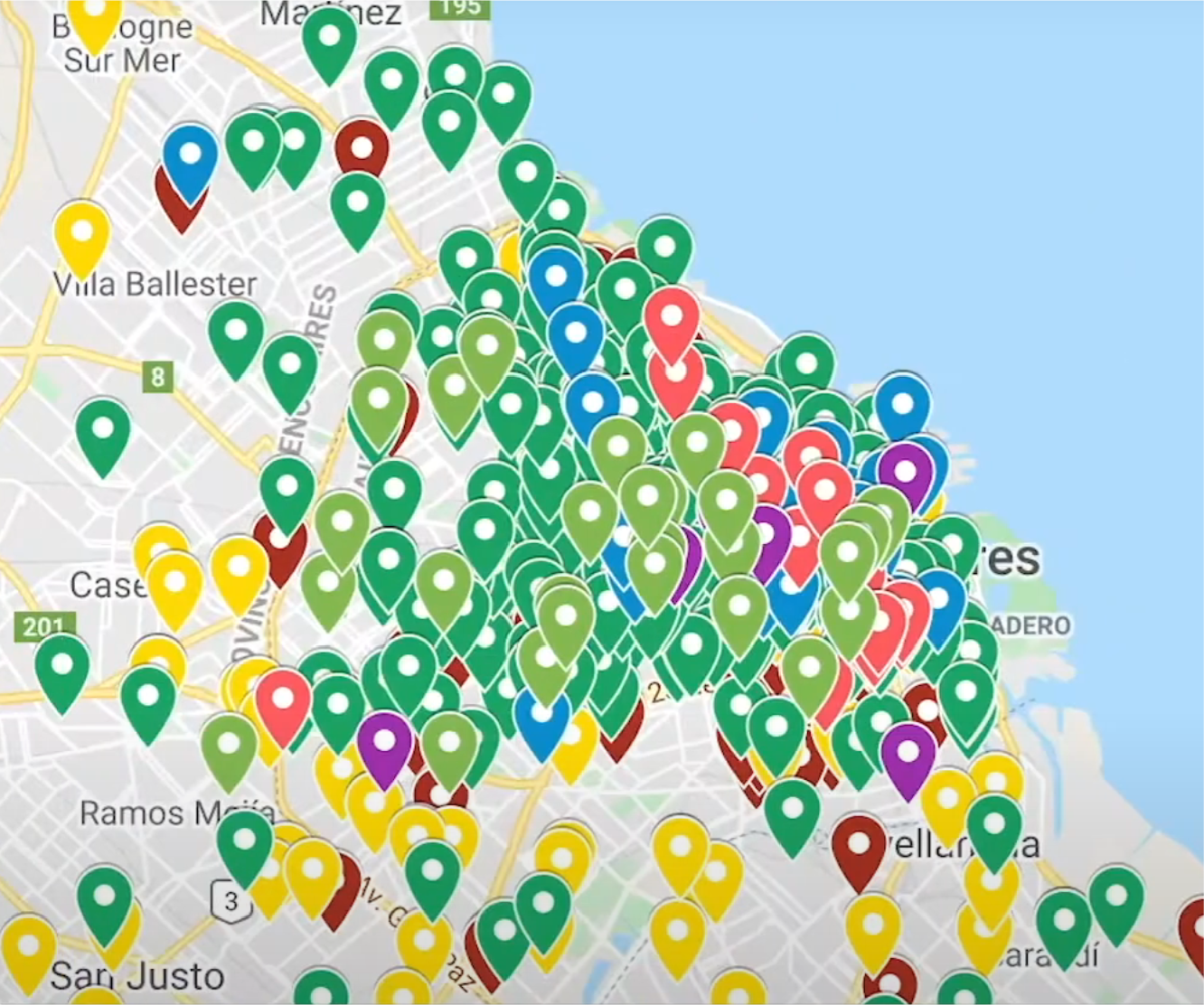
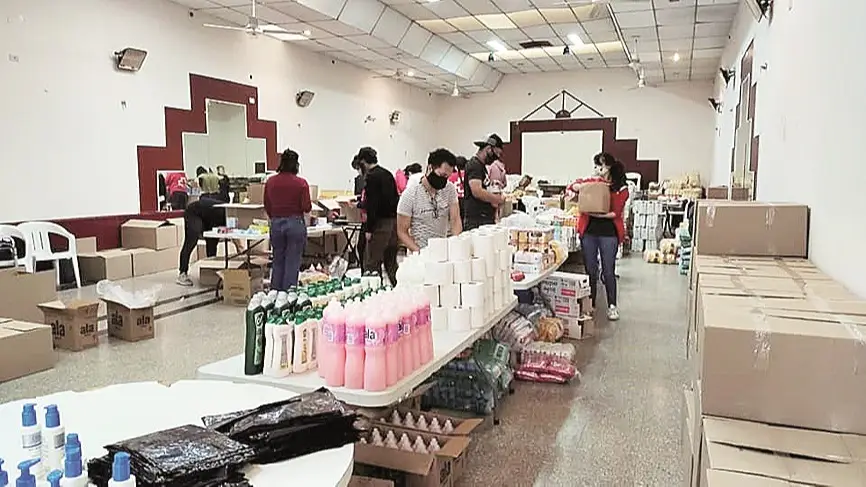
Once dependent entirely on virtual networks, Teje increasingly needed a physical space to sustain the growing volume, rhythm, and coordination of its work. In just a few months, the team was granted access to a senior citizens’ center that stood unused due to sanitary restrictions. The urbanist Ben Campkin notes that queer infrastructures flourish “most readily in failed, ruined, marginal, and stigmatised space.”59 Teje’s very place of emergence, then, was no coincidence.
People as Infrastructure
As winter approached, Teje’s call expanded, and donations of warm clothing quickly exceeded the capacity of the senior center. At the same time, accelerating inflation led the team to purchase supplies wholesale, generating new storage demands. In response, they secured space in a neighborhood association on Maure Street, near the school’s former location in Federico Lacroze. As Rocío recalled, it was “a huge warehouse, well located and with plenty of access.” The site became Teje Solidario’s headquarters and, at the same time, the space where Mocha Celis resumed in-person classes until 2022, when the national government granted the school a building on Jujuy Avenue.
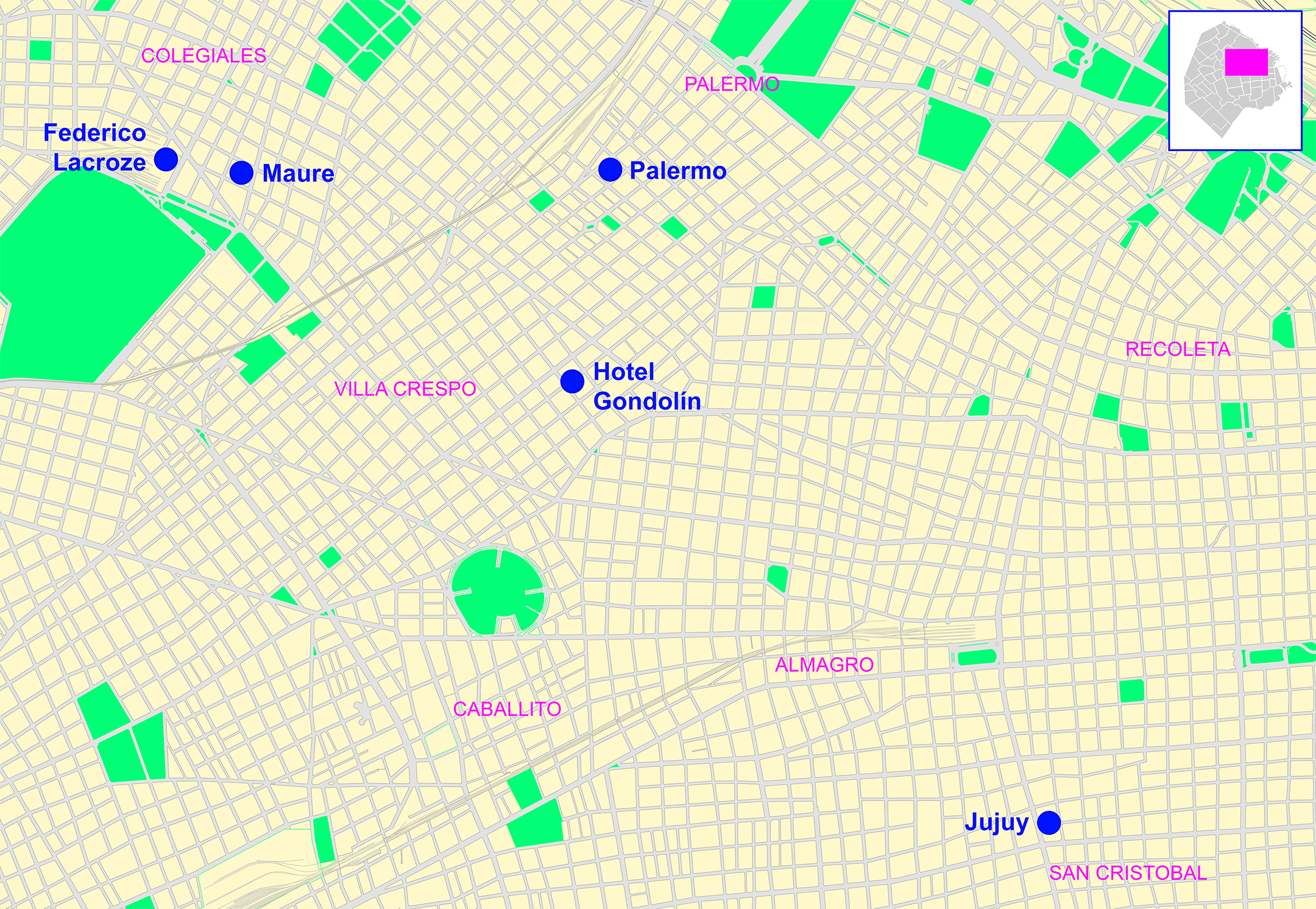
As a “new normal”60 emerged, the Maure headquarters began to host the first in-person meetings. In those instances, neighbors and volunteers—many unfamiliar with the trans population—began meeting face to face with compañeras, who often also carried prejudices shaped by discrimination. According to Maryanne, these encounters fostered new forms of bonds:
You realize that one can generate human infrastructures without knowing each other. Just by bringing a bag of food, to get to know the reality, to get to know trans people… The Teje humanized the trans population for the rest of society.61
The Maure building also functioned as a pedagogical space, where each distribution transmitted the meaning of the work, as Rocío explained:
Every time a delivery was about to go out… we would give a small talk to the drivers, explaining what we were doing. We tried to involve them and to make them understand what was happening, why what we were doing was so important.62
Through everyday gestures aimed at involving all the participants in the process—from compañeras and community members to neighbors, volunteers, and drivers assisting with deliveries—as well as through constant campaigns via social media, the organization established practices that incorporated people not merely as logistical links but as part of the infrastructure itself. Following the sociologist AbdouMaliq Simone’s framework of collective agency, this dynamic animates the notion of “people as infrastructure,” which refers to the dense, improvised, and constantly shifting interactions through which residents and communities make life possible in contexts where material infrastructures are absent, deteriorated, or insufficient.63 The intersection of bodies, knowledges, and practices forms a social platform that sustains everyday survival, enabling transactions, movements, and collectivities that cannot be easily captured by formal systems.
The Maure building also hosted training courses in home care for older adults, developed together with the Ministry of Social Development and the Red Cross. Emerging at a moment when care labor had gained unprecedented visibility due to the pandemic, these courses sought both to offer an employment pathway and to acknowledge work that many travesti-trans people had long been carrying out in domestic and community settings. Over time, this training produced tangible reversals in care relations: people who had initially participated in the Teje as volunteers or neighbors later found themselves being assisted by the same compañeras they had once supported. As Gabriela put it, “the roles were reversed.”
Teje as Mocha; Mocha as Teje
As Teje Solidario matured during the crisis, so did Mocha Celis. In fact, Teje Solidario was a significant catalyst for Mocha Celis’s development beyond a school. Teje Solidario helped not only build political capital but also materialize what Marlene Wayar had anticipated in the first editorial in El Teje: the capacity to organize collectively, unify ways of acting, and gain strength and impact before the state. In July 2020, Mocha Celis had formally established itself as a civil association, transitioning into a legally recognized nonprofit organization—a status it had long sought but had not achieved in its first ten years of existence.64 The pandemic accelerated this process, and so did the growing awareness of the risks involved in operating without a legal framework. As one collaborator recalled: “We had an illegality that put people at risk.”65
Returning to the very notion of teje, as something that is enacted, threaded as a mode of relation—a mode, to repeat Wayar, “of complicity”—the growth of Teje Solidario as a travesti-trans infrastructure and of Mocha Celis as an institution is inseparable. Their shared formalization poses different risks and tensions. According to Gabriela:
There is a double edge in what Teje meant for Mocha Celis, which has to do with organizing, structuring, hierarchizing that energy, that militant spark… and transferring it to a structure, to an organization. Now that we are an NGO… how do we maintain the militant spirit?
The same question, however, could be asked of Teje Solidario itself. Mocha Celis has maintained this militant spark in Teje Solidario through “artisanal” practices rooted in improvisation, care, and continual reinvention, which do not signify precariousness so much as (re)territorializing urgency into concrete organizational forms. For Maryanne, this creative force is a knowledge-seeking practice that is, first and foremost, grounded in action: “Something that I think characterizes us is that we do, and then we understand what we are doing.”66
Between 2020 and 2022, the Teje assisted more than 2,500 trans people in Buenos Aires and surrounding areas, mobilizing more tan 400 volunteers. In 2022, during the design of the National Census—which, for the first time, incorporated questions on gender identity and sexual diversity—the state, through the Ministry of Women, Genders and Diversity, turned to the data produced by the Teje and consulted its team. A similar collaboration took place with the Ministry of Women of the Province of Buenos Aires, which likewise drew on Teje’s territorial experience to refine its instruments and programs. In this way, an infrastructure developed to address the absence of the state in the context of crisis ultimately came to inform the state’s own forms of knowledge production post-crisis.
“We almost replaced the state.” These words from Marcos capture the reach and impact of Teje Solidario. And yet, the possibility of acting in place of the state is limited, as are the expectations that come with it. As of 2025, Mocha Celis has just over two years left on its six-year, state-granted loan of the Jujuy building. Maryanne reflects on this question of temporality: “We created a structure without infrastructure, which at the same time did have an infrastructure, but it was just not physical… here the infrastructure was something else: human.” Teje actively produced an infrastructure that was, at once, materially rich in social, bodily, and practical terms, and temporally and spatially contingent. Maryanne’s ambivalence in this statement articulates a tension at the heart of infrastructure itself—a tension that invokes Edward Soja’s socio-spatial67 dialectic. Teje Solidario unsettles the assumption that material stability precedes social organization. Here, practices of care, reterritorialization, and mutual aid actively produce infrastructure, while the process of scaling-up exposes the limits of endurance without physical space and institutional anchoring. Teje thus compels us to rethink infrastructure not as a fixed object but as a constant negotiation with socio-materiality and the body—a condition that remains perpetually at stake. Sometimes, without some form of state formalization, even robust infrastructures are vulnerable to collapse.
However, this insistence on the human does not seek to romanticize informality. It clarifies what is at stake when a collective infrastructure is forced to act in place of the state: durability, space, and the conditions that allow care to endure beyond emergency. Teje shows how an infrastructure can be actively produced, even when material and institutional support are uncertain. In this sense, the question is not about whether Teje “was” infrastructure, but about survival; about the limits imposed on infrastructures that must hold themselves up while also holding others.
This recognition, in turn, must extend beyond conceptual definition to become a practice of collective action. In weaving together heterogeneous actors, knowledges, and resources, Teje Solidario articulated a dispositif sustained by concrete practices of care. Malatino expressed this clearly: “An ethos emerges from an ensemble of practices,”68 one that is never abstract but made material through a choreography of collective gestures. Teje, sometimes used as a noun, other times as a verb, names both the weave and the weaving: a shared, versatile practice of complicity through which the travesti-trans community assembles what is missing and, in doing so, “creates an infrastructure to hold itself in the world.”69
-
Jacques Derrida, “Freud and the Scene of Writing,” in Writing and Difference, trans. Alan Bass (Chicago: University of Chicago Press, 1978), 210. ↩
-
“El Teje: Revista travesti,” Lavaca, October 12, 2007, link. ↩
-
See Paul B. Preciado, “Queer: Historia de una palabra,” Parole de queer, no. 1 (2012), link. ↩
-
Marlene Wayar is an Argentine travesti human rights activist, and the founder and editor of El Teje, the first travesti newspaper in Latin America, which I will discuss later in this essay. She also founded the Nadia Echazú textile cooperative and co-founded the Latin American and Caribbean Trans Network Silvia Rivera, and is a founding member of Futuro Trans. Wayar is the author of Diccionario Travesti de la T a la T (Buenos Aires: La Página, 2019) and Travesti/Una teoría lo suficientemente buena (Buenos Aires: Muchas Nueces, 2018). ↩
-
“El Teje: Revista travesti.” ↩
-
The term “trans” is used throughout this essay as a broad, flexible category, following Susan Stryker’s definition as “the movement across a socially imposed boundary from an unchosen starting place” and encompassing the multiplicity of embodied experiences, identities, and trajectories. See Susan Stryker, Transgender History (New York: Seal Press, 2008), 1. For more on contemporary political violence, see also, Harriet Barber, “‘A Whole Spectrum of Hatred’: Women Face Increased Violence in Milei’s Argentina as Rights are Eroded,” Guardian, August 13, 2025, link. ↩
-
Sebastian Jack Buser, “Developing a Transpoetic Architectural History and Theory of WANC (1998–2011) Through Site-Visitations” (PhD diss., University College London, 2024), 35. Buser draws on the work of Isabelle Doucet and Nel Janssens, eds., Transdisciplinary Knowledge Production in Architecture and Urbanism: Towards Hybrid Modes of Inquiry (Dordrecht: Springer, 2011). ↩
-
In the Argentine context, the term “militante” refers to a person actively engaged in political or social activism, often through grassroots organizing and collective practices. It does not primarily connote violence, as the English term “militant” might, but rather sustained activist commitment. ↩
-
Magdalena Rodekirchen and Sawyer Phinney, “The Role of Social Infrastructures for Trans* People During the COVID-19 Pandemic,” in Community and Society, vol. 1, ed. Brian Doucet et al. (Bristol: Policy Press, 2021). ↩
-
Marcos, online interview with the author, July 2025. ↩
-
The Care Collective, The Care Manifesto: The Politics of Interdependence (London: Verso, 2020). ↩
-
All the interviews and archival materials used in this essay were originally produced in Spanish, and all translations into English are my own. I have chosen to preserve certain features of the original speech—turns of phrase, rhythms, registers—even when they may appear unusual to English-speakers. ↩
-
Such as with Hotel Gondolín, a squatted hotel for trans women in Buenos Aires; Kumas, a cultural space for trans people over 50 years old inaugurated by the Archivo de la Memoria Trans; Futuro Trans, a house led by Marlene Wayar and focused on workshops with trans children and adolescents; a culinary workshop classroom at the Mocha Celis building on Jujuy Avenue; and PH+50, a housing initiative currently being developed with various organizations to create a senior living facility for trans women in Buenos Aires. ↩
-
A combination of primary and secondary sources includes five semistructured interviews conducted between June and July 2025 with key actors from Teje Solidario, carried out online, respecting each participant’s chosen form of naming. ↩
-
Yaffa Truelove and Hanna A. Ruszczyk, “Bodies as Urban Infrastructure: Gender, Intimate Infrastructures and Slow Infrastructural Violence,” Political Geography 92 (2022). ↩
-
Ash Amin, “Lively Infrastructure,” Theory, Culture & Society 31, no. 7–8 (2014): 138. ↩
-
Kate Bosworth, “What Is ‘Affective Infrastructure’?” Dialogues in Human Geography 13, no. 1 (2023): 55. ↩
-
Michel Foucault, The History of Sexuality, vol. 1 (London: Editions Gallimard, 1976). ↩
-
Achille Mbembe, Necropolitics (Durham, NC: Duke University Press, 2019). ↩
-
Deborah Cowen, “Infrastructures of Empire and Resistance,” Verso (blog), January 25, 2017, link. ↩
-
Gediminas Lesutis and Maria Kaika, “Infrastructured Bodies: Between Violence and Fugitivity,” Progress in Human Geography 48, no. 4 (2024): 467. ↩
-
Stathis G. Yeros, Queering Urbanism: Insurgent Spaces in the Fight for Justice (Oakland: University of California Press, 2024). ↩
-
Elijah Adiv Edelman, “Beyond Resilience: Trans Coalitional Activism as Radical Self-Care,” Social Text 38, no. 1 (2020): 118. ↩
-
Pablo B. Brandolini and Facundo Revuelta, “¿Qué hago con esto? Una conversación con Marlene Wayar,” El lugar sin límites: Revista de Estudios y Políticas de Género 7, no. 12 (2025): 331. ↩
-
Aizura and Malatino, quoted in Hil Malatino, Trans Care (Minneapolis: University of Minnesota Press, 2020), 42. ↩
-
Aizura and Malatino, quoted in Malatino, Trans Care, 42. ↩
-
Jack Jen Gieseking, “Privates: Theorizing Private Space in Trans Care,” Feminist Formations 34, no. 3 (2022): 148. ↩
-
Aren Z. Aizura, “Communizing Care in Left Hand of Darkness,” Ada: A Journal of Gender, New Media & Technology, no. 12 (2017): 12. ↩
-
Malatino, Trans Care, 41. ↩
-
María Puig de la Bellacasa, Matters of Care: Speculative Ethics in More Than Human Worlds (Minneapolis: University of Minnesota Press, 2017). ↩
-
Marlene Wayar, “Editorial,” El Teje 1 (2007): 2. ↩
-
M. Ximena Rojas Mora, “Tejiendo la resistencia trans/travesti,” Inter Disciplina 12, no. 32 (2024): 368. ↩
-
Martín Guillermo Boy and Verónica Paiva, “Space and Sexualities: (I)Legitimate Users of Urban Area in the Red Zone, City of Buenos Aires, 1998–2005,” Cadernos Pagu 45 (2015): 540. ↩
-
The travesti-trans movement of the 1990s emerged primarily in response to widespread police violence that targeted the community on a daily basis, and in this resistance began to forge early political alliances with gay and lesbian organizations. ↩
-
María Laura Raffo, “Ciudadanías en construcción: Un estudio sobre organizaciones de travestis en la Ciudad de Buenos Aires” (Cuadernos de CLASPO, 2006), 26. ↩
-
One of the code’s main measures was the delineation of a designated red-light working area in the Palermo neighborhood. ↩
-
Lohana Berkins and Josefina Fernández, “La gesta del nombre propio: Informe sobre la situación de la comunidad travesti en la Argentina” (Buenos Aires: Asociación Madres de Plaza de Mayo, 2005). ↩
-
Juliana Martínez and Salvador Vidal-Ortiz, “Travar el saber: Travesti-Centred Knowledge-Making and Education,” Bulletin of Latin American Research 40, no. 5 (2021): 675. ↩
-
Berkins and Fernández, “La gesta del nombre propio,” 5. ↩
-
Pato Laterra, “La producción de información cuantitativa sobre las condiciones de vida de las personas trans en Argentina. Aportes desde una mirada trans*,” Cuadernos de Economía Crítica 11, no. 21 (2025): 75. ↩
-
Hotel Gondolín resident, interview with the author, Buenos Aires, March 2023. ↩
-
Lohana Berkins (1965–2016) founded, among other things, the Asociación de Lucha por la Identidad Travesti y Transexual (ALITT), which she chaired until her death, and co-founded the Nadia Echazú Textile Cooperative. She was also one of the main promoters of the Gender Identity Law (2012). ↩
-
Martínez and Vidal-Ortiz, “Travar el saber,” 667. ↩
-
The organization takes its name from Mocha Celis, a travesti from the province of Tucumán in northern Argentina, and a friend of the activist Lohana Berkins from the red-light district of Flores in Buenos Aires. Mocha Celis was killed by police gunfire in circumstances that were never clarified. She had not completed secondary education. ↩
-
Martínez and Vidal-Ortiz, “Travar el saber,” 672. ↩
-
Martínez and Vidal-Ortiz, “Travar el saber,” 667. ↩
-
Vida Morant, “Otra vida,” Lavaca, November 2011, para. 8. ↩
-
Sage Brice, “Geographies of Vulnerability: Mapping Transindividual Geometries of Identity and Resistance,” Transactions of the Institute of British Geographers 45, no. 3 (2020): 175. ↩
-
Maryanne, online interview with the author, July 2025. ↩
-
Rocío, online interview with the author, June 2025. ↩
-
Martina, online interview with the author, July 2025. ↩
-
Traditionally, ally refers to cisgender and/or straight people who provide active, consistent support to LGBTQ+ communities by advocating for their rights and challenging prejudice and discrimination. However, allyship is a contested and evolving concept, moving beyond reductionist views of straight/cis allies to include expansive, intersectional, and sometimes intra-community forms of solidarity. See Wendy Cumming-Potvin, “LGBTQA+ Allies and Activism: Past, Present, and Future Perspectives,” Journal of Media and Cultural Studies 38, no. 3 (2024): 339. ↩
-
Tim Gough, “Trans-Architecture,” Footprint 21 (2017): 53. ↩
-
Edelman, “Beyond Resilience,” 120. ↩
-
Gabriela, online interview with the author, July 2025. ↩
-
During the first months of Argentina’s COVID-19 lockdown, movement beyond the home was permitted only for essential purposes, restricted to a small radius from one’s registered address (initially 500 meters, later 1,000), and subject to an early-evening curfew. Within these constraints, Teje Solidario emerged as one of the few legitimate grounds for being out of the house. Although the network initially lacked the authority to issue circulation permits, it later obtained authorization, enabling volunteers to conduct deliveries and other essential tasks with official documentation. From my own experience as a volunteer, these outings also functioned as rare sites of encounter, sustaining a sense of connection to an outside world that grew increasingly remote as winter set in. ↩
-
Marcos, online interview with the author, July 2025. ↩
-
“They were the very key prostitution areas, or the very key Mocha areas at the time: Federico Lacroze, Retiro, Constitución, Palermo.” Maryanne, interview with the author, July 2025. ↩
-
Ben Campkin, “Queer Urban Imaginaries,” in The Routledge Companion to Urban Imaginaries, ed. Christoph Lindner and Miriam Meissner (London: Routledge, 2018), 411. ↩
-
Hans Henri P. Kluge, “Transitioning Towards ‘a New Normal’ Must Be Guided by Public Health Principles, Together with Economic and Societal Considerations,” World Health Organization, June 3, 2020. ↩
-
Maryanne, interview with the author, July 2025. ↩
-
Rocío, online interview with the author, June 2025. ↩
-
AbdouMaliq Simone, “People as Infrastructure: Intersecting Fragments in Johannesburg,” Public Culture 16, no. 3 (Fall 2004): 407–429, link. ↩
-
During the pandemic, administrative procedures were relaxed, allowing for the remote registration of new organizations. Mocha Celis thus became the first association in the country to complete its legal registration entirely online. ↩
-
Marcos, interview with the author, July 2025. ↩
-
Maryanne, interview with the author, July 2025. ↩
-
Edward W. Soja, “The Socio-spatial Dialectic,” Annals of the Association of American Geographers 70, no. 2 (1980): 207–225. ↩
-
Malatino, Trans Care, 40. ↩
-
Lauren Berlant, “The Commons: Infrastructures for Troubling Times,” Environment and Planning D: Society and Space 34, no. 3 (2016): 401. ↩
Facundo Revuelta is an Argentine architect, researcher, and activist, specialized in public policy and queer studies (The Bartlett, FLACSO, UNTREF). Her work focuses on the conceptualization and development of projects around trans and queer housing, commoning, and community-led initiatives. Based between Buenos Aires and London, Revuelta coordinated the full renovation of the Hotel Gondolin between 2022 and 2023, a self-managed collective house of the travesti-trans community in Buenos Aires. She also collaborates with Archivo de la Memoria Trans, Bachillerato Mocha Celis, and Futuro Trans, among others. Revuelta’s writing appears in Queer Spaces: An Atlas of LGBTQIA+ Places & Stories and recently co-edited the publication Arquitecturas Degeneradas, with Pablo Brandolini, the first Spanish-language collection dedicated exclusively to exploring the intersections between architectural practice, design, and dissident sexualities in Latin America.