
Midway upon the journey of our life
I found myself within a forest dark,
For the straightforward pathway
had been lost.
—Dante Alighieri, Inferno1
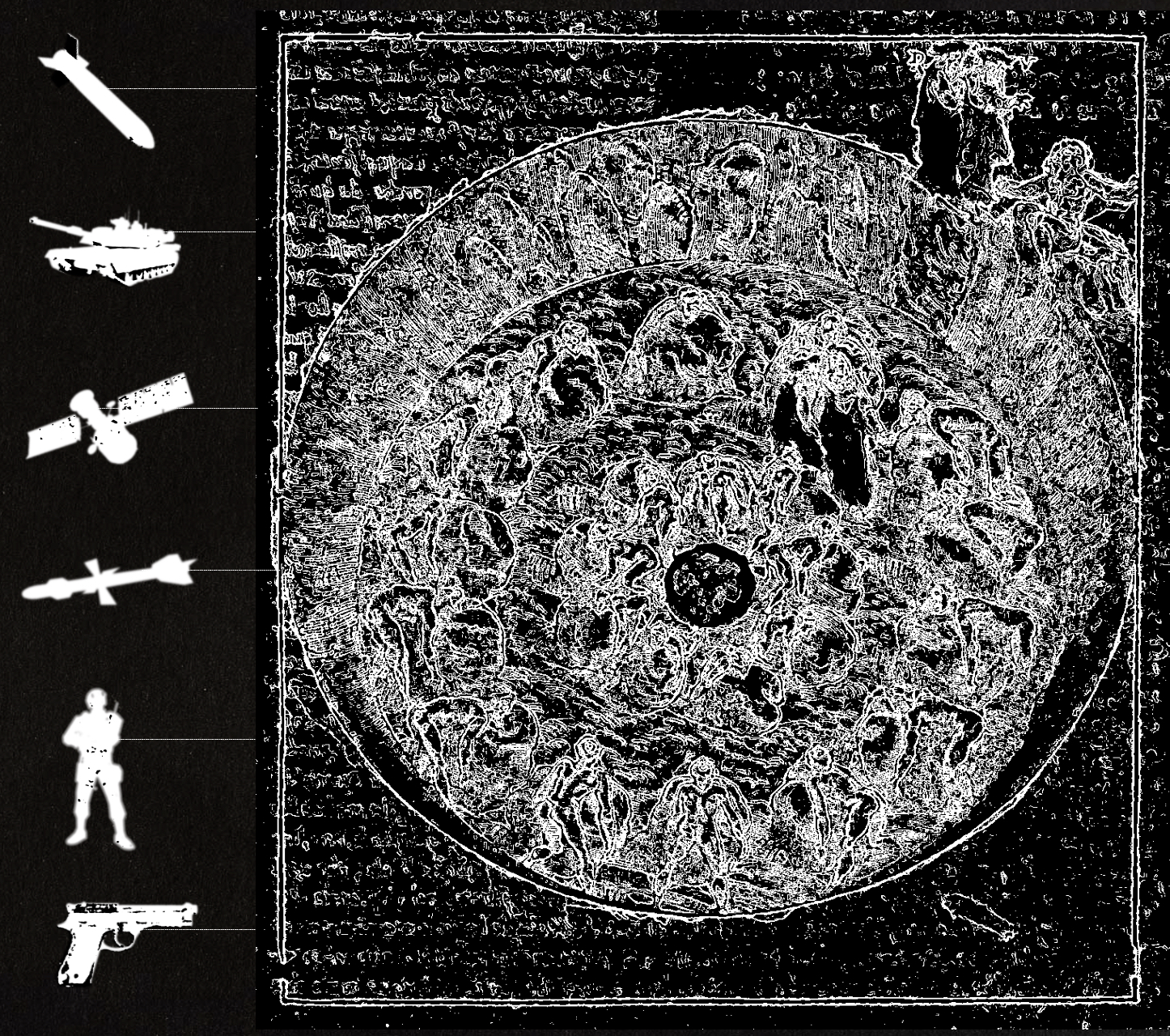
First Circle (Limbo): An Introduction to Hell
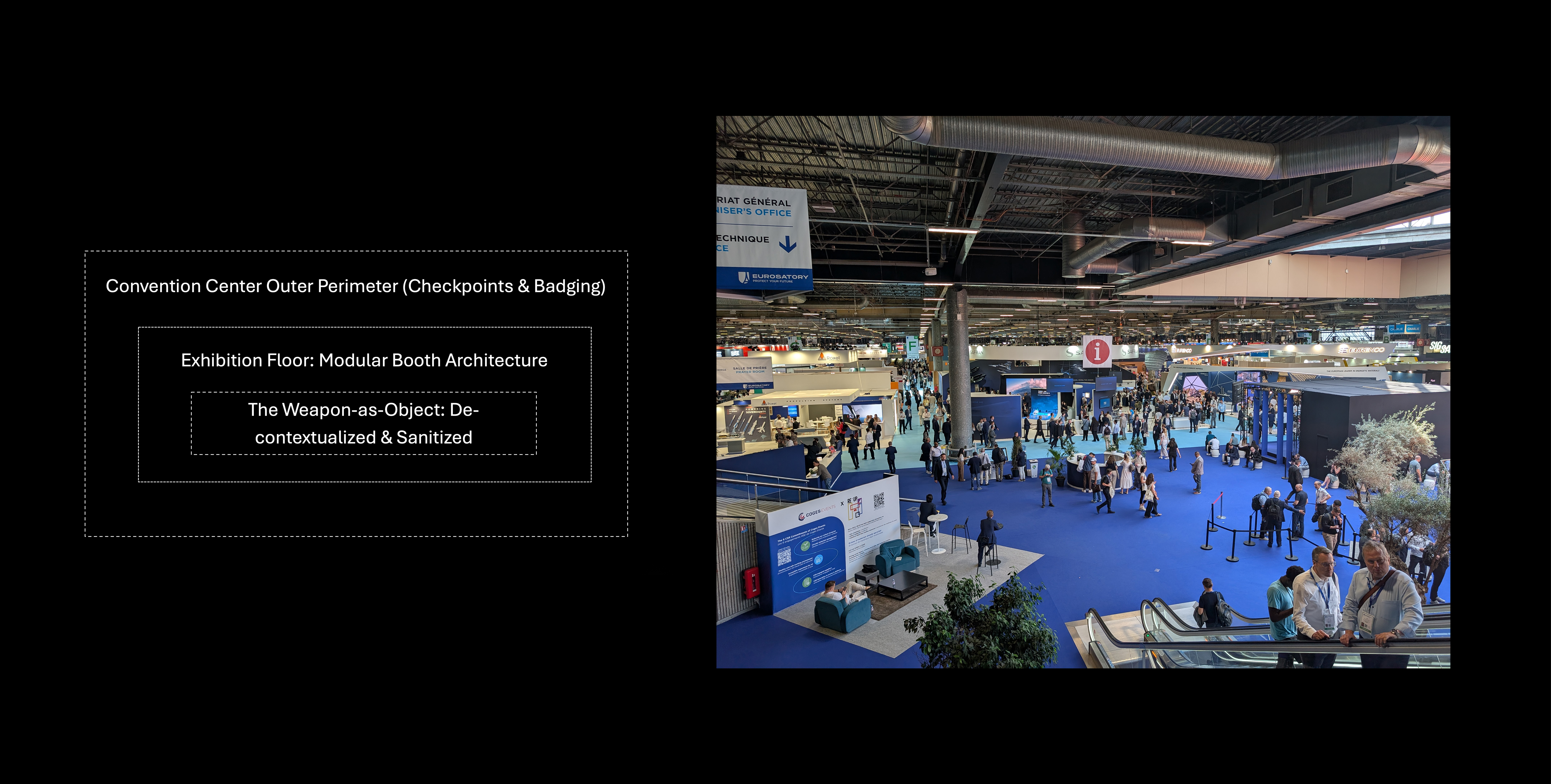
The portal never changes, nor do its protocols: walk through the metal detector, pass your bag through the millimeter wave security scanner, and collect a lanyard with your passport photo and role printed in stark capital letters—ACADEMIC, JOURNALIST, maybe even ARTIST. Crossing the threshold shifts your status entirely. No longer outside the venue and behind police lines with your fiery loudmouthed comrades, you step into the hall, sporting a neutral, blank face, and assume a low-risk professional alibi. It feels oddly mundane and seamless as you blend into a warmongering swarm of arms dealers, industry specialists, government representatives, corporate salesmen, procurement managers, acquisition experts, high-ranking officers, brokers, veterans, and soldiers, all wearing the same tailored dark suit as you.2 In this way, the entrance to an international defense expo feels less like a sudden descent into hell and more like a Limbo of bureaucratic procedure, security infrastructure, and moral indefiniteness. At one point you swear you hear the “sighs of untormented grief” amid all the chatter and mingling.
While the entrance to the arms fair seems banal enough, the rest of the circuit is downright infernal, with its maze of stalls, booths, pods, screens, and stages that loudly advertise the latest tech designed for the capture of land and resources. There are a million directions to look in and a hundred paths to take, yet all feel equally damning.3 A “warm” welcome is provided by a commander on the main podium, who speaks of living in an era of “existential threat,” worrying for his children and grandchildren, yet finishes his speech with promises of investment payouts and lucrative rewards. Shiny bullets encased in Perspex glisten; a group of eager blokes line up to take selfies with a “full-scale missile” that will be dropped somewhere in Palestine over the coming months. The reoccurring sounds of simulated bomb blasts and whooshing rockets accompany the multisensorial spectacle, simultaneously concealing small talk regarding the ever-accelerating development of lethal technoscience.
Following the psychoanalyst Coline Covington’s argument that evil arises “out of the everyday exigencies that determine our lives,”4 this essay examines the material environments that structure, support, and bolster the dealings of the defense industry.5 In particular, it examines the role of the fair, or expo, in normalizing evil and cultivating the fantasy of ordinary, even harmless, violence. I draw on Hannah Appel’s concept of corporate “licitness,” Nicholas Norman Adams’s spatial tiers of access, and recent additions made to critical security scholarship, to frame the fair floor as a staged arena where dehumanization and war lust are rendered routine and logical.6 Furthering work by Anna Leander, Anette Nyqvist, and Rodrigo Fracalossi de Moraes, I suggest that the trade fair operates as a spatial “tournament of values”—a stage where militarized actors use architectural spectacle to manufacture legitimacy and common sense rather than simply exchange commodities.7 Ultimately, through the concept of “sublime hellscapes,” this essay traces how the fair’s spatial design abstracts the visceral violence of the war machine into a spectacle of distant, sanitized, and technical architecture.
Arms fairs, defense exhibitions, and the like usually occupy the vast non-place of suburban convention centers—exhibition halls built on drained wetlands, former brownfields, and industrial peripheries. Indeed, Defense and Security Equipment International (DSEI), a major biennial defense and security trade exhibition bringing together governments, armed forces, industry leaders, and academics, has been held at ExCeL London—a convention center on a sprawling 100-acre site—for twenty-five years. Hugging the Royal Victoria Dock, it directly connects the business of arms dealing with the paludal strata of colonial commerce, hydrological intervention, and aggressive urban restructuring. The docks have always been central to violent trade, functioning as an industrial nexus for colonial extraction by funneling vast bulk commodities—such as settler-colony grain, meat, wool, and rubber—directly into the British metropole. By integrating steam shipping with railways and cold-storage logistics, the docks accelerated supply chain capitalism while violently reshaping East London’s environment and labor force to sustain the machinery and the army of empire.8
Similarly, Eurosatory, Europe’s largest arms fair, takes place at the Paris-Nord Villepinte Exhibition Centre, in a former agricultural district turned global logistics, transport, and warehousing hub. Much like the Royal Docks, Villepinte shares a conceptual lineage as a massive state-backed spatial intervention, which turned a former industrial/working-class suburb into a high-value corridor for capital and commodities.9 The choice of these sites is of no surprise, with both London’s docklands and Paris’s northeastern outskirts bearing the historical marks of land exploitation, energy-hungry commerce, and highly seasonal, gig-based, outsourced labor. Suspended between sovereign states, global logistics networks, and corporate entity status, the arms fair operates through what Christopher Kelty terms an “evil infrastructure,” a system designed to normalize, distribute, and obscure moral accountability through seamless bureaucratic efficiency.10
In such a threshold space, violence is climate-controlled to a steady 21°C and enclosed in neutral, corrugated steel. A booth at a major expo typically costs anywhere between €15,000 and €150,000+ in total, though massive multinational prime contractors can spend millions on sprawling pavilions.11 Usually built in a day or two, they are demolished in a fraction of that time, with most, if not all, of the components ending up in landfill. For an event like DSEI, which hosts 1,500–1,600 exhibitors, approximately 5,000 workers are contracted to build and assemble the exhibition stands and dismantle them at the end of the fair. The architecture of total destruction utilizes the spatial vernacular of trade shows for medical equipment, cosmetics, commercial HVAC systems, and the like. Anodized aluminum trusses frame pristine white vinyl booths. Soft carpet runners cushion the steps of military attachés, procurement officers, and hedge fund analysts. The air smells faintly of industrial carpet adhesive and espresso, served by nearly hidden hospitality workers on precarious contracts, paid per diem. Kill chains are translated into neatly packaged products with sleek designs and compelling taglines.12 All these elements establish a state of moral suspension in which attendees see and read things purely according to visual interest and pleasure. The structural genius of Limbo is that nobody here claims to kill; they merely display, network, and facilitate.
Second Circle (Lust): How to Flirt with a Demon
Eroticism at the arms fair is transactional, embedded in the tactile intimacy between human flesh and machined steel. Exhibitors do not merely showcase hardware, they invite touch. Booths feature ergonomically carved pistol grips cast in rubberized polymers, velvet-lined display cases holding sniper rifle triggers, and high-definition screens that render target acquisition software in lush, hypersaturated color palettes. This multisensory choreography relies on the art of seduction. Hostesses in miniskirts and V-neck blouses offer champagne alongside anti-drone defense systems, while slickly edited promotional videos overlay techno house beats with high-speed footage of missile launches. The booth designs harness and manipulate light: focused LED downlighting reflects off brushed titanium hulls, guiding the hand of the buyer to rest gently on the barrel of an automatic weapon. This is the spatial logic of desire—the weapon is packaged as an object of exquisite engineering, pulling the visitor into a haptic flirtation that erases the grim reality of its ultimate target.
Once you venture even farther into the fair, making your way around “the floor” (industry-speak), you will inevitably be hit on by one of the salesmen. They will be there for the “booze, bombs, and babes,” and to regale you with stories of their service in Iraq, Afghanistan, Syria, and/or Kuwait, emphasizing both their boredom and their sexual frustration. They will show you mirror pics of their pecs taken on their Nokia 3310s and 1100s that during the Iraq war defined the very aesthetics of deployment and base life. They will brag about their kill counts and their sniper-turned-consultant career path, and they will look at you with a sense of incredulity and amusement when you tell them about your profession as a historian, or an artist, or a cultural theorist, joking that they thought you were a “sexy sultry undercover spy.” They will make inappropriate comments about your body, your youth, and your intelligence and offer to take you to their hotel bar of choice after the fair, awkwardly hiding their wedding band as they talk.13 As Terrell Carver and Laura Lyddon argue in their reflection on the performance of gender at military trade shows, “the gender order is deadly serious, and we know it when we see it.”14 Out of the corner of your eye, you’ll see a friend and fellow female undercover anthropologist being pulled by her lanyard by one of the “guys” as a joke, the gesture mimicking the pull of a dog’s leash, to draw her closer to his crotch, in front of all his friends. You’ll hear the words “blowjob,” “submissive,” and “harmless fun” thrown around. At the same time, the US company John Cockerill Defense will unveil their very serious, very complex, and very deadly new turret system. The curtains open; the veil falls.
Nearly exposed, you will think of the feminist scholar Carol Cohn’s canonical 1985 text in which she shares her experience navigating a summer workshop on nuclear weapons, nuclear strategic doctrines, and arms control taught by “distinguished defense intellectuals.”15 Through her ethnographic incursion, she demonstrated the existence of a chimerical “hard-nosed realism” among white male American “defense intellectuals,” with its dangerous claim to “cool-headed objectivity” and “hyper-rationality.”16 In the same article, Cohn coined the term “technostrategic,” which, at the time, sought to represent the inextricably intertwined nature of technological and nuclear strategic thinking, inaugurating a way of looking at problems that are reflective and deeply embedded in the technology itself.17 Formal mathematical modeling, systems analysis, game theory, linear programming; all these epistemic frameworks reflected the very way the world and human life were being apprehended and evaluated.
Along with the rationalization of war as a technostrategic calculation, Cohn was struck by the men’s explicitly sexualized relationship to nuclear weapons and war making. While she found terms like missile envy “uncomfortably reductionist,” her experiences did little to dispel the clear sexism and misogyny present in militarized spheres.18 The creation of the atomic bomb and the doctrines around its use, Cohn found, were rife with phallic imagery, competitive male sexuality, and the promise of sexual domination. You will recognize the continuation of the same erotic evil running like an undercurrent at the fair: Barbie pink FP-5 ground-launched cruise missiles, the SkyWiper (EDM4S) Anti-Drone Weapon that features a slim-waisted, busty witch, male attendees gently stroking the weapons on display, jokes about cocked guns, and personal missile sizes.19
Third Circle (Gluttony): Even the Devil Has a Sweet Tooth
Gluttony at the fair manifests as both endless logistical consumption and the intake of copious amounts of treats and indulgences. To quote one interlocutor, “The fair will teach you quite quickly how to be a functional alcoholic... the drinking begins as soon as you enter.”20 The layout of the floor is a labyrinth of abundance—booths overflowing with corporate-branded merchandise, artisanal catered spreads, and bottomless lunches positioned strategically next to missile defense arrays. Brochures come with chocolate samples and candy. Take, for example, the boiled sweet handed out at a stall for AB Bofors (a Swedish arms manufacturer owned by BAE Systems) to promote its Bofors Test Center. Wrapped in black packaging emblazoned with the words “WELCOME TO HELL,” the sweet perfectly encapsulates the nauseating irony of pairing expo sweets with the merchandise of destruction.21 More recently, attendees have been offered desert-grown dates at the Saudi pavilion, a box of handmade organic chocolates by one of Palantir’s competitors, and breath mints by a company that repurposes military surveillance technology for border control.22 All this is an exercise that David Howes refers to as “hyperesthesia,”23 or the sensual logic of late capitalism which relies on the “increasingly vociferous invocation of the senses”24 to connect consumer capitalist (experience) economy with the business of selling weapons.25
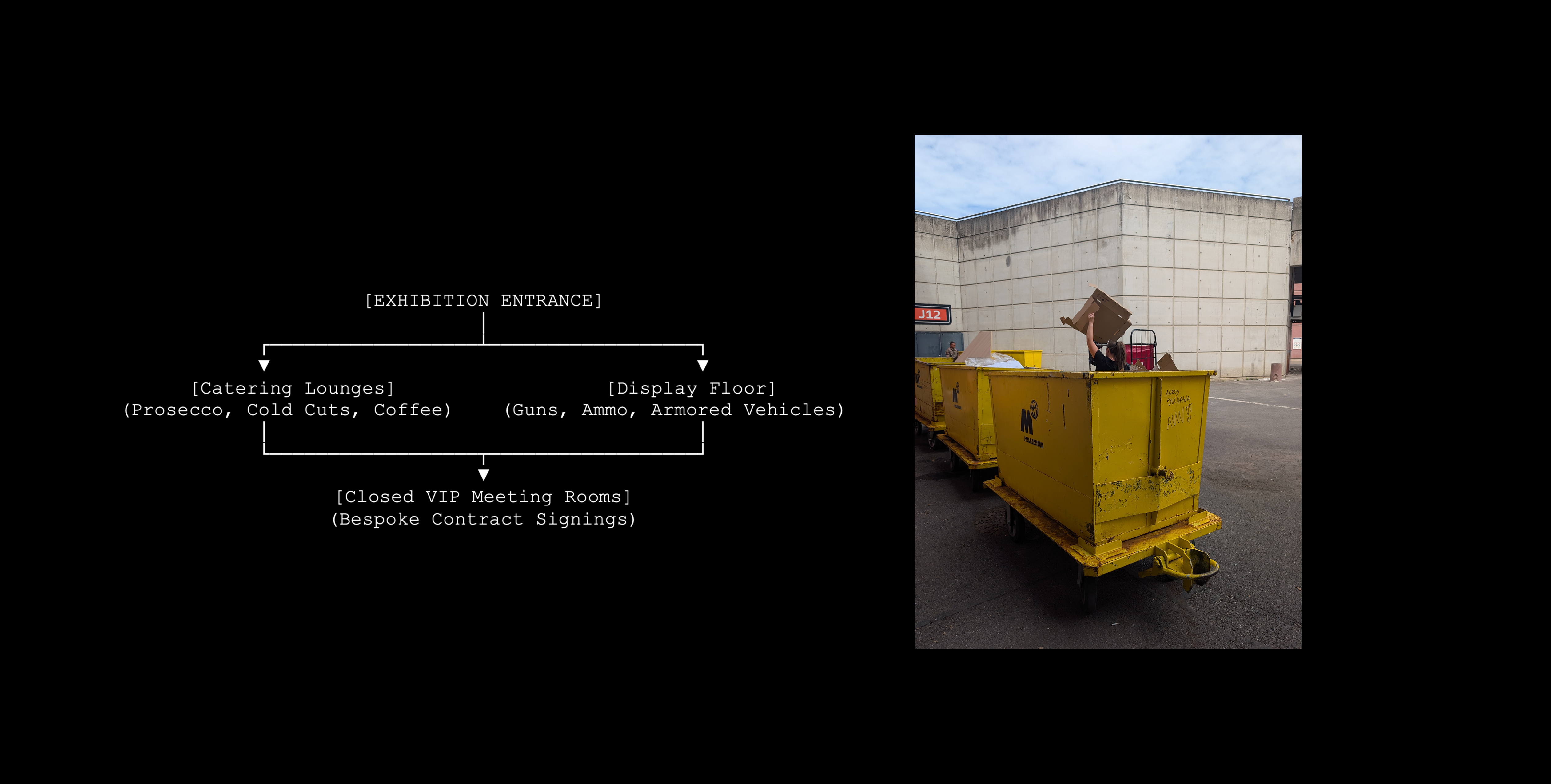
Similarly, the physical infrastructure of the fair distracts attendees from the spatial mechanics of lethality’s consumption by explicitly catering to bodily comfort and the maximization of pleasure. Delegates graze on prosciutto and sip chilled prosecco as they negotiate ammunition orders of hundreds of thousands of rounds. Waste is instantly whisked away by an invisible army of service workers, who ensure that the aisles are kept immaculately clean. The space demands an endless appetite—more contracts, more upgrades, more payloads, all consumed in a brightly lit environment that masks the resource extraction and destruction required to sustain it. It is only during smoke breaks that you will see the extent of the labor required to feed such an appetite. You’ll brush against frontline workers—dishwashers, servers, event loaders—typically hired through third-party staffing agencies and hear whisperings of low pay, zero-hour contracts, and minimal employer accountability, all while the defense firms spend thousands on luxury hospitality packages throughout the fair.26 In the words of one waiter:
We’re on our feet twelve to fourteen hours a day, taking three-minute breaks behind temporary partition walls where the floor is sticky, and you can hear the hum of the air handlers sucking up the diesel exhaust from the setup crews. Up on the main floor, everything is polished glass, carpets, and soft lighting, but back here it’s pure slog.
You’re instructed to be invisible, to keep the champagne flowing, to clear the trays without sound while these guys negotiate contracts worth millions. We get paid minimum wage... maybe a couple of pounds above if you’re supervising... to clean up after men who are casually pricing out missile systems and tactical drones like they’re ordering off a brunch menu.27
Fourth Circle (Greed): Would You Trade Your Soul for This?
As you continue to descend farther into Hell, you’ll encounter the spatialization of pure exchange value. In this section of the fair, weapons are stripped of their materiality and reduced to speculative financial assets. Wall-mounted monitors display real-time stock ticks, supply chain projections, and unit-cost breakdowns. It is worth noting that, according to one insider, the contracts exchanged on the floor are “worth fuck-all,” serving as irrelevant templates.28 Actual deals and price evaluations are all conducted in secret and revealed only to stakeholders. The floor architecture mimics that of a financial trading desk—glass-walled meeting pods offer private spaces for high-stakes negotiations, complete with whiteboards and encrypted network connections. Other spaces hijack the language of collaboration, community, and conviviality, inviting you to meet new people in bespoke corners, with tables configured so as to resemble restaurant speed-dating.29 Recruiters regularly scour the floor, looking for young new talent. Increasingly, neurodivergent attendees are singled out as particularly attractive candidates, with companies like The Hacking Games warning of the cognitive weaponization of young people by cybercriminals and hostile actors, and encouraging the recruitment of “corkscrew minds” who possess a “desire to cheat to win.”30
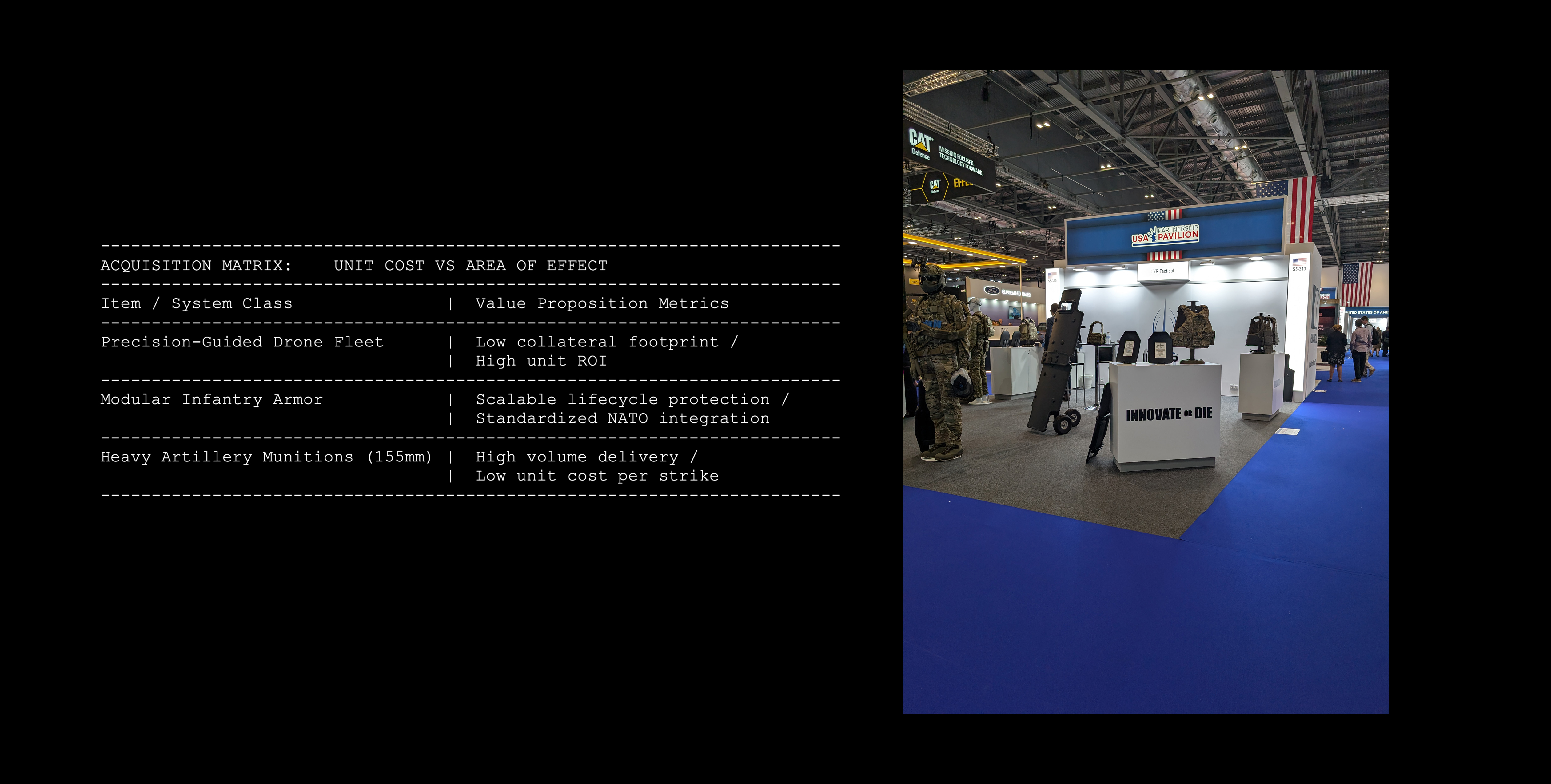
Evil infrastructure operates here by monetizing scale. The trade in lethal weapons is framed as a matter of fiscal responsibility, long-term maintenance contracts, and offset agreements. The spatial layout forces a comparison between the cost of a missile system and its return on investment, converting human casualties into an abstract calculation on balance sheets. This process mirrors what Susan Lindee identifies as the core logic of both industrialization and technoscientific warfare—interchangeable parts, efficiency, and rational management.31 At this intersection of capital and destruction, the market dynamics of the war machine reveal a deeper, systemic drive. Manuel DeLanda recalls that, as the pressure of peacetime logistics32 pushed society from a market economy toward a command economy, the flexible software managing the network of wartime logistics followed the opposite route—moving from early centralized command networks to decentralized “agoric systems” (from the Greek agora, meaning market), where autonomous computational agents trade, bid, and allocate resources in competitive markets.33 In these automated, market-driven environments, weapons and logistics are increasingly valued not for their physical utility on a battlefield but for their real-time performance as financial assets. At arms fairs, these agoric networks manifest as digital procurement portals, algorithmic war-gaming simulations, and real-time stock market valuations responding to geopolitical flashpoints. In Exocapitalism, Marek Poliks and Roberto Alonso Trillo term this “lift,” wherein capital continuously seeks independence from its material base, lifting away from physical dependencies, fixed infrastructure, and manufacturing constraints into pure financialized abstraction.34 On the trade show floor, lethality is no longer bound to the bloody physical terrain of combat—it floats above it as pure market liquidity.
Fifth Circle (Anger): Trigger-Happy Therapy
The Fifth Circle is designed for controlled simulated aggression. Booths are transformed into immersive tactical sanctuaries featuring VR headsets, closed-loop firing simulators, and interactive war-gaming stations. Here, violence is sanitized into catharsis and gamified feedback. The spatial design insulates the user from real-world consequences, echoing a longer trajectory of remote militarism from early drone warfare to modern algorithmic targeting. In these digital architectures, the classic voyeurism paradox of the remote operator—where hypersurveillance paradoxically breeds profound emotional detachment—is commercialized into pure entertainment. This aesthetic of clinical distance evokes the Obama-era calculus of targeted killing, where precision strikes and sanitized metrics were marketed as a clean ethical alternative to boots on the ground, masking the persistent horror of asymmetric warfare.35
Recoil is simulated via pneumatic actuators, offering satisfying physical feedback without blood, dust, or grating sound. The atmosphere mimics a luxury gaming arcade, encouraging delegates to test their reaction times and rack up high scores on digital targets. At the IAI stand, Israel’s Iron Dome system mimics the aesthetics of the arcade game Space Invaders with a movable laser cannon shooting at pixelated enemy missiles. The architecture converts rage into a clean, metric-driven interface, turning the mechanics of killing into a therapeutic exercise in spatial control and elimination. This gamified sanitization provides a vital psychological shield against deep-seated existential terror. As psychoanalyst Franco Fornari argues, the primary question is not merely who causes war, but what psychic function war performs—war as a necessary social institution with the ultimate aim of curing the paranoid and depressive anxieties that exist in every individual.36 It serves as a security system against internal terrors where the true objective, paradoxically, is “not to defend ourselves from an external enemy, but to find a real enemy”—externalizing a terrifying and impossible to resolve internal anxiety into a “flesh-and-blood adversary” who can be “faced, targeted, and destroyed.”37
In the twentieth and twenty-first centuries, war became increasingly less capable of containing these deep psychic anxieties. The growth of military technology—from the indiscriminate carpet-bombing campaigns of World War II and the strategic nuclear posture of the Cold War to the algorithmic, signature-strike protocols of the global War on Terror—has induced what the psychoanalyst Hanna Segal describes as a schizoid psychopathology marked by prevailing dehumanization, depersonalization, and derealization.38 Pushing a button to annihilate parts of the world one has never seen, whether authorizing a B-52 Arc Light strike in Vietnam or executing a remote drone signature strike from a console at Creech Air Force Base in Nevada, becomes a “mechanized, split-off activity.”39 Warmongers inhabit a vicious cycle of self-induced helplessness, terror, and omnipotence where, confronted by pure destructiveness, individuals and institutions divest themselves of moral responsibility through “denial, projection, and fragmentation.”40
Within this landscape of dark triad personalities, many of the male attendees latch onto female attendees (who are sometimes undercover researchers) for comfort and reassurance. They will come to you expressing worry that what they are doing might be morally reprehensible and contributing to the further escalation of violence. Some will even wield the language of complicity and shame and “feel a great deal of pain and anguish at the thought of innocent people getting caught up in the middle of this.”41 However, it is important to take these interactions with a grain of salt, especially since there will be no actual withdrawal from the business of war. Many of these moments may resemble the relationship between therapist and patient, or priest and confessor, where the ultimate aim is the alleviation of a “bad feeling” or a nagging sense of culpability/responsibility. Many of the men are also expert manipulators—former negotiators, foreign area specialists, and the like—with training in psychology, behavioral analysis, and human resource management. They know exactly which facial expressions to mimic and which discourses to wield for maximal emotional engagement, and you will feel your emotional battery grow depleted with each passing conversation.
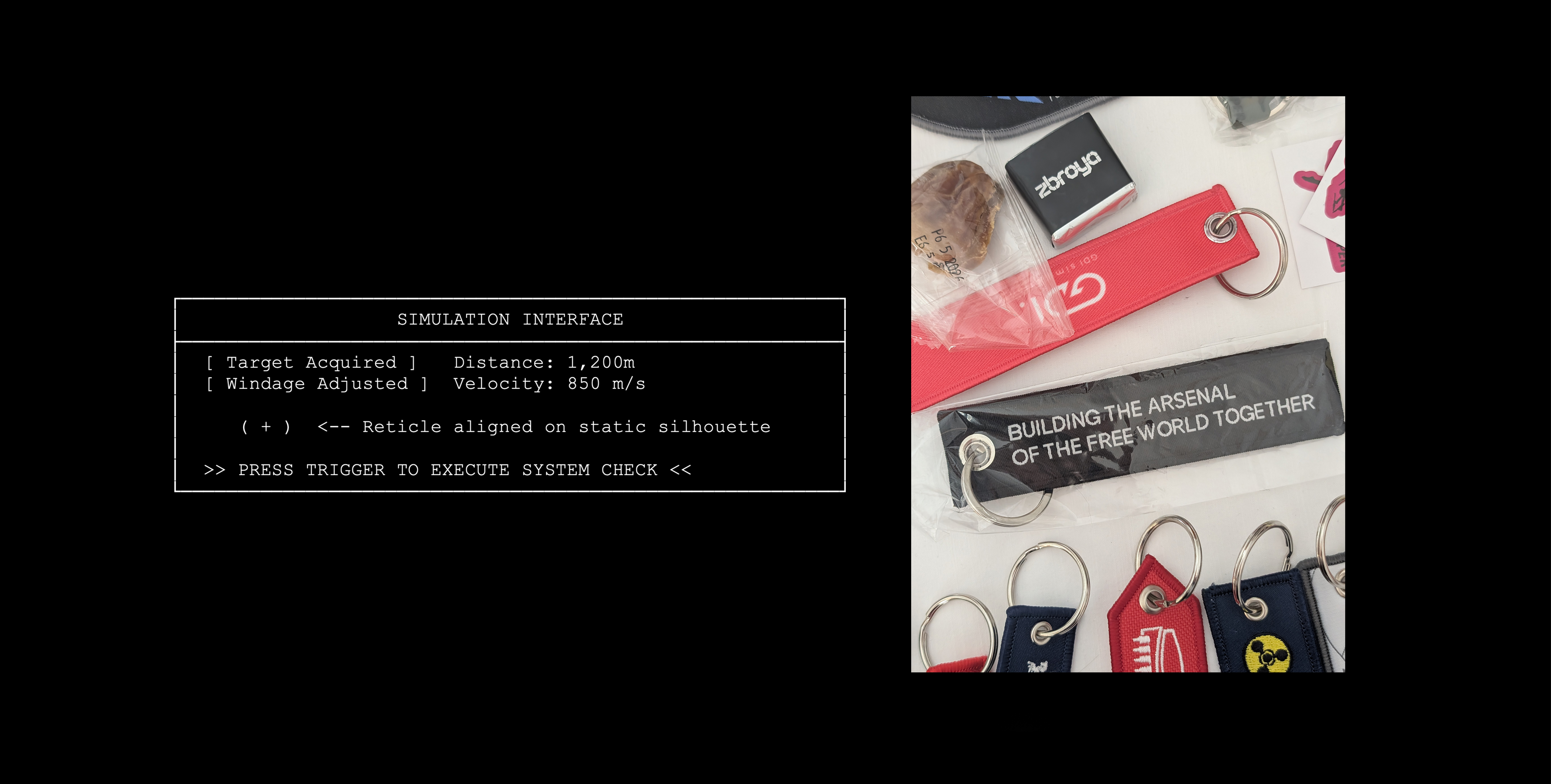
Even the weapon systems engage in tactics of affective sabotage, weaponizing discourses of sovereignty, freedom, and love. There is Fire Point, a leading Ukrainian defense-tech company that develops and produces advanced, cost-effective, and “battle-proven” UAV and missile systems. Its arsenal is flamingo pink, and its promotional videos flash the words “love at first strike.” Another rival drone company hands out stickers bearing statements like “catching drones, not feelings,” “no dependency, just connection,” “I got you,” and “size matters.” It may remind you of Sara Ahmed’s point about the structural weaponization of “good feelings” to maintain status quo systems of oppression, with violent actors and institutions frequently authoring a “politics of hate” through the language of love, for nation, for one’s own kind, or for the profit margin.42 Attendees also evoke a connection between the arms trade and lofty notions of liberty, with one corporate affairs director from a European defense industrial consortium stating:
Without a sovereign defense industry, national self-determination is a total illusion. What we facilitate in this hall isn’t just commercial trade... it’s the physical infrastructure of freedom. When a democratic nation buys our air defense systems or precision-guided munitions, they are purchasing the ability to say “no” to foreign coercion. Peace isn’t a default state of nature... it requires deterrence and enforcement. An arms fair like DSEI is where free nations build the collective industrial muscle to guarantee their own survival and sovereignty in an increasingly aggressive world.43
Another, a head of communications at major missile manufacturer, similarly tells you:
Look at the geopolitical landscape... sovereignty is only as real as your capacity to defend your borders. By bringing together domestic innovators, allied procurement agents, and tech developers under one roof, we accelerate the delivery of lifesaving, freedom-preserving technology to the front lines. Every contract signed on this floor strengthens the industrial base that underpins Western democracy. We don’t create conflicts... we provide free nations with the tools required to deter authoritarian expansion and protect civil liberty.44
Sixth Circle (Heresy): Part of God’s Divine (Tactical) Plan
Along with using the language of liberty, the fair also trades in sacred narratives and pseudo-scientific dogmas, repurposed by defense contractors to legitimize their hardware. Booths increasingly incorporate pseudo-monumental architecture, from tall fabric columns to dramatic directional spotlighting and minimalist pedestals that frame weapon systems like holy relics. Promotional materials merge theological concepts of protection and divine justice with advanced military technology—for example, on a Lockheed Martin missile you will spot the ominous text “God Bless You,” written in English and Arabic. You also walk past missiles and defense shields named after mythical gods and religious iconography, presented as tools for restoring order in a fallen world. There is David’s Sling, a central component of Israel’s air defense architecture designed to intercept medium-range rockets and cruise missiles, and Greece’s Achilles’ Shield, a major modernization program that works in tandem with advanced Israeli tech (like David’s Sling and SPYDER) to intercept modern missile, aircraft, and drone threats. There’s also RS-28 Sarmat/Satan II, Russia’s premier silo-based, liquid-fueled intercontinental ballistic missile (ICBM), fielded to replace its older Cold War predecessor. While its domestic name is the Sarmat, NATO deliberately preserved the biblical, apocalyptic moniker “Satan II” to formally codify its destructive threat profile within Western defense mapping systems.
Beside the monikers, the physical arrangement of the fair forces a posture of reverence—visitors look up at towering drone platforms mounted on pedestals, framed by banners proclaiming the preservation of freedom, security, and civilization itself. Technology is elevated to become in effect a secular religion, promising redemption through total spatial awareness and air dominance. This totalizing dogma finds its historical precedent in Patrick Geddes’s early attempts to construct a rigid taxonomy of war and peace.45 As Daniel Pick highlights, Geddes introduced technoscientific terms to categorize social order and disorder, labeling war as geoklastic, paleotechnic, and kakopsychic, while defining peace as geotechnic or Eupsychic.46 Through this, Geddes sought an objective “science of war” analogous to sciences like volcanology and seismology—hoping to isolate fundamental, “nodal” wars from surface tremors while acknowledging that peace itself may merely be latent war brewing beneath an apparently stable crust.47 Those who preach naive pacifism, Geddes hinted, ignore the subterranean world of psychic life and forget the sobering reality that “it is in Wardom that we live, move and have our being.”48
A similar drive to construct a grand secular dogma appeared in Gaston Bouthoul and René Carrère’s post-1945 project of “polemology.”49 The pair sought to establish a precise scientific taxonomy and chronology of war, sorting historical conflicts into rigid structural classifications—ultraconflicts, macroconflicts, microconflicts, and infraconflicts—in order to map the demo-economic, geographical, and mental structures which engender collective aggression. Yet, as Pick observes, this ambition relied on a strangely naive constellation of generalizations, demographic statistics, and structuralist hubris.50 It attempted to reduce the chaotic madness of war to a synchronic and diachronic science, seeking comfort in formulas and tabulations, all the while ignoring the underlying capacity for human madness—what Roger Money-Kyrle identified as the innate human capacity for delusion and collective psychosis.51 In the end, these academic frameworks and modern trade displays reveal a shared impulse—an attempt to use systems of classification and technology to sanitize and normalize the reality of mass destruction.
Seventh Circle (Violence): Lethality Is the Metric
At the center of the fair lies the Seventh Circle, where the core purpose of the convention floor is displayed without metaphor—raw, unadulterated lethality. The spatial organization shifts from soft corporate branding to cold, functional display arrays. Antipersonnel mines, cluster munitions, thermobaric warheads, and urban assault vehicles sit under intense fluorescent lights. Here, the evil infrastructure discards its subtle facades. The spatial language focuses on raw performance metrics—penetration depths, blast radii, fragmentation density, and hit probabilities. The architecture organizes these items into clean grids, treating tools of bodily dismemberment like hardware store inventory. Violence is framed as a technical problem to be solved by engineering, materials science, and spatial precision. This technical reductionism mirrors a broader bureaucratic shift across contemporary defense establishments, where “lethality” has been elevated to an all-encompassing institutional mandate. Under this totalizing doctrine—championed in official policies and speeches that weaponize the term as a singular metric of success—every facet of military life is retrofitted to maximize lethal hits. From physical fitness baselines, dietary regimes, and combat pedagogy to the systematic dismantling of diversity, equity, and inclusion (DEI) frameworks, the entire apparatus of the US Department of Defense, or the UK’s Ministry of Defense, is refashioned into maximizing and streamlining military killing power.52
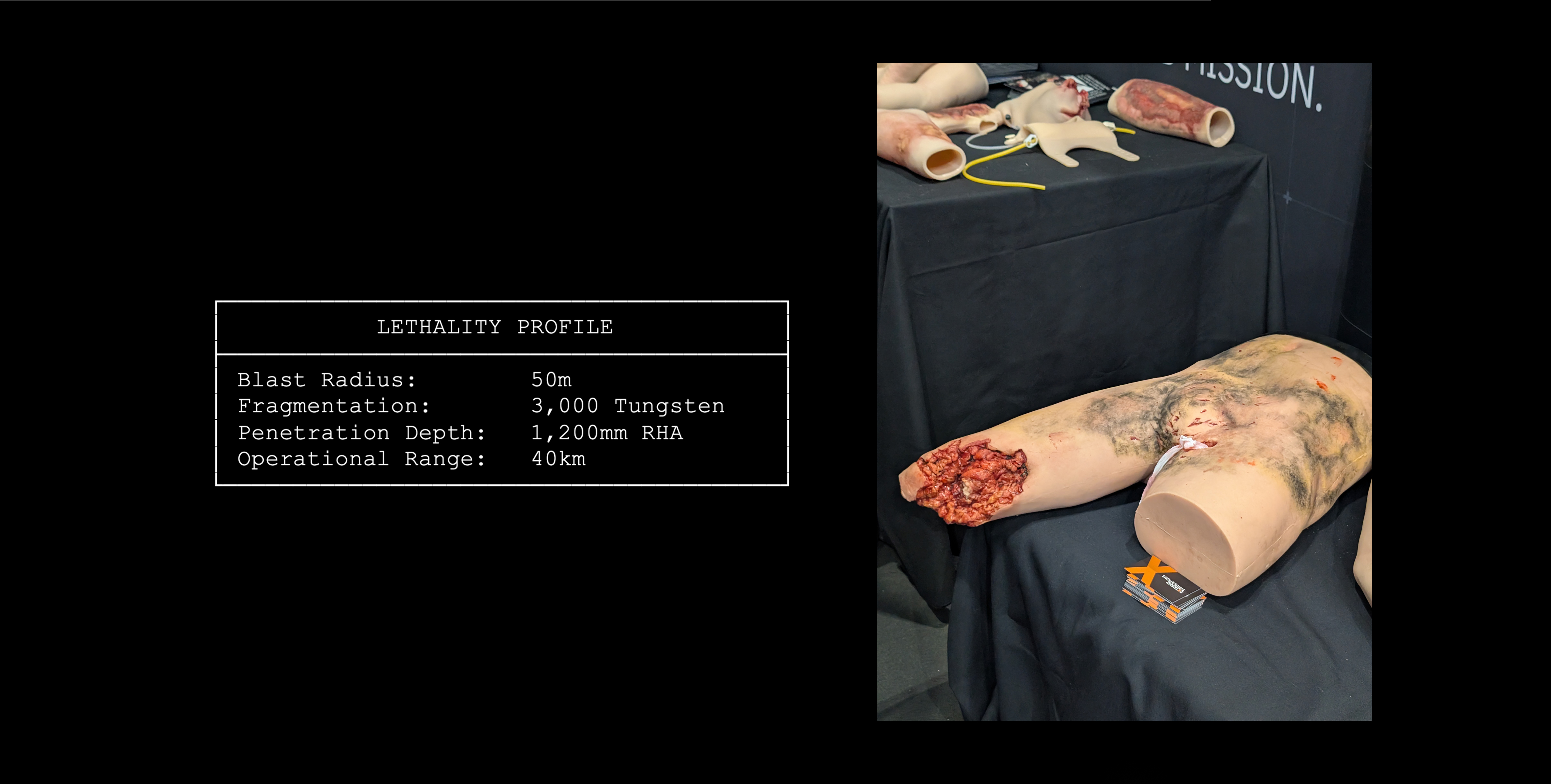
This hyper-rationalization of violence operates within what Susan Lindee terms a “rational fog.” Within this fog, military, technological, and scientific achievements possess a seductive quality, operating in a “half-light” and generating collateral data to guide future violence. It leads to the alleged forces of reason producing utterly unreasonable outcomes.53 As Lindee emphasizes, modern scientific knowledge is inherently double-edged—if you understand how an economy or human mind functions, you know how to destabilize it; if you understand structural engineering or microbiology, you know precisely how to destroy bridges or maximize the deadliness of a pathogen.54
The technical mastery over destruction alters the emotional landscape of war. As Grégoire Chamayou observes, remote and automated weapons like the drone fundamentally transform the ethics of combat, often appearing as “a weapon of cowards,” removing all physical risk for the perpetrator.55 New technologies produce entirely new strategies of emotional damage. As Paul Virilio famously declared, contemporary battle is “nothing more than the autonomy, or automation of the war machine,” and no longer a collision of heroic forces.56 The violence on display in the Seventh Circle represents the culmination of this automation—an unfeeling metric completely detached from human empathy. With cheap algorithmic drones and unsupervised AI slowly but surely replacing human soldiers, the final horizon of military tech seems to be a war machine that operates entirely without human oversight or bodily involvement.57 Such developments will not only alter notions of complicity and legal responsibility but also potentially erase an essential domain for the development of anti-war or anti-military sentiment—the embodied human experience of war.58
Eighth Circle (Fraud): Strategic Make-Believe
The penultimate circle reveals the trade show floor as a theater of illusions. It features speculative military technology: mock-ups of fifth-generation fighter jets made from painted fiberglass, early-stage AI defense algorithms rendered in glossy animations, and nonfunctional prototypes designed solely to secure venture capital or government grants. The space relies on theatrical staging. Darkened rooms with blue ambient lighting, smoke machines, and holographic displays create an illusion of cutting-edge innovation. This architectural mirage allows contractors to trade in promises, using spatial spectacle to sell concepts that may never materialize. Indeed, as one insider notes, “half of the kits, technologies, and devices here are pure fiction... here to entertain... the actual weapons used in the field remain simple and effective.”59 The fraud lies in the gap between the sleek, error-free simulations shown on the fair floor and the chaotic, destructive realities of deployed military hardware.
This gap highlights the profound contradiction between the ideal theory of war and its real-world manifestation. In classic strategic theory, such as Carl von Clausewitz’s On War, conflict is conceptualized as purposive, instrumental, and reducible to an ideal science of planning—an instrument of political policy subordinate to state reason.60 Yet, as Daniel Pick notes, Clausewitz himself recognized that the actual practice of war inevitably undermines the consistency of the thought and theory built around it.61 The very etymology of the word war traces back to the Old High German werra, meaning confusion, discord, and strife. Far from being a rational instrument of statecraft, the war machine operates with its own autonomous, chaotic momentum. As Gilles Deleuze and Félix Guattari argue in Nomadology, the war machine has an intrinsic energy and momentum, one that is fundamentally external to the state apparatus. While the state apparatus constitutes the interiority according to which we habitually think, the war machine is a form of pure exteriority, retaining something eternally nomadic, like “the tribe in the desert.”62
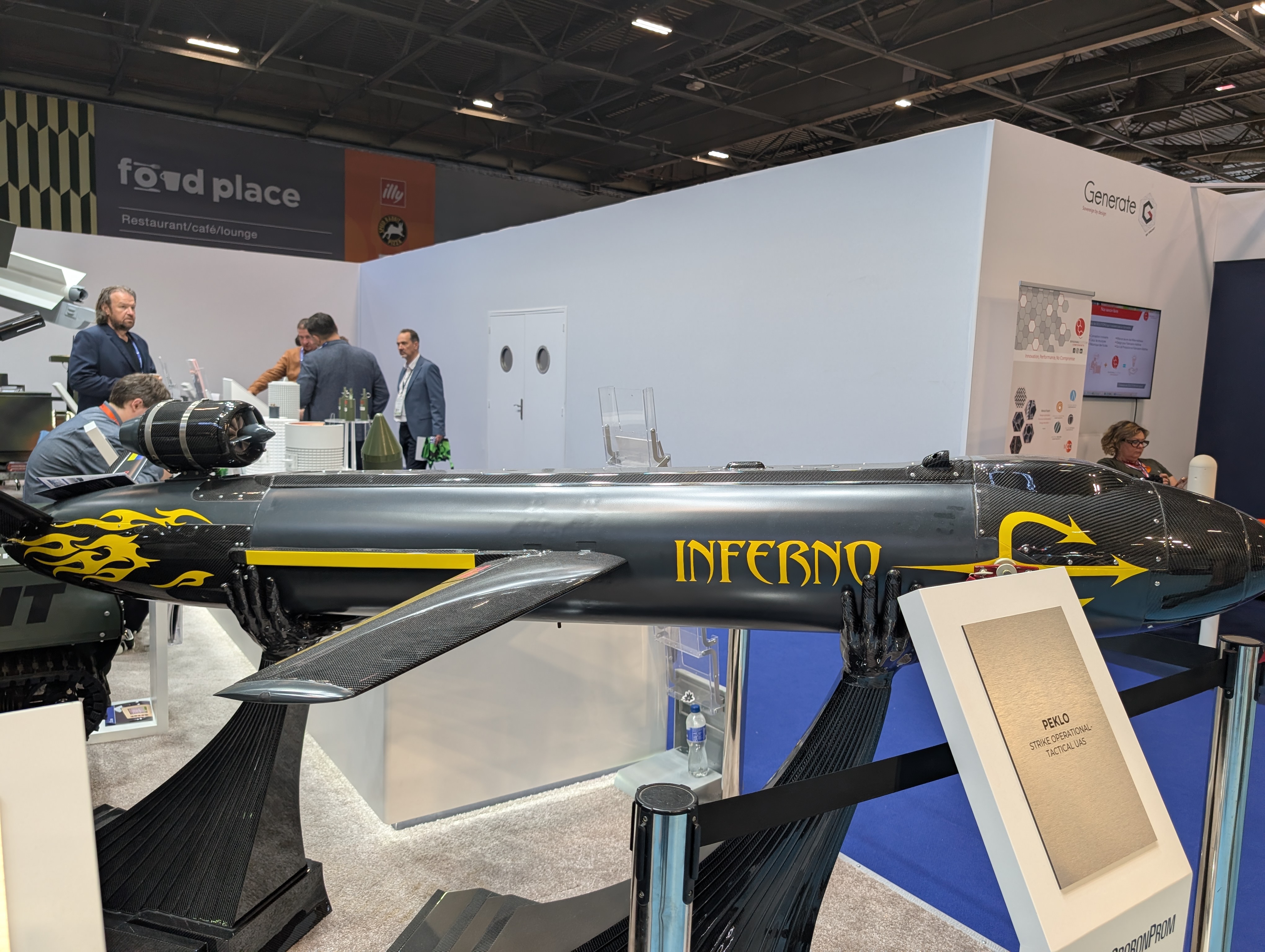
In the digital era, this autonomous war machine manifests as computational software objects. DeLanda notes that these independent software entities, aptly and perhaps ironically, termed “demons,” form computational societies that resemble ecological systems (such as insect colonies) or market systems. Past a threshold of connectivity, the digital membrane covering the planet begins to “come to life,” giving rise to autonomous system dynamics that escape and evade human control.63 It can be argued that these digital formations underpin what Anna Engelhardt and Mark Cinkevich term “infrastructural horror”—where supply chains, digital networks, and military logistics merge into terrifying automated architectures of militarized neo-imperialism and neocolonialism.64 It necessitates the development of “demonology” as method, where automated sensoriums and networked bases, operating outside of human agency, are treated as nonsecular beings of evil, capable of creating new forms of control, surveillance, and suffering, and requiring new modes of cleansing and protection.
Ninth Circle (Treachery): A Guilty Heart Is Heavier Than a Guided Missile
The final circle is the exit space—the transition zone where the trade fair connects back to the everyday city. It encompasses the loading docks, VIP drop-off zones, and security checkpoints where lanyards are discarded into overflowing trash bins. Here, the infrastructure of the fair performs its final act of betrayal—absolute disavowal. The spatial design ensures that once a delegate steps through the glass turnstiles into the crisp air outside, the connection between the contracts signed inside and the real-world destruction they help fund is severed. The fair dissolves into the urban landscape, leaving behind an empty convention center ready to be re-carpeted for an upcoming cosmetics or dental equipment expo. The ultimate treachery of the arms fair is its temporal nature—it materializes as an extravaganza, facilitates transactions of absolute violence, and vanishes without leaving a visible trace in the city that hosted it. Reflecting on Jacques Derrida’s argument in No Apocalypse, Not Now, that the true horror of modern nuclear capabilities is not merely physical ruin but “the new reality of the potential destruction of history itself—of the very archive as such,”65 the most frightening aspect of the defense industry seems to be its ahistoricity: its capacity to persist in the face of the destruction it makes possible. An infinite, sublime hell that appears every year, anew, offering novel temptations and cutting-edge instruments of torture and death.
In the same text (and as paraphrased by Pick), Derrida writes that recuperation and assimilation (for example, of the apocalyptic or bimillenary type) might make us “blind and deaf to the newness of what we face.”66 One needs to cut through the apparent resemblance of this discourse to others and ensure that hell does not become familiar. The fact is that, if you have a soul, attending an arms fair will weigh heavily on it. You will walk out of the convention center with brain fog, experiencing a sort of secondary guilt that comes with helping hold a butcher’s knife or wiping the sweat off the executioner’s forehead. You will think of the ongoing, intentional, and systematic carnage of people who find themselves maimed and killed by the fair’s many shiny weapons—in Palestine, Lebanon, Syria, Yemen, Congo, and Sudan.67 You will think about how these weapons are also being deployed for internal political repression and border enforcement. You will take excessively long showers to clean off the psychic filth that settles on you, and try to scour away the unwanted touch of demons.
This is a good thing. It means that for you the arms fair is still a hell worth abolishing and dismantling. It means that you have not made kin with sociopathic demons. That you still seek to ward off the evil eye of the (military-industrial) complex. That behind the grand, intoxicating spectacle of this sublime hellscape, you can still recognize the devil for what he is.
-
Dante Alighieri, The Divine Comedy of Dante Alighieri: Inferno, trans. Henry Wadsworth Longfellow (Boston: Ticknor and Fields, 1867), 1.1–3. This essay uses the Divine Comedy as a way to apprehend the arms fair as both “infernal” structure and surreal experience. Much like Dante’s nine circles of hell, the layout of contemporary arms fairs resembles a strictly mapped, bureaucratic funnel that grows in violence and exclusivity as one travels deeper within it. Within the context of this piece, readers will move from the outer circles of commerce to the lower circles of violence and fraud, before ending up in the center of the abyss (betrayal). ↩
-
Thank you to Taylor Miller for reminding me of Max Porter’s soliloquy on the weapons industry, “Wild West,” in which he encounters a similar evil and poses the question: “Does the devil wear a grey M&S suit with comfy brown Merrells?” (2023), link. ↩
-
For those who are interested, exhibition floor plans are available at link (for Eurosatory) and link (for DSEI). ↩
-
Coline Covington, Everyday Evils: A Psychoanalytic View of Evil and Morality (London: Routledge, 2016), 1. ↩
-
This concept appears in Covington’s Everyday Evils, which blends psychoanalysis with sociology and history to explain how ordinary people come to commit harmful and violent acts. ↩
-
Hannah Appel, The Licit Life of Capitalism: US Oil in Equatorial Guinea (Durham, NC: Duke University Press, 2016); Nicholas Norman Adams, Terminal Destruction: Capitalism, Technology, Accelerationism and the Decline Within Immediate Modernity (London: Palgrave Macmillan, 2026); Columba Peoples and Nick Vaughan-Williams, Critical Security Studies: An Introduction (London: Routledge, 2015); Chris Rossdale, Resisting Militarism: Direct Action and the Politics of Subversion (Edinburgh: Edinburgh University Press, 2019); and Terrell Carver and Laura Lyddon, Masculinities, Gender and International Relations (Bristol: Bristol University Press, 2022). ↩
-
Anna Leander, “Parsing Pegasus: An Infrastructural Approach to the Relationship Between Technology and Swiss Security Politics,” Swiss Political Science Review 27, no. 1 (February 2021); Christina Garsten and Anette Nyqvist, eds., Organisational Anthropology: Doing Ethnography in and Among Complex Organisations (London: Pluto Press, 2013); Hege Høyer Leivestad and Anette Nyqvist, eds., Ethnographies of Conferences and Trade Fairs: Shaping Industries, Creating Professionals (Cham, Switzerland: Palgrave Macmillan, 2017); and Rodrigo Fracalossi de Moraes, “The Security Sector in Pursuit of Legitimacy: Self-Legitimation Practices in Security Fairs,” Security Dialogue 56, no. 2 (2025). ↩
-
David Gilbert and Felix Driver, “Capital and Empire: Geographies of Imperial London,” GeoJournal 51, no. 1 (2000): 23–32; Jonathan Schneer, London 1900: The Imperial Metropolis (New Haven, CT: Yale University Press, 2001); Isabel Hofmeyr, Dockside Reading: Hydrocolonialism and the Custom House (Durham, NC: Duke University Press, 2021). ↩
-
Patrizia Ingallina and Jungyoon Park, “Tourists, Urban Projects and Spaces of Consumption in Paris and Ile-de-France,” in World Tourism Cities: A Systematic Approach to Urban Tourism, ed. Alastair M. Morrison and Cristina Maxim (London: Routledge, 2014), 43-65. ↩
-
Christopher Kelty, “Evil Infrastructures,” Theorizing the Contemporary, Fieldsights, April 28, 2017, link. ↩
-
While this information was gleaned during an interview with a sales representative at Eurosatory, conducted on June 15, 2026, there are budget overviews, pricing guides, and factsheets that indicate similar prices. ↩
-
By kill chain, I mean the “interconnected chain of elements” that make up modern weapons systems. This includes the sensor element, detecting, identifying, and tracking a target; the Command and Control (C2) element processing data from the sensors to make engagement decisions; the delivery vehicle/platform transporting the lethal payload to the coordinates of the target; the payload/effector inflicting the actual physical destruction; and the assessment element verifying the outcome of the strike and closing the loop of the system. The kill chain describes everything from radar systems to thermal imaging cameras, AI, target-prioritization algorithms, fighter jets, naval destroyers, kinetic warheads, precision guided munitions, directed-energy weapons (like lasers), battle damage assessment (BDA) drone footage, satellite imagery, and more. For a comprehensive overview, see Christian Brose, The Kill Chain: Defending America in the Future of High-Tech Warfare (New York: Hachette Books, 2020). ↩
-
While confirmed only through hearsay and off-the-record conversations with interlocutors, major international trade expos—including defense and arms fairs—frequently see localized spikes in after-hours nightlife, dating-app activity, and the use of commercial sex work. The fact that major defense firms and militaries enforce strict compliance and anti-corruption guidelines prohibiting the use of corporate funds for commercial sex entertainment indicates that this has been an issue in the past. There are resonances here with the Grindr app surge/crash during annual meetings of the Republican National Committee (RNC), link. ↩
-
Carver and Lyddon, Masculinities, Gender and International Relations, 45. ↩
-
Carol Cohn, “Sex and Death in the Rational World of Defense Intellectuals,” Signs: Journal of Women in Culture and Society 12, no. 4 (1987): 688. ↩
-
Cohn, “Sex and Death in the Rational World of Defense Intellectuals,” 692. ↩
-
Cohn, “Sex and Death in the Rational World of Defense Intellectuals,” 690. ↩
-
Cohn, “Sex and Death in the Rational World of Defense Intellectuals,” 692. The term missile envy was coined by the physicist and anti-nuclear activist Helen Caldicott. See Helen Caldicott, Missile Envy: The Arms Race and Nuclear War (New York: William Morrow, 1984), 25. ↩
-
For more on gender relations and arms fairs, see Nico Edwards’s recent dissertation: Nico Edwards, “Decarbonisation as Warfighting Opportunity: Military Climate Governance, the Green Transition and Struggles for Socio-Ecological Justice,” PhD thesis, University of Sussex, 2026, link. ↩
-
DSEI, London, September 9, 2025. ↩
-
The candy was recently included in the artist Jill Gibbon’s new book, Gifts from the Arms Trade, which explores the secretive culture of international military trade shows through corporate freebies and promotional merchandise collected during two decades of undercover fieldwork. Jill Gibbon, Gifts from the Arms Trade (Kalsemade, Denmark: Narayana Press, 2026). ↩
-
The offering of the dates felt especially loaded with subtext, given the geopolitical significance of date production in the region. While the provision of Arabic coffee (gahwa) at the Saudi pavilion was an expression of hospitality (karam), the dates seemed more akin to a tool for soft power and an instrument of economic strategy. They were offered to remind attendees of the Saudis’ grip on production and their control of the water sources necessary to sustain date groves in the region. For the politics of the date palm, see: Eran Segal, “Palm Dates, Power, and Politics in Pre-Oil Kuwait,” All Things Arabia: Arabian Identity and Material Culture, no. 54 (2020). ↩
-
David Howes, “Hyperesthesia, or, the Sensual Logic of Late Capitalism,” in Empire of the Senses: The Sensual Culture Reader, ed. David Howes (Oxford: Berg, 2004), 281. ↩
-
David Howes, “How Capitalism Came to Its Senses—and Yours: The Invention of Sensory Marketing,” Centre for Sensory Studies, 2017, 1, link. ↩
-
There is something to say about the release of dopamine by sweet consumption, and the neurochemical frenzy of arms trading (experienced through heightened oxytocin and serotonin), all coursing through the bodies of the attendees. The concept of chemical ethnography, or chemo-ethnography, has an established presence within the discipline of anthropology; it would be interesting to apply its framework and methodology to the context of the arms fair—akin to a (neuro)chemical ethnography. This could entail reading the human body not just as a political or economic actor but as a biological site of neurochemical orchestration and treating the exhibition hall as a synthetic biome engineered to hack the nervous systems of buyers, sellers, and delegates. For more on the “material, toxicological, and neurological valences of molecular dreamworlds, growing pharmaceutical markets, and landscapes haunted by industrial capitalism,” see Nicholas Shapiro and Eben Kirksey, “Chemo-Ethnography: An Introduction,” Cultural Anthropology 32, no. 4 (2017): 481–93; Kim Fortun, Advocacy After Bhopal: Environmentalism, Disaster, New Global Orders (Chicago: University of Chicago Press, 2001); Cori Hayden, When Nature Goes Public: The Making and Unmaking of Bioprospecting in Mexico (Princeton, NJ: Princeton University Press, 2003); Michelle Murphy, Sick Building Syndrome and the Politics of Informational Bodies (Durham, NC: Duke University Press, 2006); and Joseph Dumit, Drugs for Life: How Pharmaceutical Companies Define Our Health (Durham, NC: Duke University Press, 2012). Along similar lines, there’s also Maan Barua, “Metabolic Ethnography,” Progress in Human Geography 50, no. 5 (2026): 677–695. ↩
-
For more on the hidden global labor regimes behind sanitation, waste management, and domestic work, see Françoise Vergès, Making the World Clean: Wasted Lives, Wasted Environment, and Racial Capitalism (London: Goldsmiths Press, 2024). ↩
-
Conversation with anonymous catering staff, DSEI, September 9, 2025. ↩
-
Private phone call, February 6, 2026. ↩
-
Over the past few years, I’ve noticed a distinct proliferation of spaces—corners, booths, and hubs—that co-opt the language of connection and conviviality. Ironically, these spaces are usually filled with men on their laptops conducting private calls or attending online meetings. ↩
-
Verbatim quote of a speech delivered by Fergus Hay, cofounder and CEO of The Hacking Games, at ITEC, London, April 14, 2026. ↩
-
Susan Lindee, Rational Fog: Science and Technology in Modern War (Cambridge, MA: Harvard University Press, 2020), 45. ↩
-
It is worth noting that the concept of “peacetime” logistics relies on a persistent historical fiction. For imperial states like the United States and the United Kingdom, there has been no true break from mobilization since the mid-twentieth century. Peace is merely the shadow phase of endless preparation. Rather than shutting down, the logistical apparatus shifts from active destruction to anticipatory accumulation, continuous research and development, supply stockpiling, and real-time financial speculation. In this permanent war economy, the supply chain, the algorithm, and the database are always dual-use infrastructure—governing populations and pricing risk under the quiet, ceaseless hum of mobilization without the need for active conflict or a “hot war.” For more on the strange temporalities and continuities of war, see Paul Virilio and Sylvère Lotringer, Pure War (Cambridge, MA: MIT Press, 2008), and Seymour Melman, The Permanent War Economy: American Capitalism in Decline (New York: Simon & Schuster, 1974). Melman meticulously documents how the US state continuously diverts economic resources into military production, creating a self-sustaining system where “peace” is structurally indistinguishable from preparation for war. ↩
-
Manuel DeLanda, War in the Age of Intelligent Machines (New York: Zone Books, 1991), 180. ↩
-
Marek Poliks and Roberto Alonso Trillo, Exocapitalism: Economies with Absolutely No Limits (Berlin: Becoming, 2025), 45. ↩
-
For more on this, see Beryl Pong and Michael Richardson, Drone Aesthetics: War, Culture, Ecology (London: Open Humanities Press, 2024); A. P. Mathew, “Drones: The Psychological and Cultural Effects of Gaming/Kill Operations in the Future of War,” American Intelligence Journal 31, no. 1 (2013): 130–133; Roberto J. González, “Death by Remote Control: Drone Warfare in Afghanistan, Ukraine and Beyond,” Anthropology Today 40, no. 1 (2024): 7–11; and Geoff Martin and Erin Steuter, Drone Nation: The Political Economy of America’s New Way of War (New York: Bloomsbury, 2016). ↩
-
Franco Fornari, The Psychoanalysis of War, trans. Alenka Pfeifer (Bloomington: Indiana University Press, 1974), xvi. ↩
-
Fornari, The Psychoanalysis of War, xvii, xxvi. ↩
-
Hanna Segal, “Silence Is the Real Crime,” International Review of Psycho-Analysis 14, no. 1 (1987): 3–12. ↩
-
Segal, “Silence Is the Real Crime,” 5. ↩
-
Segal, “Silence Is the Real Crime,” 5. ↩
-
Connections can be drawn with the performative empathy of AI “bros” and the slide decks they prepare when quitting Open AI, Anthropic, and so on. Thank you, Taylor, for this observation. There is much to say about the weaponization of “trauma-speak” within arms fairs circles. Particularly by a younger generation of men. ↩
-
Sara Ahmed, “Affective Economies,” Social Text 22, no. 2 (2004): 119. ↩
-
Eurosatory, Paris, June 16, 2026. ↩
-
Eurosatory, Paris, June 15, 2026. ↩
-
Patrick Geddes, “Wardom and Peacedom: Suggestions Towards an Interpretation,” Sociological Review 8, no. 1 (1915): 15–25. ↩
-
Daniel Pick, War Machine: The Rationalisation of Slaughter in the Modern Age (New Haven, CT: Yale University Press, 1993), 265–266. ↩
-
Geddes, “Wardom and Peacedom,” 22. ↩
-
Geddes, “Wardom and Peacedom,” 15. ↩
-
Gaston Bouthoul and René Carrère, Le défi de la guerre, 1740–1974: Deux siècles de guerres et de révolutions (Paris: Presses Universitaires de France, 1976), 34. ↩
-
Pick, War Machine, 67. ↩
-
Roger Money-Kyrle, Psychoanalysis and Politics: A Contribution to the Psychology of Politics and Morals (London: Gerald Duckworth, 1951), 35–42. ↩
-
For a critical take on lethality, see Matthew Ford, “The Epistemology of Lethality: Bullets, Knowledge Trajectories, Kinetic Effects,” European Journal of International Security 5, no. 1 (2020): 77–93. For a more institutional take, see John M. Hinck, Robert S. Hinck, Jayson A. Altieri, and David R. Jarnot, “On Lethality: Toward a More Complete Definition and Formation of the Lethality Framework,” US Army War College Quarterly: Parameters 55, no. 4 (2025): 9. ↩
-
Lindee, Rational Fog, 224. ↩
-
Lindee, Rational Fog, 235–236. ↩
-
Cited in Lindee, Rational Fog, 232. ↩
-
Paul Virilio, War and Cinema: The Logistics of Perception, trans. Patrick Camiller (London: Verso, 1989), 2. ↩
-
Several scholars within critical media theory, political science, and philosophy have augured the shift toward fully automated warfare and the programmatic displacement of human judgment by machines. For more, see Elke Schwarz, Autonomous Weapons and the Moral Challenge of Systematic Killing (Cambridge: Cambridge University Press, 2022); Jeremy Packer and Joshua Reeves, Killer Apps: War, Media, Machine (Durham, NC: Duke University Press, 2020); and Lucy Suchman, “Algorithmic Warfare and the Reinvention of Accuracy,” Critical Studies on Security 8, no. 2 (2020): 175–187. ↩
-
Scholars across disability studies, critical theory, and cultural geography have demonstrated the propensity for the physical realities of war, disability, and the act of witnessing to inspire anti-war/anti-military resistance and solidarity. For more, see Jasbir K. Puar, The Right to Maim: Debility, Capacity, Disability (Durham, NC: Duke University Press, 2017); and David T. Mitchell and Sharon L. Snyder, The Biopolitics of Disability: Neoliberalism, Ableism, and Peripheral Embodiment (Ann Arbor: University of Michigan Press, 2015). ↩
-
Private conversation at Eurosatory, Paris, June 15, 2026. ↩
-
Carl von Clausewitz, On War, ed. and trans. Michael Howard and Peter Paret (Princeton, NJ: Princeton University Press, 1984). ↩
-
Pick, War Machine, 262. ↩
-
Gilles Deleuze and Félix Guattari, A Thousand Plateaus: Capitalism and Schizophrenia, trans. Brian Massumi (Minneapolis: University of Minnesota Press, 1987), 379. ↩
-
DeLanda, War in the Age of Intelligent Machines, 34. ↩
-
Anna Engelhardt and Mark Cinkevich, “Infrastructural Horror: Soaring, Sprawling, Vast,” e-flux Architecture (September 2024), link. ↩
-
Jacques Derrida, “No Apocalypse, Not Now (Nuclear Age, Time Without War),” trans. Catherine Porter and Philip Lewis, Diacritics 14, no. 2 (1984): 24. ↩
-
Pick, War Machine, 260. ↩
-
It is important to acknowledge the whole life cycle of military violence, which includes the extraction of raw materials. Long before these components are assembled into weapons, the arms trade relies on the brutal exploitation of extractive labor across the Global South. The cobalt, lithium, rare earth elements, and heavy metals necessary to fuel modern military technology are torn from the earth through hazardous mining practices, often sustained by forced labor, toxic ecological degradation, and endemic human rights abuses. This foundational extraction constitutes the invisible baseline of militarized violence, ensuring that the polished, high-tech hardware of modern warfare is built upon a substrate of localized human suffering and environmental devastation (increasingly obfuscated by a rhetoric of sustainable warfare). For more, see Ralph Tafon, “Green Defense in the Racial-Colonial Anthropocene: Militarized Twin Transitions and the Necropolitics of ‘Conflict-Free’ Mineral Securitization in Eastern Congo,” Antipode 58, no. 5 (2026); Erik Post and Philippe Le Billon, “The ‘Green War’: Geopolitical Metabolism and Green Extractivisms,” Geopolitics 30, no. 2 (2025): 760–800; and Mark Griffiths and Kali Rubaii, “Late Modern War and the Geos: The Ecological ‘Beforemaths’ of Advanced Military Technologies,” Security Dialogue 56, no. 1 (2025): 38–57. ↩
Zsuzsanna Dominika Ihar is a writer and research-based artist interested in the epistemic and elemental politics of war. She is currently a postdoc at the Max Planck Institute for the History of Science, working on a project titled "Academia and the Warmachine: A Critical History." She received her PhD in History and Philosophy of Science from the University of Cambridge, with a dissertation examining archipelagic militarization. Zsuzsanna runs the reading group Multispecies Militarism and was the cofounder of the Military Surplus Research Network at CRASSH, Cambridge. She is currently attempting to alchemize her PhD research into a monograph tentatively titled “Missilic Isles: Military Folklore Along the Atlantic Fringes” and is also completing “The Fair,” a book of nonfiction based on multiyear fieldwork conducted at international arms fairs. Her pieces have been published by Duke University Press, The Break-Down, Culture Machine, American Anthropologist, Pilot Press, and Progressive International, among others.